


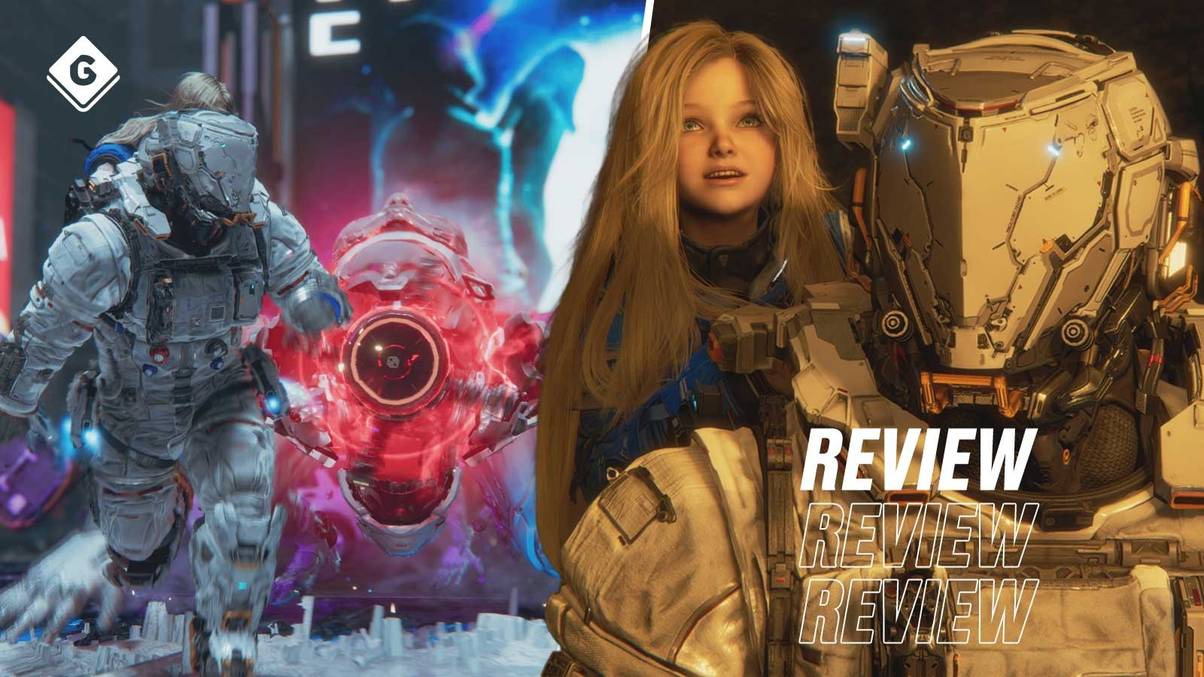
Pragmata is one of the most pleasantly surprising games I’ve played in 2026 so far and well-deserving of your attention.
Capcom is known by gamers for its pre-established series such as Resident Evil, Monster Hunter, Street Fighter, and many more. Many like myself have enjoyed treading familiar territory over the years, with a return to Raccoon City or the promise of a new, traditional Mega Man platformer but it’s always great to see new IPs emerge. Pragmata is an excellent example of that.
To The Moon And Back
Perfectly timed with the historic Artemis II moon mission, Pragmata is set on a moon base called The Cradle. When communications cease, a team is dispatched to both investigate and repair whatever glitches are in the system, but when lead protagonist Hugh and his companions arrive, the base’s inhabitants are nowhere to be found.
Upon further investigation, an earthquake hits, separating Hugh from his team and plunging him into the depths of the facility. He’s greeted by Diana, a child-like android – or pragmata – with the extraordinary ability to hack pretty much anything. This ability is immediately put to use when the pair are attacked by The Cradle’s corrupted AI IDUS, who commands all on-site security bots to eliminate the duo immediately.

Think First, Shoot Later
Pragmata is different from any other third-person shooter you’ve played before. While we’d all like to embrace our inner Frank Reynolds and just start blasting, that’s a surefire way to get yourself killed.
The Cradle’s security bots are shielded behind thick plated armour that’s impenetrable to standard weaponry which is great when they’re on your side, less so when they’re trying to chop you in half. As said before though, Diana can hack attacking bots to expose their inner workings and they’re just begging to be shot at. Anything glowing blue is good to go, but each type of robot has its own personal weakness that you should be making your priority when lining up a shot.
Hacking a bot is relatively simple as you use the buttons on your controller to navigate a nexus of tiles, with the glowing green one being your end goal as that’s what peels back their armour. Time isn’t frozen whilst initiating a hack though, and your enemies aren’t going to just stand around and let you expose their weaknesses. Gameplay becomes a tactful dance of hacking, dodging, repositioning and hacking again until you’re finally able to unleash your arsenal.
The difficulty comes when there’s a wider variety of bots to face as split-second decisions dictate which ones you’ll take down first. Some bots are faster than others whereas some are slow but hit like a truck. Utility bots can also appear to provide ranged fire support, so you’re always thinking about which target needs eliminating first before trying to find your opening.

The scales are balanced as you unlock new and powerful weapons each with their own role to play in battle. Some are there purely to cause damage whereas others are more about crowd control and giving yourself time to breathe or think.
A steady stream of upgrades and “nodes” also make life easier. Nodes are a limited-use loadout that add new icons to the hacking nexus for various effects. For instance, some let you hack multiple targets whereas others cause damage over time. My personal favourite turned hostiles into allies for a limited time which was a game-changer when combined with multi-hacking.
Pragmata is a game that both encourages and rewards critical thinking. Enemy variety and the plethora of loadout combinations keep the action fresh and engaging, no doubt helped along by the game’s stellar pacing. It always felt like there was something new to draw my attention to.
Seriously, How Big Is This Base?
The environments of Pragmata deserve a special shoutout as they completely subverted my expectations for what life on a moon base would look like.
Cold, sterile white rooms make up the first area of the game and they set the stage beautifully. Without the people that used to work and live in The Cradle, the decor is a stark reminder that flesh and blood is no longer in control of the complex. It’s a theme Pragmata clings to even as the environments start to open up, like when Hugh and Diana find themselves standing in a recreation of New York City. Everything found on the base, including the structure itself, is a fabrication. The Cradle basically 3D prints everything its denizens need whether it be work equipment or personal belongings.

Pragmata’s take on New York City is the biggest example of where this technology can go wrong, as while it looks the part at distance, a closer inspection reiterates that it’s all just smoke and mirrors. The Cradle’s AI can build a New York that looks the part, but doesn’t feel the same.
There are more examples later in the game, and while Hugh and Diana don’t go out of their way to lecture the player on the dangers of AI, they don’t have to. Every recreation of Earth and humanity they come across simply fuels their desire to escape the Moon and see the real thing, Diana especially as she’s never been to Earth before.
The only time the environments fall short is during backtracking. There are plenty of collectibles scattered throughout each area and you’re unlikely to find them all on your first go. Whenever you do decide to head back to a previous area though, you’ll find all of the enemies you previously encountered will have respawned. This quickly becomes an issue when you’re locked in certain rooms until every enemy is defeated. On your first run, you’re just going through the motions in these moments but when backtracking, it does begin to feel as if there are some unnecessary roadblocks.
These repeated encounters aren’t too egregious as by the time you revisit, you’ll likely have stronger weapons, but I still found myself second-guessing if that collectible was worth it if I was forced to replay a certain encounter again.
The Pragmatic Pragmata Diana
I’d be remiss if I didn’t talk about Diana further as she really does steal the show.
There’s been a noticeably growing trend in video games over the last decade where the player’s character becomes a real or adoptive parent for a young companion. The Last of Us Part I is by far the best example here but there are other examples like Telltale’s The Walking Dead and God of War (2018).
There are a couple of reasons as for why this is such an effective narrative device as it gives the player something they need to protect, so when Atreus falls ill in God of War, you’re supposed to feel just as anxious as Kratos when you’re carrying him to safety. It’s also a great way of filling dead air, as conversations between both characters can be used for context, comic-relief, or hints.
Pragmata’s Diana is by far the most-effective example of this growing trend I’ve seen in a game.

Like I said before, Diana has spent her entire existence within The Cradle and until Hugh arrives she’s not even online. Because of this, her knowledge of Earth is severely limited, so Hugh’s mere existence excites her to no end. Throughout the game, Hugh shares facts and anecdotes of his life on Earth for her amusement and it’s so, so endearing.
It drives you as a player because while your main objective is to escape The Cradle in one piece, you’re also motivated by Diana’s hope of seeing Earth with her own eyes. Every shared laugh and triumphant high-five feels sincere, and that natural bond beautifully juxtaposes the artificial environment around them.
Early on in the game, the pair are transported to The Shelter where Hugh can rest, upgrade his gear, and more importantly spend time with Diana. You can chat about the current situation, Diana’s memories, and Hugh’s life on Earth – but the real highlight comes in the form of hidden collectibles scattered throughout the game’s levels. These are digital memories of Earth that when taken back to The Shelter, can be fabricated into toys and apparatus Diana can play or interact with.
You need to venture off the beaten path to find them, but they’re more than worth it just to see Diana riding a skateboard or playing on a swing whenever you return to The Shelter. Diana will even reward you for your efforts with a picture she drew if you’re lucky.
Final Thoughts
Pragmata truly is a triumph. The mix of hacking and shooting forces you to find a rhythm in combat and depending on what enemies are on the field and what equipment you have, the tempo can vary significantly. Combat never felt like it was outstaying its welcome nor did it feel repetitive. The Cradle is an excellent setting both in terms of story and environment variety so while backtracking for collectibles felt like a pain at times, it was still rewarding to revisit those areas to see what I originally missed. Hugh and Diana really are a dynamic duo and it was a pleasure to see their friendship develop; the humanity both of these characters bring to the plot is essential for the narrative to work and it was refreshing to have protagonists that aren’t carrying the weight of the world on their shoulders at all times. It made for higher stakes when the pair were in genuine danger and levity during the story’s quieter moments.
Pros: Hacking and combat never gets old, environments feel varied and meaningful, Hugh and Diana are one hell of a team
Cons: Backtracking can be a little tedious if you’re going for all collectibles
For fans of: Dead Space, Death Stranding, Resident Evil
9/10: Exceptional
Pragmata launches on 17 April on PlayStation 5 (version tested), Xbox Series X/S, PC and Nintendo Switch 2 A review code was provided by the publisher. Read a guide to our review scores here.

It’s great to hear that Pragmata has made such a strong impression! It’s always exciting when a game exceeds expectations and becomes a standout. Looking forward to seeing more about it!