

I’m 44 years old, and my first-ever PC was my dad’s hand-me-down ZX Spectrum. I’m not sure of the first game I played, but the first one I remember is Horace Goes Skiing. The humble Speccy kicked off the hobby of a lifetime: my habits may have changed over the years, but gaming has been a constant joy in my life.
So much so that in my 20s I became a games journalist. I’ve worked for almost every outlet you’ve heard of over the last 20 years, as well as writing a full history of the medium, and I never tire of learning new things about games. Now that I have children, I delight in watching them explore and fall in love with these wonderful virtual worlds.
All of which is my lead-in to saying that I know an awful lot about videogames. And in recent times Roblox has come to my special attention: both because I didn’t want my son on it and then, when I finally caved, I couldn’t believe what this platform is actually doing to its users. I often think that Nintendo is the company that shows other videogame developers how to do almost everything right, in terms of delighting and surprising the player. Its inverse is Roblox Corporation, a company that has created a platform that specialises in exploiting and frustrating players.
My son is seven years old. Until now he’s been quite happy on his Switch, with the Mario games and Minecraft particular favourites. But several months ago he started going on about Roblox. Luckily I was able to tell him it’s not on Switch, because I didn’t want him playing on there. But on and on went the chatter about Roblox, and in particular the games Steal a Brainrot and 99 Nights in the Forest. It seemed like all of his mates were on there, and nearly every day after school he’d be excitedly telling me about what could happen in one or the other game.
How bad can it be, I thought. I gave in and downloaded Roblox to my PlayStation, and then made sure to turn on every safety feature it has: he can’t communicate with other users, the privacy settings are maxed, all the content filters are on. As I’d soon find out, unfortunately, these only tackle part of the problem.
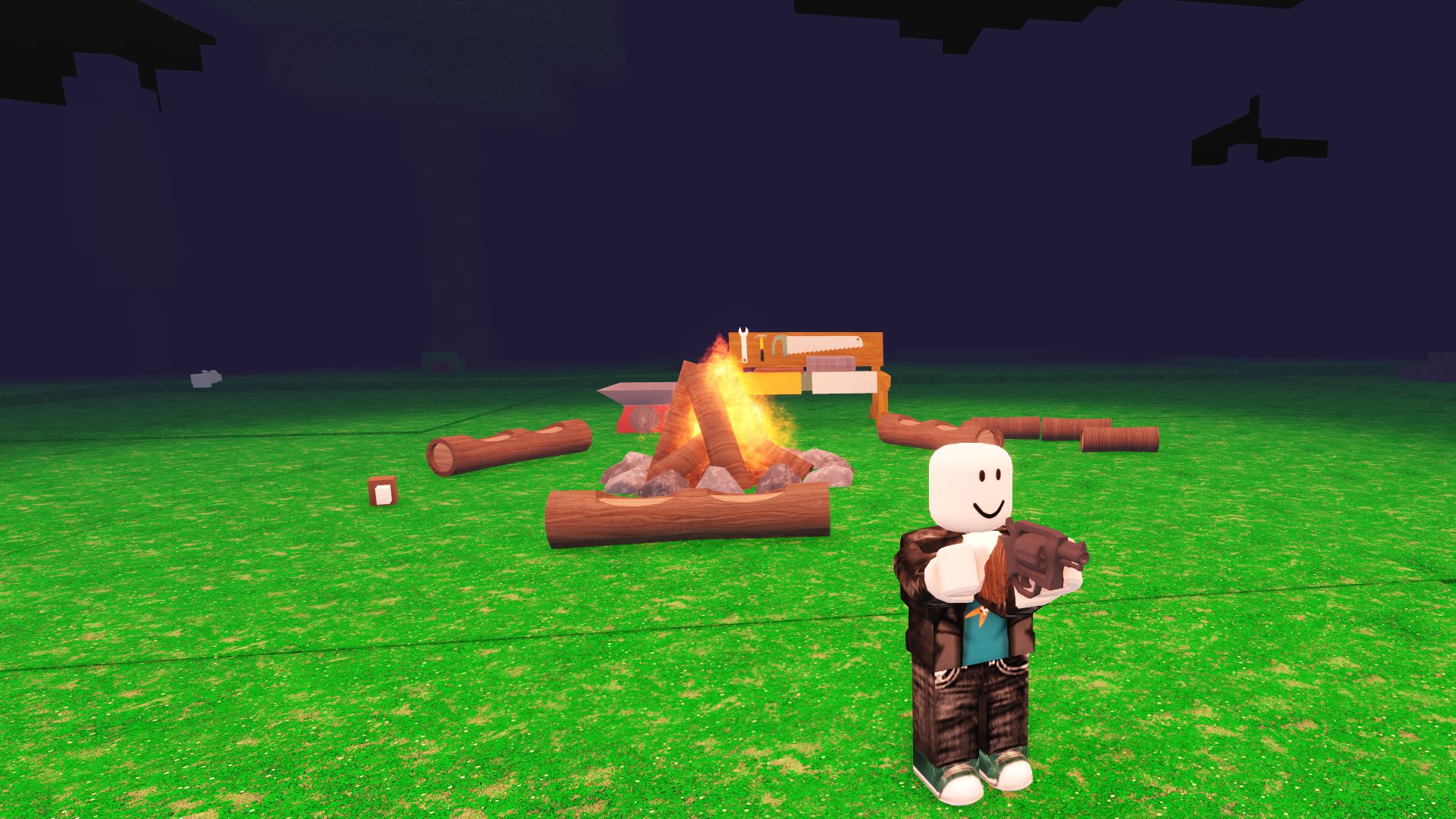
I knew 99 Nights was a horror game of some sort, so tried it myself: and yeah it was a little scary the first time I saw the deer-thing, and I wasn’t too sure about the idea of saving kids from their doom, but my son already knew about all of this stuff from his mates. So I decided to play it with him and gauge things.
When my son found out I’d installed Roblox he was. needless to say. over-the-moon. We sat down to play and he was soon zipping around batting things, collecting wood, building fires, and laughing at the deer. Naturally, he soon messed things up and died, and this was when I began to notice the monetisation.
Got any Robux?
When you die in 99 Nights, a pop-up appears offering a “self-revive”, which obviously my son wanted. But it cost a significant amount of Robux and he had none on his account. I explained to him that this was a bad thing to spend money on, because it was a one-off purchase within a single match and he got no permanent gain from it.
This is not accidental design
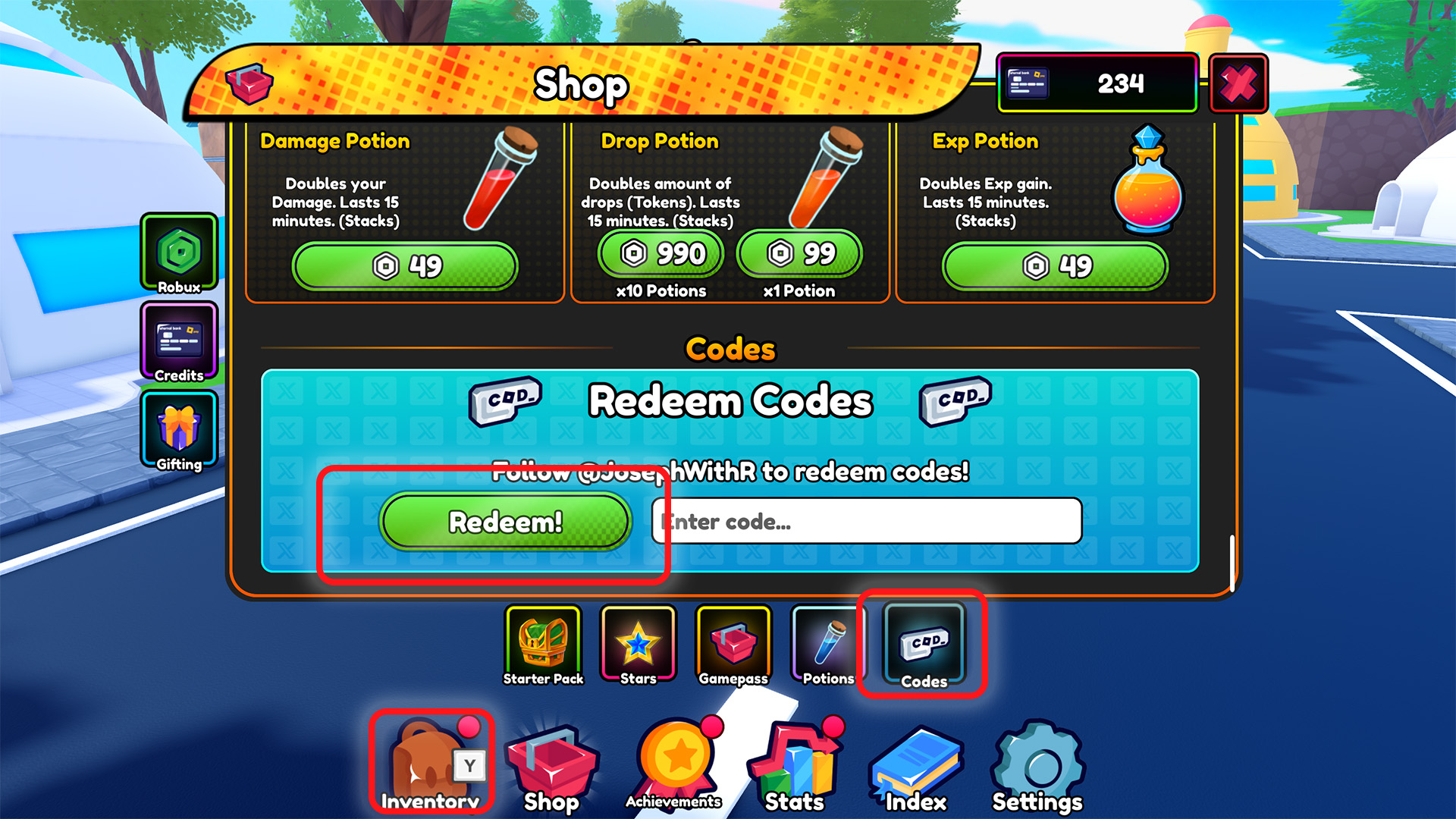
He was annoyed, but I stood firm. I told him that after he was more familiar with the game I might get him some Robux, and soon enough he started telling me all about the classes, especially the Cyborg and the Vampire. You can’t buy these with Robux: instead you need to buy gems with your Robux, and then buy classes with the gems.
This is a kids’ game, and it’s layering multiple currencies atop one another to obfuscate the cost of things, as well as using pop-ups, timer bars, and “buy” buttons to offer temporary boosts and, generally speaking, remove the game’s in-built friction. But he didn’t have any Robux, so at least there was that.
When I gave my son that month’s pocket money, guess what he asked for? I said OK, it’s your money, I’ll get you Robux with it, and did so. He had 1,000 Robux, instantly converted it into gems, and then… the class he wanted to buy wasn’t on-sale. The class shop rotates every 24 hours.
I said just wait till tomorrow, we’ll see if Vampire comes up. But he’s seven. The minute my back was turned he bought the Cyborg class instead, even though Vampire was the one he wanted. He couldn’t wait.
Then he started going on about the self-revive again. Told him not to do it. Next time I check, he’s wasted his Robux on it. Of course he has. Because he’s a kid who doesn’t understand money, and this game is set up to exploit that in the most cynical way possible. 99 Nights is a skinner box for children, and it doesn’t even try to hide it.
A recent study called Misleading and Deceptive Monetisation in Roblox ran an experiment whereby it gave a bunch of kids a $20 gift card, almost all of whom immediately converted it into Robux. Professor Marcus Carter’s team found deceptive monetisation in 14 of the platform’s top 15 games, and identified tactics such as “near miss” visuals to make wins feel close, countdown timers to manufacture “false urgency”, and a bunch of other deceptive tricks.
“Play is almost entirely the friction to make you spend money,” Carter told the Sydney Morning Herald. “Kids are constantly being peppered with pushes to spend … the whole gameplay loop is deeply ingrained with spending.
“Nearly all the kids that we spoke to had been scammed, and most had also scammed another child. My problem is with a billion-dollar company monetising that and building a platform in such a way that these predatory, toxic cultures are supported.”
The scams being referred to are the usual: fooling other users into swapping rare items for common ones, gem-doubling scams, all the things a child might fall for.
Carter’s problem is my problem too. This is not accidental design: it’s the whole point of Roblox as a platform. Roblox Corporation is a massively profitable company that is exploiting young children with dark patterns, and encouraging games that paywall the fun stuff… and not even in a way where if the kid pays they get value from it.
I think about how my own son was so enraptured by the idea of the self-revive that, even though I told him not to buy it, he had to. And it was a waste of his precious Robux. I wonder how many millions of kids have spent their cash on that feature.
Built for fun
Campaigners have made a new complaint to the Federal Trade Commission about Roblox’s “unfair and deceptive practices” (via the BBC). It mentions “engagement-maximising” design, which is exactly what it is.
But Roblox says the platform was “built for fun and connection, not short-term engagement.” Bollocks. Why do so many games have daily reward streaks and systems showing other players’ items, creating envy? A spokesperson said it had “clear policies” that banned actual and simulated gambling, but that’s neatly side-stepping the fact that this is not the problem.
I want my son to feel the same, and understand the joy these pocket worlds can bring
The complaint was made by child safety organisations Fairplay and the National Centre on Sexual Exploitation, who say the in-game systems are too complex and difficult for children to understand. I’ve seen it first-hand. It gives an example of a parent whose 10-year-old daughter spent more than $7,000 (£5,200) in two months, despite them trying to limit purchases. And yeah that parent has messed up somehow: but that’s a feature of Roblox, not a bug.
The groups say these features exploit “developmental vulnerabilities” in children, particularly around impulse control. Again: I’ve seen it in my own kid.
“Parents are doing everything they can to protect their children on Roblox, but it’s not a fair fight,” said Ashwin Verghese of Fairplay. “The platform is designed to take advantage of kids’ developmental needs and prey on their vulnerabilities.”
2026 games: Upcoming games
Best PC games: All-time favorites
Free PC games: Freebie fest
Best FPS games: Finest gunplay
Best RPGs: Grand adventures
Best co-op games: Better together
“While Roblox is rolling out new age-based protection features, young gamers are digital escape artists who easily bypass safety features,” said Drew Benvie of the youth safety nonprofit Raise.
“What’s needed is greater user and parental awareness of the impact social features in games can have on children, as well as wide scale legislative changes to address addictive or problematic features, not just the digital sticking plaster of age limits.”
Benvie is bang-on. Roblox Corporation is never going to solve these problems on Roblox. It has absolutely no incentive to do so: it is fleecing the world’s children with exploitative design, in plain sight, and regulators have done nothing. This is a platform that needs government intervention to protect children: Roblox needs to be legislated to within an inch of its life.
Videogames should be an uncomplicated joy for children, as they were for me. They shouldn’t be looking to scam them out of their pocket money or leaving them feeling confused and disappointed.
I love videogames. When I’m in the care home I’ll be on some crazy rig living my best life. I want my son to feel the same, and understand the joy these pocket worlds can bring. Instead he loves Roblox and, rather than being a place that encourages and expands the joy of childhood, it’s one where he’s constantly being asked for money and has to grow up faster to avoid all the traps and scams. In all of my time playing videogames I have never seen a platform that needs regulation as much as Roblox.