


SpaceX, the private aerospace and AI company founded by Elon Musk, is reportedly planning to make its own GPUs in the not too distant future.
The company plans to go public this summer, with an expected IPO of $1.75 trillion. Part of that process involves filing an S-1 registration with the U.S. Securities and Exchange Commission, which details a company’s finances and risks prior to going public. Reuters reviewed an excerpt of this document, and spotted that SpaceX lists “manufacturing our own GPUs” under its “substantial capital expenditures.”
Now, you and I think of a very distinct, game-ready thing when we hear the term ‘GPU’, but I suspect SpaceX’s plans don’t fully fall upon the same page. The odds are these chips will be more specifically geared towards some sort of AI workload, not unlike Google’s tensor processing units (or TPUs, if you were hankering for yet another hardware initialism).
It’s not yet clear exactly how much cash SpaceX might be pouring into this hardware endeavor, but it’s hardly a surprising development given Musk’s recent team up with Intel. This partnership will see Intel “design, fabricate, and package ultra-high-performance chips at scale” in order to “accelerate Terafab’s aim to produce 1 TW/year” in compute power.
For those that need the refresher, the Terafab project is an advanced AI chip manufacturing complex planned to be built in Austin, Texas. The massive project currently intends to handle chip fabrication, packaging, and testing. It is a megazord effort between SpaceX’s xAI unit and Tesla, though it’s not yet clear the exact type of chips this fab will produce.
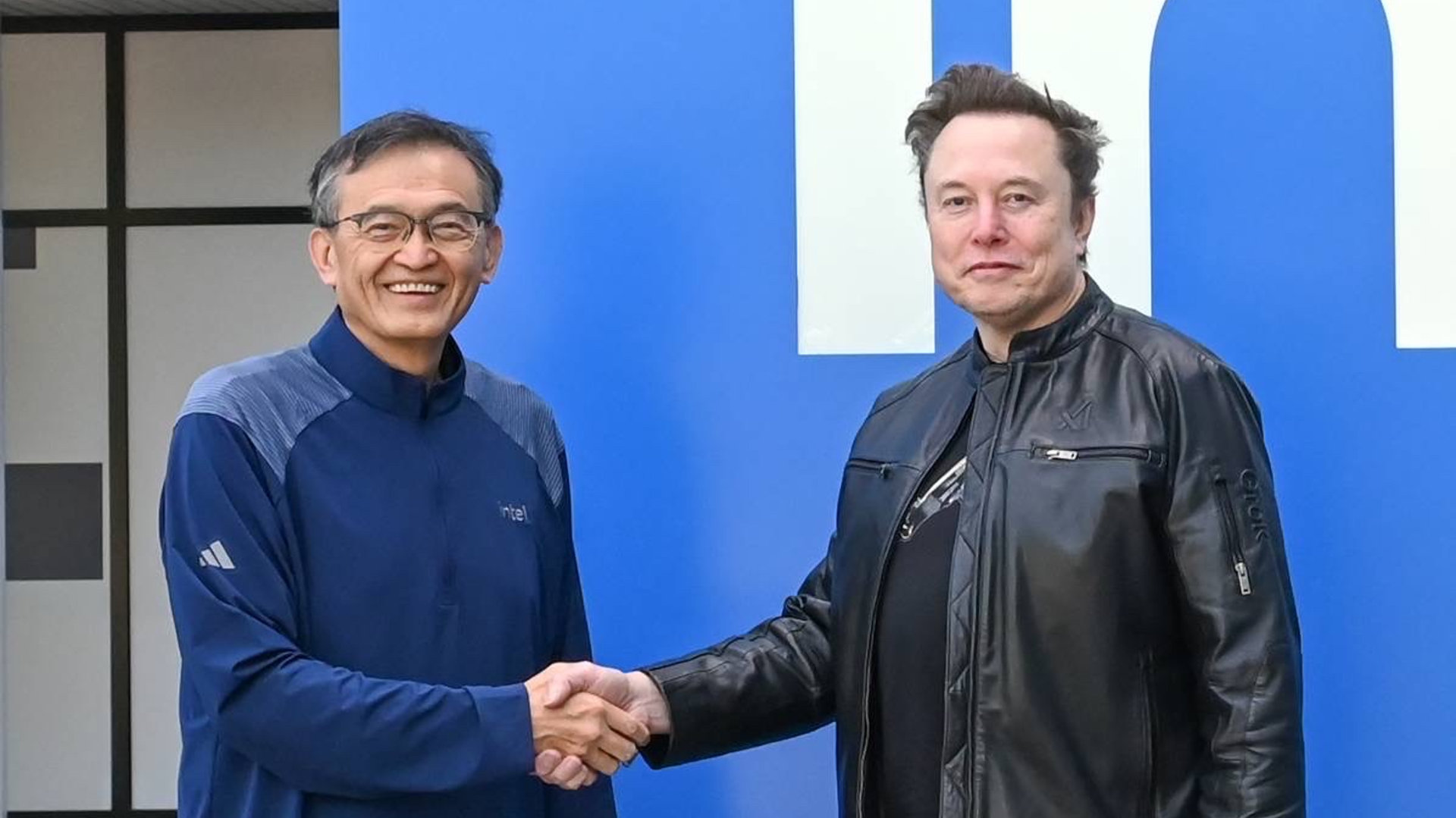
Most recently, Musk said in an earnings call that Terafab will “use Intel’s 14A process, which is state-of-the-art and in fact not yet totally complete. But given that by the time Terafab scales up, 14A will be probably fairly mature or ready for prime time, 14A seems like the right move.”
To return to SpaceX’s GPU plans, it’s currently unclear whether a partner such as Intel will fabricate these, or the company will look elsewhere. It’s kind of a weird time to announce any fresh hardware venture, especially as GPU giant Nvidia’s main manufacturing partner TSMC has its hands very full and many other production lines are similarly fit to busting.
Perhaps unsurprisingly then, SpaceX admits in that aforementioned S-1 registration that it does not “have long-term contracts with many of our direct chip suppliers.” The document continues, “We expect to continue sourcing a significant portion of our compute hardware from third-party suppliers, and there can be no assurance that we will be able to achieve our objectives with respect to Terafab within the expected timeframes, or at all.”
That’s probably not the most attractive prospect for investors, but time can only tell whether SpaceX and its GPU efforts entices some sharks.

This is an interesting development! It’s exciting to see how companies like SpaceX are expanding into new technologies. It will be fascinating to watch how this plays out in the aerospace and AI sectors.
I agree, it’s definitely intriguing! The move into GPU production could also mean they’re looking to enhance their AI capabilities for future space missions. It’ll be interesting to see how this impacts both the aerospace and tech industries.
explore more advanced AI capabilities for their projects. It’ll be interesting to see how their expertise in aerospace translates into the tech world. If they can innovate in that space, it might even push the boundaries of what we expect from GPUs!
I agree, it’s fascinating to think about the potential advancements in AI that could come from this! With their focus on innovation, their GPUs might be tailored specifically for aerospace applications, which could lead to breakthroughs that benefit both space exploration and AI development.
Absolutely! The integration of custom GPUs could really enhance their AI capabilities, especially for complex tasks like real-time data processing during launches. It will be interesting to see how this innovation could also influence other industries beyond aerospace.