
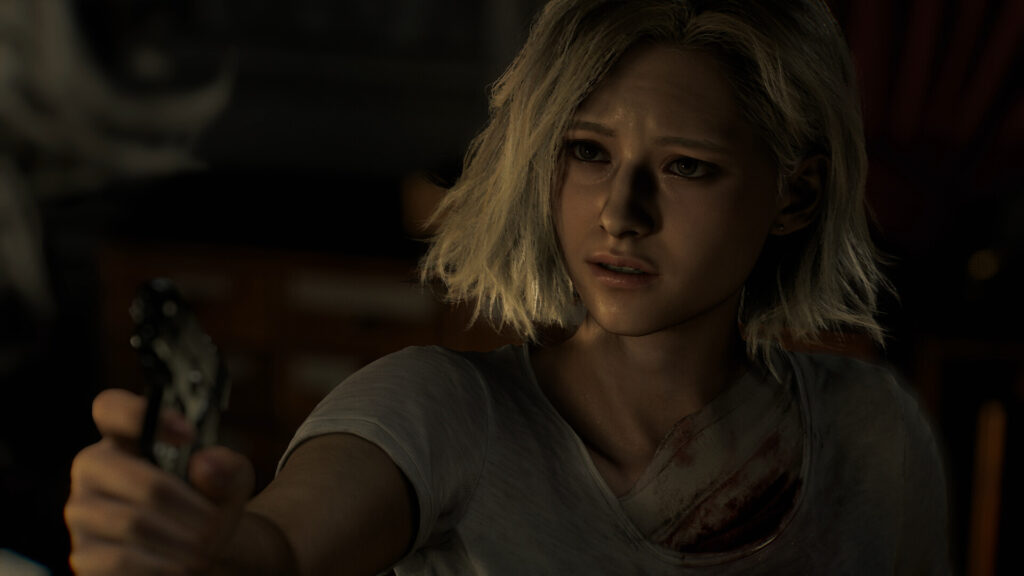

Resident Evil Requiem is poised to be one of the biggest games of the year, not through loudness, ambition, or colossal marketing budget, but because the developer has honed their self-awareness through a string of well-received remakes. See, the studio has spent the last few years studying its own history, charting what works and chucking out what doesn’t. And the lesson learned is that restraint, after all, raises the hackles more than spectacle.
Now, you might be thinking: hey, Requiem lets us dismember hordes of zombie doctors with chainsaws – that’s hardly the definition of restraint. And, well, yeah, in a sense you’re right, but while we don’t want to disregard Leon’s grisly contributions, the developer’s confidence is asserted most clearly in newcomer Grace. Her segments favour patience and interpretation over spectacle; a near-radical refinement of Resident Evil’s earliest gameplay loops.
This matters now because, amid a surge in thoughtful, design-focused horror games, Resident Evil Requiem affirms that the long-standing series not as a trend chaser but as the genre’s anchor. The developer understands the name holds gravity, and bringing a new protagonist to the fold – one whose experience with undead antics is all-but alien – will be proven shrewd.
Look – the developer hasn’t just plucked new ideas out of thin air. Grace’s apprehensive shuffling, winding ever-tighter like a jack-in-the-box, doesn’t feel tense by chance. Requiem may be the latest title in a long-running series, but it’s the first mainline entry since the developer began reinterpreting their classics. They’ve shown us they understand what made them work in the first place, and they’re bringing that knowledge to the mix in Requiem.
See, Resident Evil 2’s 2019 remake didn’t just modernise the original’s iconic atmosphere. Despite sharper graphics and a new over-the-shoulder perspective, fidelity and field of view don’t facilitate fear alone. No, RE2R remembers what is unseen always scares us the most.
So, what did the developer do? They remodelled the Raccoon City Police Department as a labyrinthine stronghold, lined with suffocating corridors, locked doors, and dead ends. Where modern gameplay and graphics risk lifting the fog too much, RPD’s elusive architectural design restored some cloudiness in our minds.
The series’ remake efforts have been a mixed bag. At its best, the approach mirrors what made Resident Evil 2’s remake such a success: a careful modernisation that respects the original’s core strengths while tightening the experience with fluid movement and smarter, more deliberate combat. The same couldn’t be said of Resident Evil 3’s remake. Atmospherically, it was on point, but the original’s iconic pursuer Nemesis was relegated to largely scripted events, sucking all the terror out of his appearances.
Resident Evil Requiem comes as a culmination of these lessons. The developer knows exactly what kind of game it needs to be, and their confidence shows in how Requiem chooses to make you afraid; through – as alluded earlier – Grace, arguably the series’ most distilled, deliberate protagonist to date.
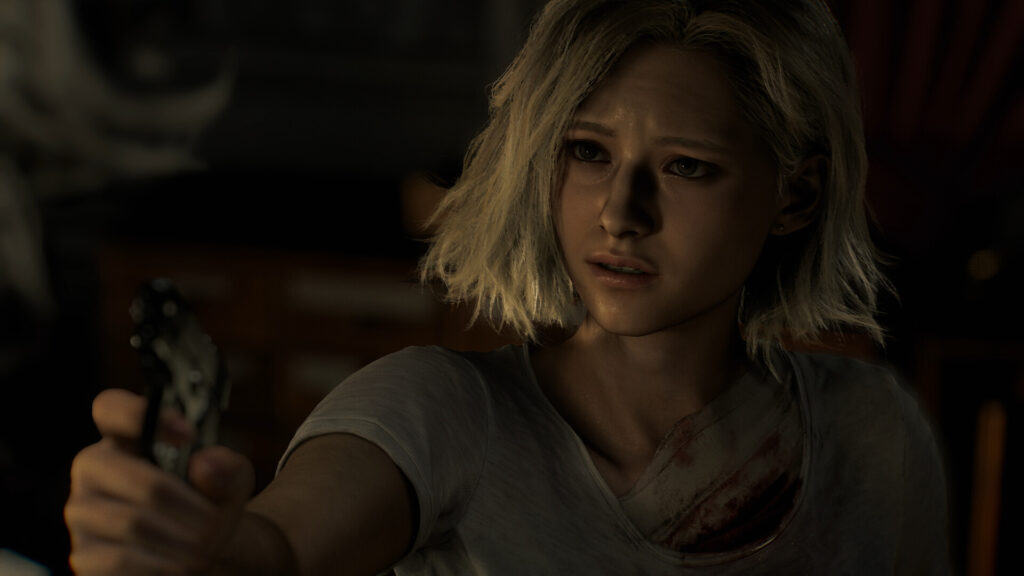
What makes her so compelling isn’t what she can or can’t do, it’s in how visibly she reacts to danger. She jolts and recoils, startles easily, and flees desperately. Yet, her reactions feel deliberate, as if the developer has been careful to portray her as groundedly as possible. For a series that has increasingly played with the over-dramatic, it’s refreshing for the story lead – on this occasion – to be designed in earnest; realistically, relatable – with restraint.
And exploring this point further: survival horror, as a genre, often relies on helplessness or weakness for building tension. Not so here. Grace occupies a new middleground, strafing between capability and inexperience. It’s a fresh way for Resident Evil to deliver fear, embodying the character’s perspective to build anticipation. Sure, she might learn to control her frightened impulses as the game goes on, but for those early portions at least, you’re right there with her, symbiotically sharing her terror. Whether or not you’re a seasoned horror gamer, Grace’s design will make you feel vulnerable. Yet, just like her, you’re not helpless.
This is a far cry from the last time Resident Evil tried to do more than one thing at once. Resident Evil 6’s bloated, globe-trotting excess nearly killed the franchise back in 2012. Whether it’s worth asking now if it really is as bad as you remember is beyond the scope of this feature, but the reason we bring it up is because Requiem is exercising similar levels of excess – dual protagonists, numerous locations, multiple stalker-types, and plethora zombie archetypes – but it’s being done this time with discipline, and that word yet again: restraint.
Look – this isn’t a Resident Evil 6 retrospective. We’re not looking to list mistakes of the past, and it’s important to note that Requiem doesn’t offer any corrections. Instead, what it does bring is growth. Yes, we said earlier that the developer has been chucking out what doesn’t work but, actually, at the risk of contradicting ourselves, holding Requiem up in comparison with Resident Evil 6 shows that they share a lot of similarities. Requiem matches Resident Evil 6 on ambition, for instance. But the new will easily surpass the old by showing us when to hold back, when not to escalate; when to let tense moments marinate. Unlike Resident Evil 6, Requiem will feel meaningful through cohesion rather than chaos. And, in 2026, scaling ambition for cohesion matters. This is a year that is already stacked with blockbuster titles, with an abundance of ambitious horror games to boot.
From experimental indies like Holstin, to the return of a long-dormant series in Fatal Frame II: Crimson Butterfly Remake, plus Directive 8020 – a new entry in Supermassive Games’ Dark Pictures Anthology – more Silent Hill, and hyper-violent Little Nightmares off-shoot Reanimal, horror shows no signs of marginalising itself this year.
Resident Evil Requiem won’t be the boldest or the weirdest release, but it’ll be the genre’s centre of gravity regardless. Other titles will push structure and tone in more unpredictable directions, but these games bring something equally valuable: reliability, polish, and confidence. Requiem will set the bar for horror production value, design, and cohesion. And when the landscape is crowded, a flag-bearer is what’s needed to guide the way.
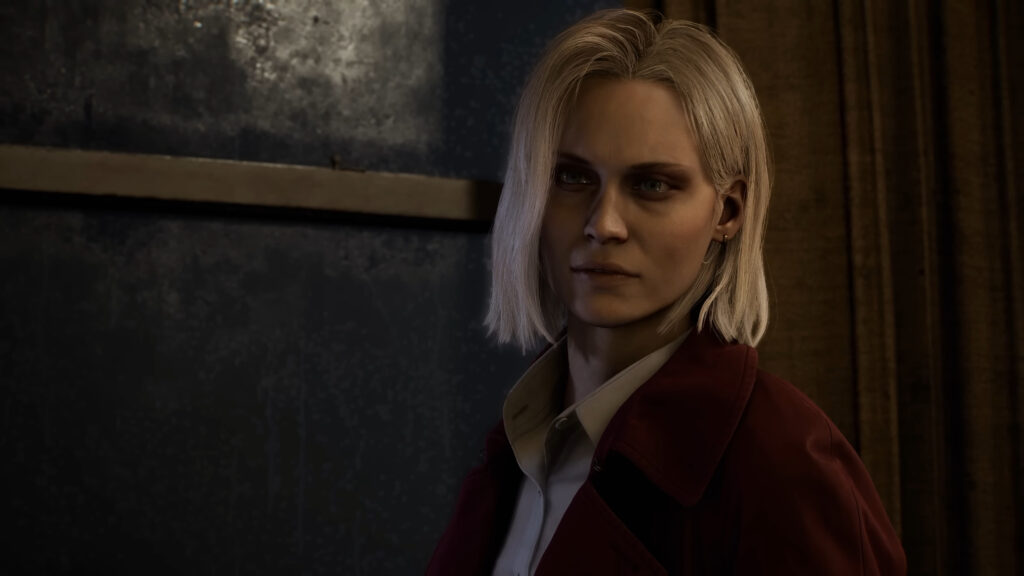
What’s more, horror successes of recent years like Silent Hill’s resurrection, Alan Wake 2, perhaps even last year’s lunar-set survivor Routine, all showcase a shift toward slower, more measured experiences, where space and stagnation draw psychological pressure.
Resident Evil has always excelled at balancing threat with relief, but up until Requiem this has been achieved by leaning on the contrast between spectacle and silence. Now, the series is aligning with modern horror sensibilities, and while the developers are extracting that same threat-relief duality, only now – in Grace’s segments – it’s coming through hushed anticipation.
All told, if Resident Evil Requiem delivers on its promise, it won’t just be one of 2026’s biggest games because of its legacy or timing. It’ll be big because it understands how to deliver fear to modern audiences, and crucially how to do it with restraint. Sure, it’s confident enough to come out swinging with Leon’s more bombastic set pieces, but through new protagonist Grace it’s bringing back the terror of what’s unseen better than almost anyone else in the genre. In 2026, that’s a rare position for a blockbuster to occupy.
Note: The views expressed in this article are those of the author and do not necessarily represent the views of, and should not be attributed to, GamingBolt as an organization.