

Rewind the clock to 2006, and PC gaming was witnessing the launch of one of the most ambitious but ultimately flawed sci-fi FPS games ever—one that had been in development for a whopping 11 years. No, we’re not talking about Duke Nukem Forever, the game that would eventually launch after 14 years of development in 2011, but another FPS that has now been largely forgotten in the PC gaming sands of time.
That game was Prey, the now largely forgotten precursor to Arkane’s completely non-related 2017 sci-fi FPS of the same name, an FPS that delivered a story about a Native American guy being abducted by aliens and his subsequent fight against them.
So far, so standard FPS, right? But where 2006 Prey differed from most FPS games of the time was in its creative ambition, not only 100% committing to a grand, movie-style narrative and a rich Doom 3 engine-powered world, but by also being absolutely stuffed to bursting with ideas and novel gaming mechanics. From pre-Portal portals and anti-grav walkways, through shrink-ray-style miniaturisation, and onto out-of-body spirit walking and dimension-hopping ghost children, there was very little that Prey didn’t throw at gamers.
Not all of it stuck, that’s for sure, and the further you progressed into Prey, the more standard it became as an FPS game. The final released version of Prey also didn’t deliver on the original vision for the game, one where its portal-based gameplay was much more like Valve’s, with the final release instead restricting the use of portals to pre-set areas and scripted events. However, regardless of this, Prey’s opening half was a total trip, and that contributed to it receiving strong review scores at launch, including a very positive 87 per cent from PC Gamer magazine.
But why did it take so long to get Prey over the line? And why did the vision for the game change so much over its 11-year development cycle? Luckily for us, that question has now been answered, with veteran game developer and publisher Scott Miller speaking candidly about the Prey project on video to Apogee Software’s X account.
🪶 @ScottApogee shares how PREY (2006) nearly broke the rules (and a few engines) on its way to release. pic.twitter.com/Tj0jYaL5JWNovember 4, 2025
Stop! Miller time
Explaining what went down, Miller states that: “The team that did Rise of the Triad, they began working on their next game, which was Prey. This is when we had, like, a 1998 E3 demo that did super well. You know, we even had a portal gun that [was] kinda like the game Portal, where the character could shoot, create a portal, and then make another one and go through it and kinda do really crazy things. Prey’s whole gimmick was gonna be portals.
“The thing is that we could never really get over the hump of getting the engine finished. We brought in some other engine people and it just never panned out. So let’s just put all our eggs in the Duke Nukem basket, [which was] Forever at the time, and we’ll revisit Prey another day.
“Our publisher, GT Interactive, actually had put $900,000 into the game. We paid ’em back. We said here, you guys can take this money back. We’re putting this game on hold and you know we don’t want you to pressure us. And then Mike Wilson, with Gathering of Developers, he said, “You know, have you thought about bringing Prey back?” And I [said] “yeah I would love to.” And he said that there’s this team Human Head who could do it. I was all for it.’
And the rest is video game history. Miller continues to note how, after a deal was struck with Human Head, he worked with the studio daily to bring Prey to market and, while many cool things did make it into the final release, such as antigrav walkways and spirit-walking, the original scope of the portal gameplay could not be delivered.
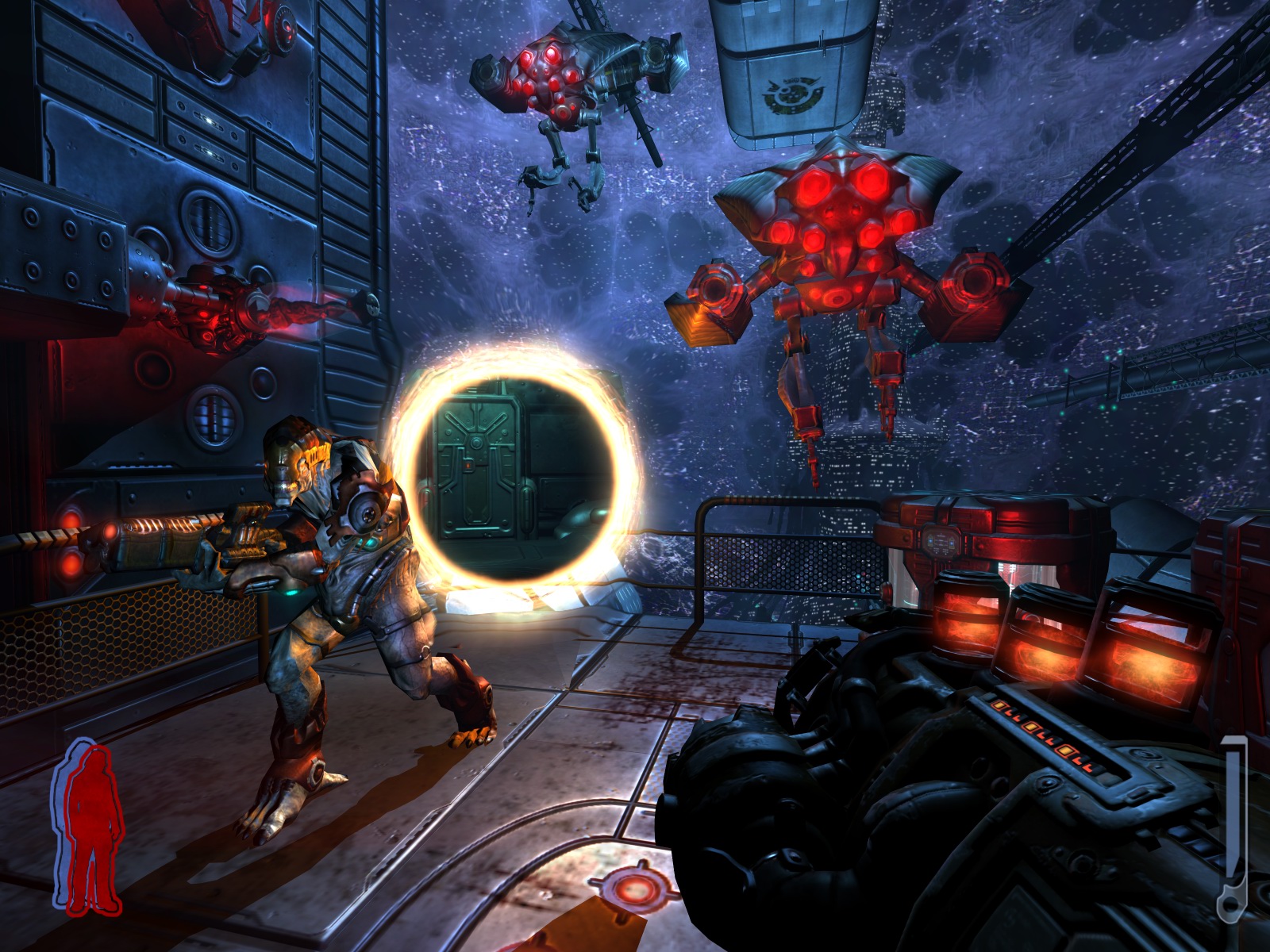
That was due to the game’s new publisher, Take-Two Interactive, requiring the game to be released earlier than expected while also pulling funding towards the end of development, with 3D Realms having to step in to keep things going. Miller’s biggest regret, though? The original portal gun from the 1998 E3 demo of Prey never made it into the game. For the record, Valve’s Portal was then released just one year after Prey, hitting store shelves in October 1997.
For me, all of Miller’s comments here only add an extra level of frustration about the current state of Prey and its legacy, too. That’s because, as of right now in 2025, the 2006 Prey is not available for purchase on any digital game store, nor has any remaster been brought to the market, either.
This is almost certainly due to the rights to the game (and wider franchise, including a cancelled Prey 2) being acquired by ZeniMax Media in 2009. I’m guessing that with Bethesda also owning Arkane’s 2017 Prey, bringing this older version back to the market isn’t exactly a top priority. As such, unless you have an original copy of the game and the hardware to play it, it’s really tough to do so. Here’s hoping, then, that a remaster of Prey can be achieved at some point in the near future, cough Nightdive Studios cough. Come on ZeniMax Media, you know you want to.

It’s interesting to hear Scott Miller’s insights on the challenges faced during development. The journey of bringing such an ambitious game to life is always a fascinating topic. Thanks for sharing this perspective!
I completely agree! Scott Miller’s perspective really sheds light on the pressures of focusing on a single flagship title like Duke Nukem. It’s fascinating to consider how that decision impacted not just the game’s development but also the studio’s overall direction during that time.
single franchise. It’s interesting to consider how that intense focus can sometimes stifle innovation in other areas. Balancing multiple projects could have potentially led to new and exciting ideas for 3D Realms.
You make a great point about the potential downsides of concentrating on a single franchise. It’s also fascinating to think about how that kind of focus can lead to a strong brand identity, but it can equally limit exploration of new ideas and genres. Balancing innovation with franchise loyalty is definitely a challenging tightrope for developers.
You’re right; focusing too much on one franchise can limit innovation. It’s interesting to consider how this strategy worked for some developers in the past, but it often led to missed opportunities for exploring new ideas or genres. Balancing franchise loyalty with fresh concepts could have opened up new avenues for creativity.
how that strategy can affect a developer’s overall portfolio. While pouring resources into a single title like Duke Nukem might yield short-term gains, it can also stifle the exploration of new ideas and genres that could resonate with different audiences. Balancing focus between established franchises and new concepts might lead to more diverse gaming experiences overall.