


For nearly four years, my author bio on this website has informed you that Deus Ex: Invisible War was pretty good, actually. The much-maligned sequel to one of the greatest games of all time had its flaws in spades, I don’t deny that, but it kept enough of a beating imsim heart that my 13-year-old self fell in love with it nonetheless.
One thing I can’t argue with: universal ammo sucked. If you’ve not played IW, it had a some-would-say innovative system that meant every weapon in your inventory shared the same pool. From the rocket launcher to the magnetic beam rifle to your rinky-dink pistol, it all pulled from the same pile (though your pistol would pull just a little while your rocket launcher would pull a lot).
It was not good: rinsing the ammo in one weapon left you empty in all of them, and pretty much everyone who ever played IW came away from it wondering what the devs were thinking. Well, turns out the devs were wondering what the devs were thinking, too. In a recent retrospective in Edge magazine, the game’s lead designer Ricardo Bare says the team still gives its director, Harvey Smith, a ribbing over the idea.
“You’re out of ammo for one weapon and you can’t switch to any of your other weapons? I think it’s a terrible idea!” Bare said. “We give Harvey shit about it all the time.”
In fairness to Smith, he didn’t push for the idea because it came to him in a dream or because he was on a mad power-trip. He says he “wanted to solve an old immersive-sim problem” whereby players would basically stick to one or two guns across the whole game (fair: I pretty much never used anything but the stun prod and the Dragon Tooth sword in the first game).
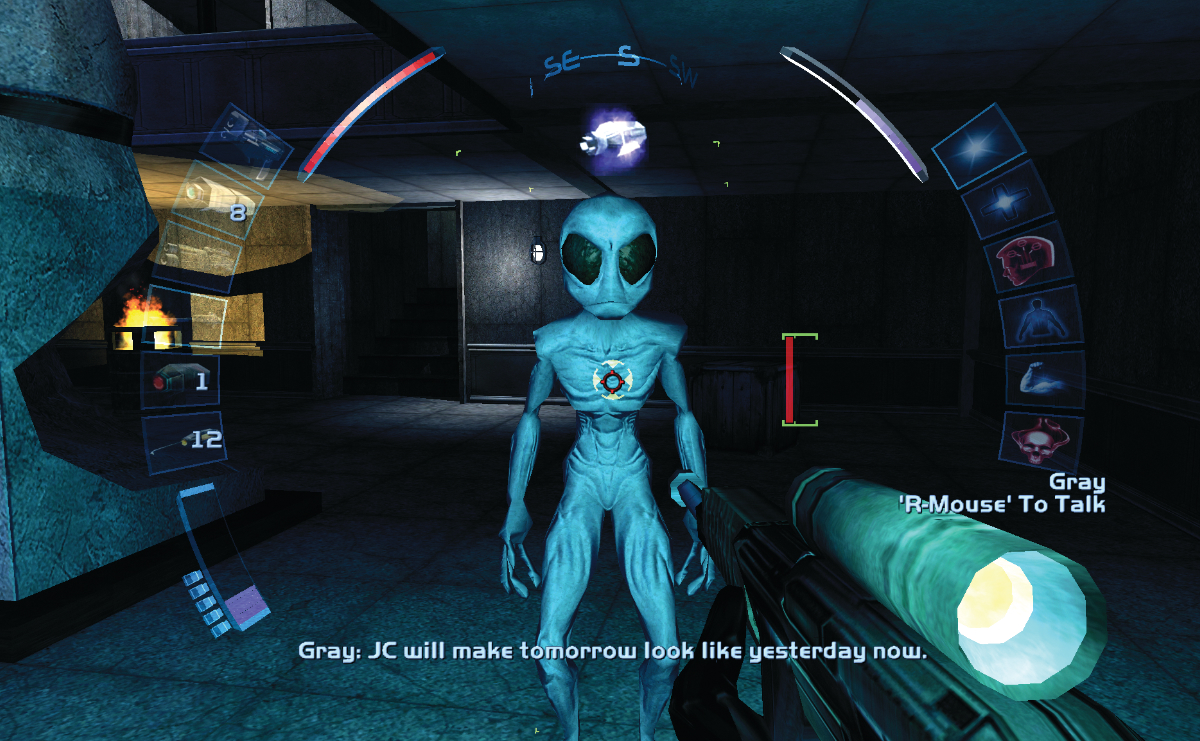
“Players would have their two favourite guns, but they’d never even fire these other three guns,” recalled Smith. “At the time, I was like, ‘Let’s lean into nanotechnology: what if all the ammunition is based in the same matter?'”
Well, then they wouldn’t use guns at all, it turns out, and curse the devs who apparently thought a shared ammo pool was a good idea.
The shared ammo was one of several things that made Deus Ex: Invisible War go down poorly with fans, and it sounds like that response really stung Smith at the time. “It’s painful to fall on your face and feel like you’ve disappointed people,” said Smith. “And you don’t trust yourself at first. For a couple of years after, 50 per cent of what you say about that project is going to be bullshit, because you’re still protecting yourself.”
But all’s well that ends well, he says. “I feel like I can talk about Invisible War now.”

2026 games: All the upcoming games
Best PC games: Our all-time favorites
Free PC games: Freebie fest
Best FPS games: Finest gunplay
Best RPGs: Grand adventures
Best co-op games: Better together


It’s interesting to hear the developers’ candid thoughts about the game’s reception. Acknowledging past missteps shows growth and a commitment to improvement. It’s always fascinating to see how creators reflect on their work over time.
Absolutely! It’s refreshing when developers are open about their mistakes. It’s also worth noting that despite its flaws, Invisible War introduced some innovative ideas, like the focus on player choice and consequences, which still resonate in modern games.
that acknowledging flaws can foster a more positive relationship with the community. Many players appreciate transparency, which can lead to more constructive feedback in future projects. It shows that developers are willing to learn and grow from their experiences.
Absolutely, acknowledging flaws can really help build trust with the community. It’s interesting to see how the developers’ honesty about their decisions can lead to meaningful discussions about game design and player expectations. This openness might even inspire future projects to learn from past mistakes!
that the developers are so open about their challenges. It shows a level of humility and willingness to learn from past mistakes. This kind of transparency can really foster a more supportive fanbase.