
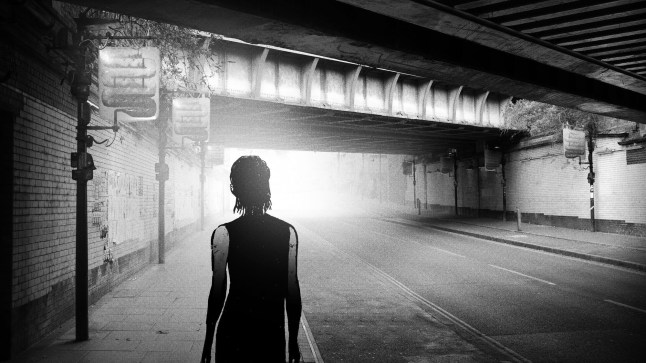


British indie games developer Gareth Damian Martin has returned with a new sci-fi game that mixes 80s social realism and sci-fi, with a very distinctive first person viewpoint.
Gareth Damian Martin is one of the rising stars of the UK games development establishment – although establishment is more or less the opposite of how you would describe them. Fiercely intellectual, with an academic and artistic background that encompasses architecture, illustration, journalism, and photography, they burst onto the scene with the Zen-like In Other Waters in 2020 and consolidated that initial promise with 2022’s Citizen Sleeper and 2025’s Citizen Sleeper 2, two unforgettable tabletop influenced sci-fi narratives.
Now Martin has unveiled their fourth game, Signet City – via a trailer released far in advance of its mooted 2027 release date. Signet City will be a radical departure from Martin’s previous games, not least by adopting a first person perspective: ‘I wanted to introduce the world, and get people used to the idea of the art style and the feel of it being quite different to Citizen Sleeper.
‘In Signet City, you play as a parasite, and it felt natural that it should be a game where you see the world through the eyes of your hosts, very literally. And it was exciting to get to do level-design and spaces, and especially urban environments, which are a big fascination of mine.’
Along with Signet City’s bold new look and monochrome art style, its gameplay should also be thoroughly distinctive. Martin explains how it will play: ‘You start off as a parasite, and you wake up in the mind of a character called Sid, who is herself waking up in the river of this city. You come to understand what you are, why it is that you’re in the mind of this person who doesn’t know that you’re there. And you start to understand what your capabilities are, and what the world is, through Sid, as she lives in the city.
‘The idea of jumping around between characters is a big part of the story. So it is narrative-led, but there’s a mechanical aspect to that, which is that your character’s skills and your resources are all based on their emotions. So how you push them in the story, and what experiences they go through, and which choices you make on their behalf, or what you encourage them towards, all that affects the skills you have access to, and also affects how you grow as a parasite – the resources you have to grow from.’
Expert, exclusive gaming analysis
Sign up to the GameCentral newsletter for a unique take on the week in gaming, alongside the latest reviews and more. Delivered to your inbox every Saturday morning.
Martin cites the example of getting a character you possess involved in a fight in a pub, so that they get angry and then possess the venom to kick down a door which opens up a new area. They add: ‘I really want to make games where the narrative element and mechanical elements are not really separable from each other. So in this case, a lot of the decisions you make in the game are simultaneously narrative and mechanical.’
As far as the gameplay mechanics are concerned, Martin says there will still be elements that Citizen Sleeper fans find familiar: ‘The key thing is that you have these explorable spaces with each host. So each time you drop into the mind of a host, what comes with them is their part of the city. You have a limited amount of actions a day and it has a day process. So you wake up as the character and you decide what it is you’re going to do with that day to get you closer to what your objectives are.
‘There’s a dice-based tabletop element to it, governing actions you can find in the world – like kicking down a door or climbing a wall or convincing somebody of something – and those are affected by the emotions of the host. So there’s a kind of lock-and-key element, but also a skill-based system that’s all about you adjusting modifiers, basically, by making narrative decisions.’
As far as Signet City’s themes are concerned, Martin’s long-existing preoccupations with architecture and black and white photography are front and centre, and even though the game exists in the realm of sci-fi, it should be Martin’s most obviously British game yet: ‘I’m always interested in cities as these big mega-interconnected ecologies, and I think that’s a big theme. I’m trying to dig into this idea of a city as a living structure – not just a city as a space that contains people, but also contains ecology, and different animals, and different layers of systems that all overlap with each other.
‘But then, also, I really wanted to make something that I felt drew more on British history and culture, and what I was born into, and the 80s cast a long shadow over the contemporary day. You’ve got fascinating events like the Winter of Discontent. I’ve got a huge stack of Café Royal books. It’s amazing having that resource when you’re building a city and you’re trying to capture the spirit of that time.’

Martin reveals that they have been obsessed with black and white photography since their teenage years, so that formed a natural basis for the art style: ‘I had this very particular vision of wanting to have hand-drawn characters that are in my natural art-style. I do a lot of ink drawing and working with quite a rough approach to illustration. But then also to balance that with this kind of photographic environment. One of the big things I love is the way in which in photography – especially black and white photography – you get imaginary detail that’s created from grain. So in the in-game visuals, we have quite a complex post-processing effect.
‘The game is very much inspired by 80s social photography; Tish Murtha had a big influence on it – I absolutely love her photographs. And I think there’s a humanity. I’ve always loved, ever since I very first started taking black and white photos, the way that it seems to cut through and get at something that is underneath or behind things. It removes distractions and really focuses on producing things: sometimes it’s atmosphere, sometimes it’s literal, physical architectural form, and sometimes it’s emotion.’
Martin admits that taking on a first-person view game for the first time as a solo developer (although they drafted in an environment artist called Tom Kitchin to help) was initially daunting, but they felt ready to take the challenge on: ‘I played about with a lot of different ways of doing this game and different levels of fidelity and control. But I kept coming back to the strength of being behind the eyes of the character, which just seemed so effective when you have these hosts. And, actually, it allows the text to play this really interesting role. Because one thing I did find making something like Citizen Sleeper is that the text had to do a lot of work to give information.
‘One thing I love about games like, let’s say Dishonored, is where they don’t give you the whole city to explore, they just let you have these little moments. You can maybe see them from each other – you can see the clock tower across the river – and you’ve just got these little locations that are suggestive of a city. There’s a reason why Dunwall and [Half-Life 2’s] City 17 live in people’s minds so strongly, and that’s because they couldn’t explore all of them; they weren’t allowed to spoil the illusion for themselves. So for me, Signet City is working in that tradition.’
As far as Signet City’s release is concerned, all we currently know is that it will arrive some time in 2027. But when it does, be prepared to find a game that looks, feels, and plays quite differently to anything you’ve experienced before.

Email gamecentral@metro.co.uk, leave a comment below, follow us on Twitter.
To submit Inbox letters and Reader’s Features more easily, without the need to send an email, just use our Submit Stuff page here.
For more stories like this, check our Gaming page.