
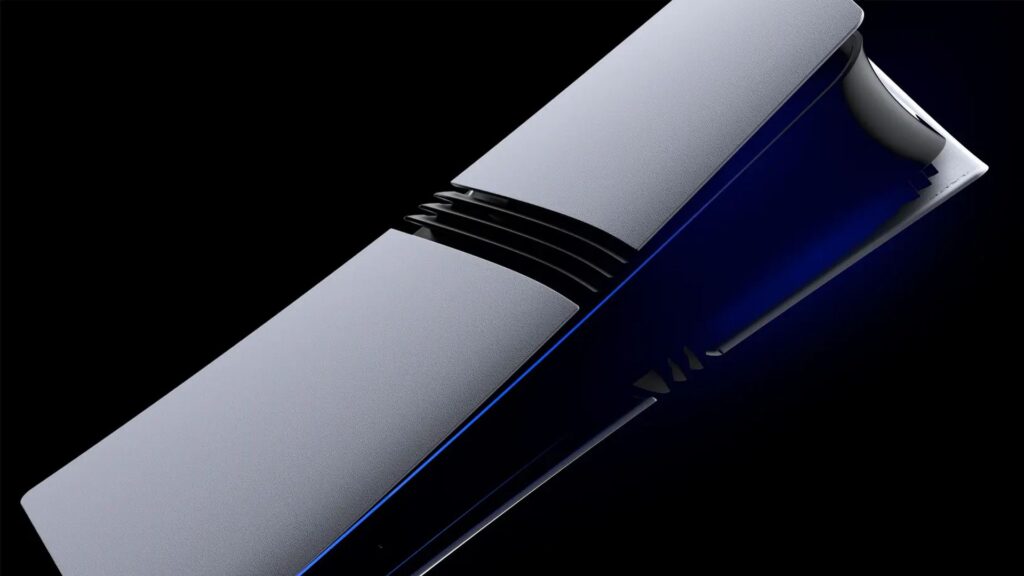

Sony’s recent announcement that it is essentially ending the concept of physical PlayStation game releases in 2028 will undoubtedly have larger ripple effects in the gaming industry. Analysts also believe that this gives us a good indicator of what we can expect from the PS6.
Among these is Ampere’s Piers Harding-Rolls, who believes that the January 2028 window indicates that Sony won’t be releasing its next-gen console until that year. Along with this, he also believes that the console won’t feature a disc drive for physical media.
“Almost certainly guarantees that the PS6 won’t arrive until 2028 at the earliest. Ampere’s current expectation is a launch at the end of 2028,” he wrote. “At a minimum, the standard version of a PS6 will not include a physical media disc drive.”
In a lengthier blog post, Harding-Rolls has discussed how Sony might be doing this in order to further cut down on the PS6’s manufacturing costs. Disc drives, while not individually expensive, also come with other costs, like licensing for Blu-ray capabilities. He doesn’t, however, discount the idea of a separate disc drive being sold that could plug into the PS6. This way, the company can still offer assurances to PS4 and PS5 users who have plenty of physical copies of games collected that the next-generation console will also support their pre-existing libraries.
“Sony will be looking for all the ways it can reduce the cost of its next-gen console, and this is an easy win,” he wrote. “It’s possible that an add-on disc drive could be made available to play older PS4 and PS5 games on disc. Removing the drive will upset some gamers that don’t want to pay for an add-on disc drive (if available) and that want to access their game collections on disc. It may be too impractical or too complex, but some process of transferral for older physical media to a digital license could alleviate some of these issues.”
Along with cutting down on its own costs, Sony might also be looking for ways in which publishers have to spend less money to release their games on its consoles. Right now, third-party publishers that want to release physical copies of their games have to pay Sony the associated licensing costs to certify their titles for PlayStation, as well as fees for the production of physical copies, which include costs for the disc itself, the case, and the cover.
“These costs are normally bundled into a single charge,” Harding-Rolls explained. “Under this model, publishers have a significant amount of financial risk in terms of paying for production and the royalty fee before any payments are received for sales into retailers.”
“Removing the costs associated with the production of physical media reduces publishers’ exposure to this inventory risk but also enables them to potentially realise better margins on sales of games through retail.”
In light of Harding-Rolls’ belief that the launch of the PS6 might be getting pushed back to 2028, it is worth noting that rumors have indicated that Sony is already working with AMD to validate the chips powering the next-gen console. There have also been reports about the PS6’s bill of materials costs having gone up by $200.