
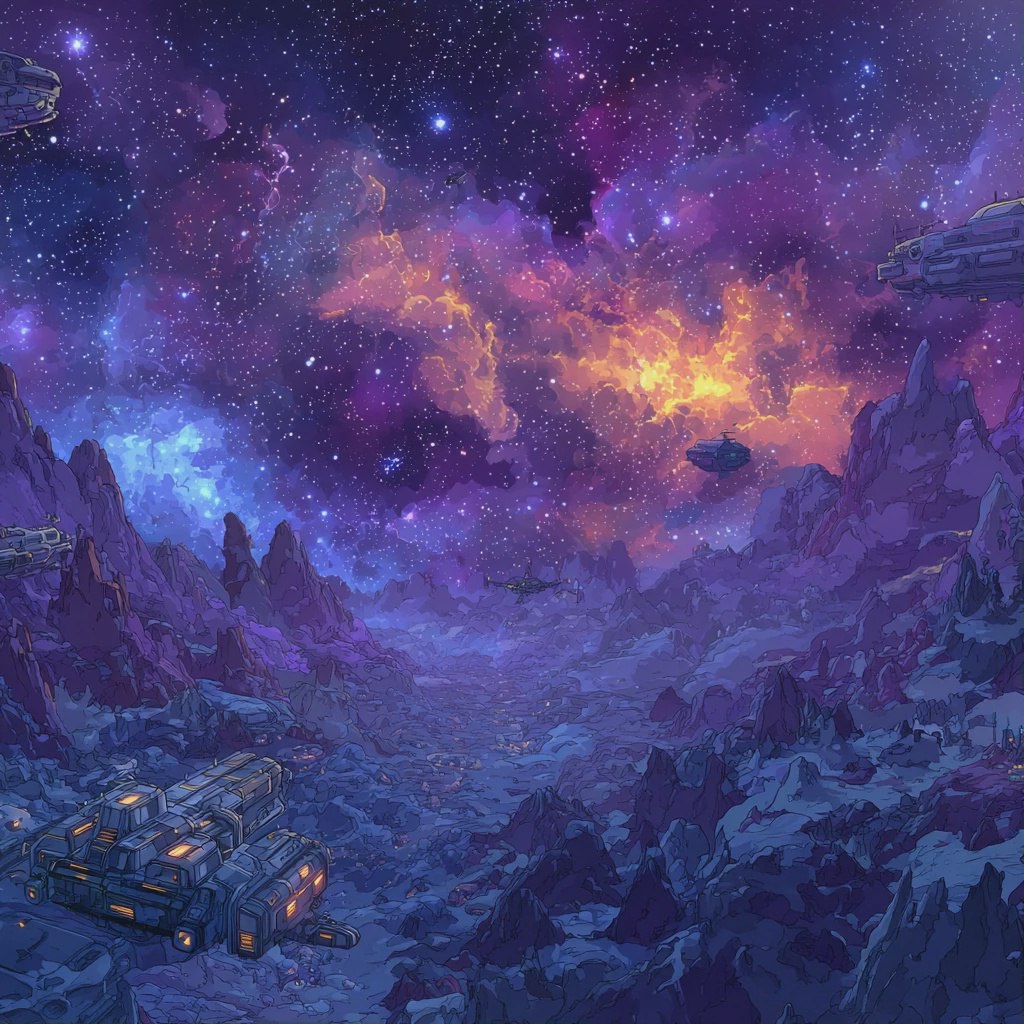

Lana Looks To The Stars

HIGH A gorgeous art style.
LOW A confusing ending.
WTF Why does this cat have telepathy?
The original Planet of Lana is a game of few words.
It’s a simple puzzle-platformer about a pastoral society invaded by a robot armada, where protagonist Lana and furry companion Mui step into the belly of the beast to pacify the mechanical threat and free their family. To lighten the tone, the entire story is told in a made-up language resembling Simlish, but Planet of Lana’s art direction and simple story beats of environmentalism and man-machine relationships speak volumes without needing to rely on complex dialogue.
Children of the Leaf blows Planet of Lana’s simple story and environment wide open. This time, instead of a response to a brutal invasion, Lana and Mui take the initiative on a whirlwind journey to stop a rival political leader from poisoning their world, while simultaneously exploring the murky history of man-machine relations. Every new mechanic brims with complexity, its puzzles are much more involved, and the story left me with more questions than answers. It’s everything one want from a sequel of this caliber.

While Planet of Lana’s story was intensely focused on Lana and Mui’s solitary journey across their planet, Children of the Leaf’s story adds new dimensions to this follow-up adventure. The journey begins when Lana’s adopted sister gets sick from radiation poisoning from a mysterious ore. What follows is a trek to make a cure for her, while also uncovering a plot from a cult leader that uses this ore to power a massive utopian city, tainting the land outside in the process.
The visual elements that worked in Planet of Lana are dialed up to 11 in Children of the Leaf. The beautiful hand-painted backgrounds are back and this time, they’re just a slice of Lana’s home planet. The verdant rolling hills and wetlands from Lana’s home village return, but new additions like a mountain peak and the deep ocean help bookend how beautiful and varied the environments are. A supporting woodwind soundtrack is always in the perfect spot — extremely evocative when it needs to be, but it just as easily slips into the background.
In terms of gameplay, the first installment’s machines are now pacified planet-wide, yet Lana and Mui must take a far more active role in their journey. Rather than scurrying in and out of cover to avoid robot enemies, Lana can now hack machines into being friendly. Controlling robots to lift Mui to hard-to-reach areas, open doors, and distract other robots puts the player in the driver’s seat, and I was impressed by how improved and more intricate these puzzles were compared to the first game. This play evolution is a clear sign that developer Wishfully is flexing their design muscles on Children of the Leaf.

Lana isn’t the only character that has more agency either, as Mui now is intertwined with Lana’s home environment. A new mechanic allows Mui to take control of creatures in the natural world to solve puzzles. This mechanic and Lana’s mechanical prowess combine in beautifully orchestrated puzzle sections, where Lana and Mui take turns to crack open a locked door or take down a gigantic drilling operation in the middle of the forest.
On that last point, Children of the Leaf isn’t afraid to tackle ethical dilemmas within its story, a criticism I had of the first title. At the end of Planet of Lana, she had successfully converted the machine entities to friendly co-inhabitants using a special data sequence that convinced robots to to stop slaughtering the biological inhabitants. Two opposing methods of using machines — as cooperators or slaves — are examined here, yet instead of taking the cop-out of “robot friends good, robot subjects bad,” Children of the Leaf goes deeper and offers a scathing assessment of the ultimate issue — extracting resources from the planet.
However, ethical dilemmas like this come with their own concerns. In attempting to expand the scope of Lana’s journey with new characters, plot beats, and messages, we lose some singular focus from the original, and example being that when the player chooses one branching path over another, some storylines fail to wrap up. To be fair, the developers so state that the story in its Simlish-esque language is “open to interpretation,” so perhaps not closing every loop is a way of letting players draw their own conclusions.

Those story beats aside, Planet of Lana II: Children of the Leaf successfully expands on its underrated first entry in nearly every way possible. It’s the perfect Empire Strikes Back to Planet of Lana’s New Hope: approachable, beautiful, and a great adventure worth taking.
Rating: 8.5 out of 10
Disclosures: This game is developed by Wishfully and published by Thunderful. It is currently available on Switch/SW2, PC, PS4/5, and XBX/S. This copy of the game was obtained via publisher and reviewed on PC. Approximately 9 hours were spent in the single-player modes and the game was completed. There are no multiplayer modes.
Parents: According to the ESRB, this game is rated E10 with a descriptor of Fantasy Violence. There is one depiction of a character’s death and one who is gravely sick, but there is no blood or other outward violence besides those incidents. This game is safe for older kids.
Colorblind Modes: There are no colorblind modes available.
Deaf & Hard of Hearing Gamers: No audio cues are required for successful play, and the only text is displayed in text boxes at the very beginning of the game. I’d say this is fully accessible.

Remappable Controls: No, controls are not remappable.

The post Planet Of Lana II: Children Of The Leaf Review appeared first on Gamecritics.com.
This review captures the essence of “Planet Of Lana II” beautifully. The art style sounds stunning, and it’s always interesting when a game leaves us pondering its ending. Looking forward to seeing how it all unfolds!
I agree, the art style is definitely a highlight! It’s interesting how the visuals complement the emotional journey of the characters, making the gameplay experience even more immersive. I hope we get more clarity on the ending in future updates!