


5th-generation QD-OLED panels solve one of the biggest critiques levied at OLED monitors: Font fringing. With burn-in becoming less and less of an issue and prices steadily going down, blurry text is one of the biggest hurdles giving IPS any sort of an edge anymore. AOC and its sister company Philips both have 5th-generation QD-OLED gaming monitors launching in Q3 this year, and I got a little bit of time with both of them.
At a press event out in Croatia, we got a briefing on what the two companies are working on this year, and got hands-on with some of its best and brightest (literally) bits of tech.
First up is the AOC AGP346UCSD (catchy name). Coming in at 34 inches, this WQHD panel has a refresh rate of 360 Hz, uses HDMI 2.1 and DP 2.1, and comes with a 15 W USB Type-C port. I’m told the low power in the USB Type-C port is simply due to the restraints of this specific monitor, and other monitors with the same tech will get up to 90 W.
We also have the Philips Evnia 34M2C8600P (they ought to dock the pay the guy who does the names), which drops the connectors down to HDMI 2.0 and DP 1.4, but offers a 65 W USB Type-C, a white shell, and Ambiglow synchronised RGB for your troubles.
What both monitors have in common are the 5th generation QD-OLED screens, which, with their V-RGB pixel substructure, offer better HDR (HDR 500 TB), reduced font fringing, and higher brightness. Both panels get a peak of 1300 nits with a full brightness of 300 nits.
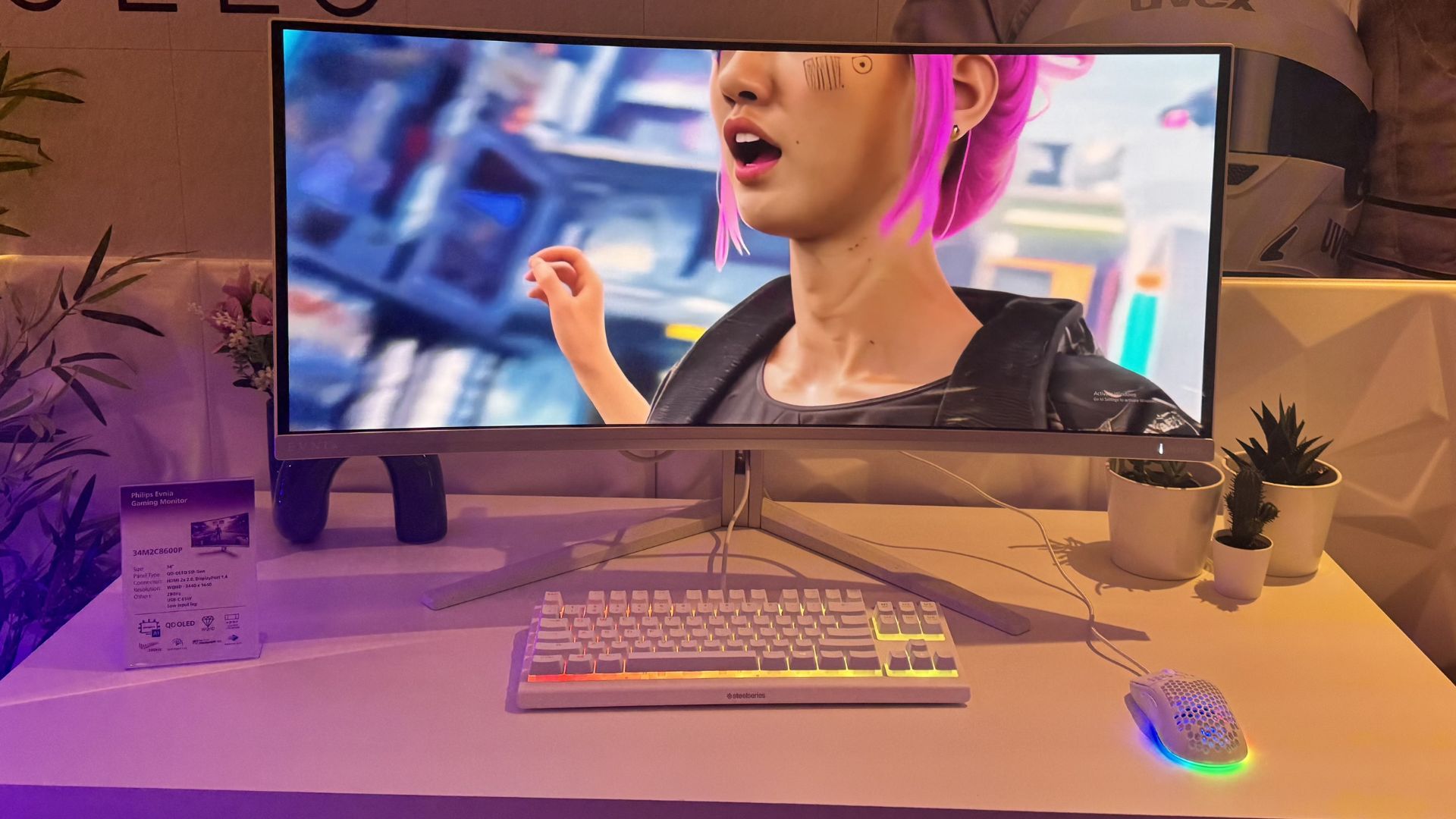
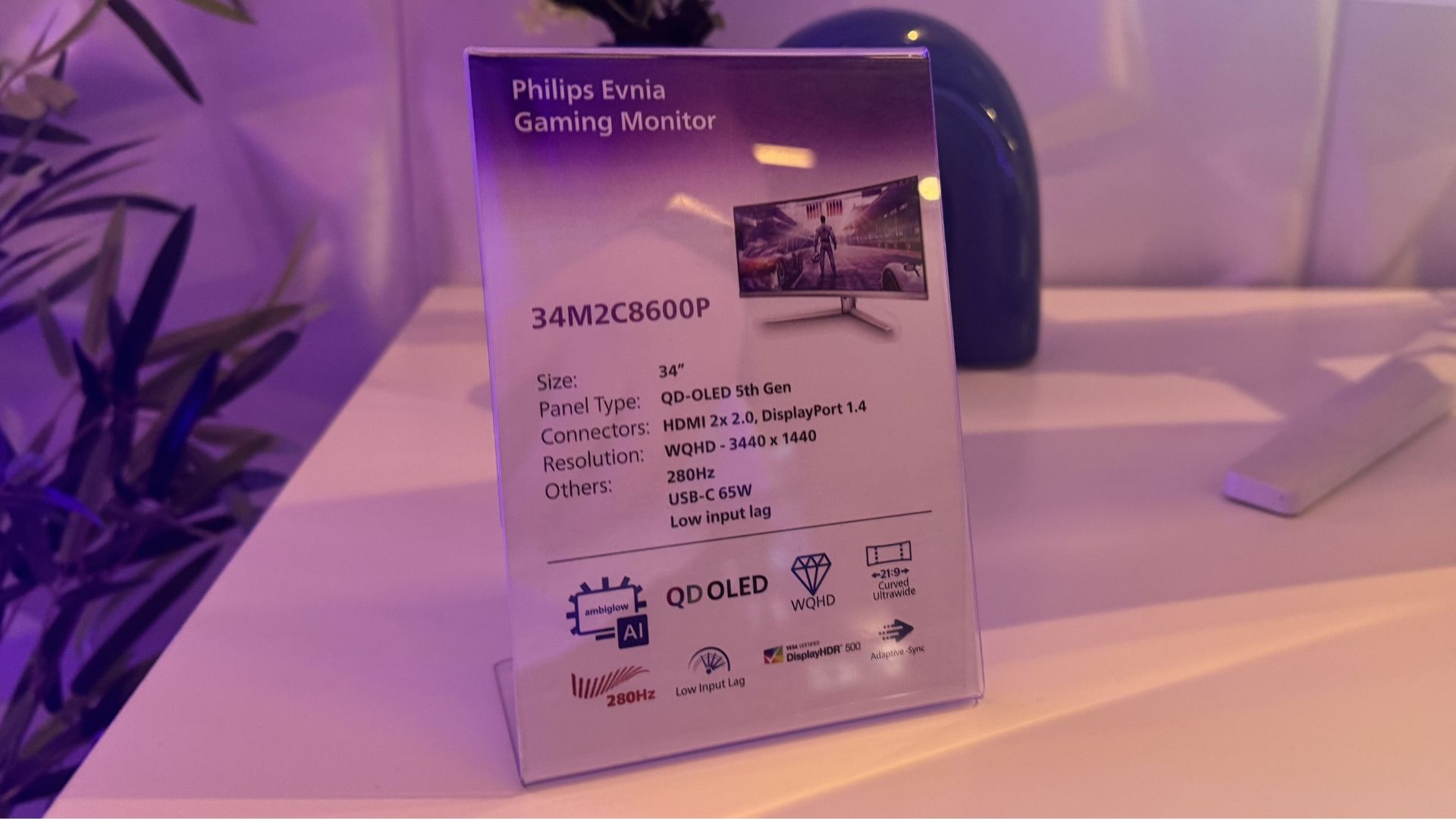
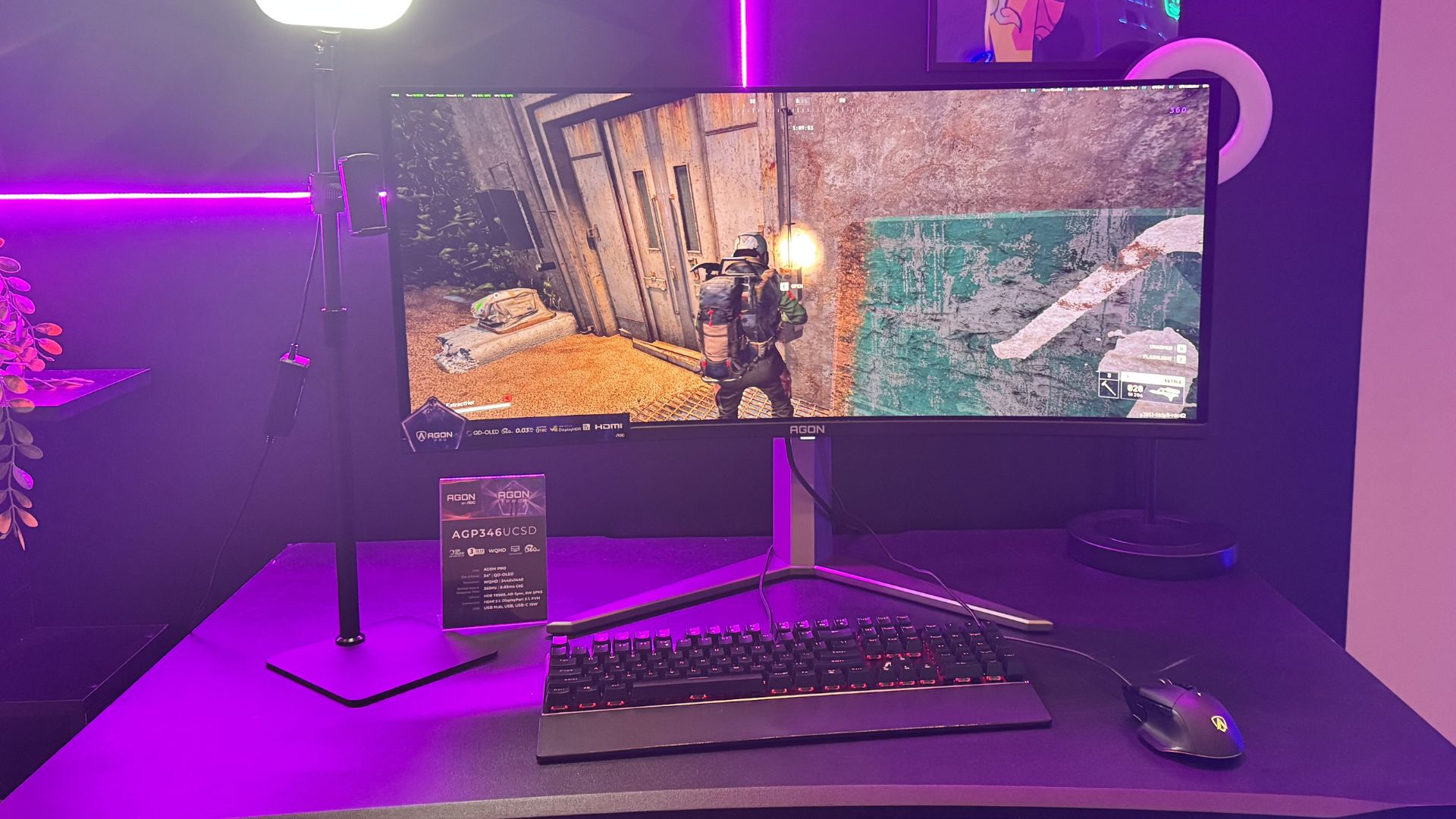
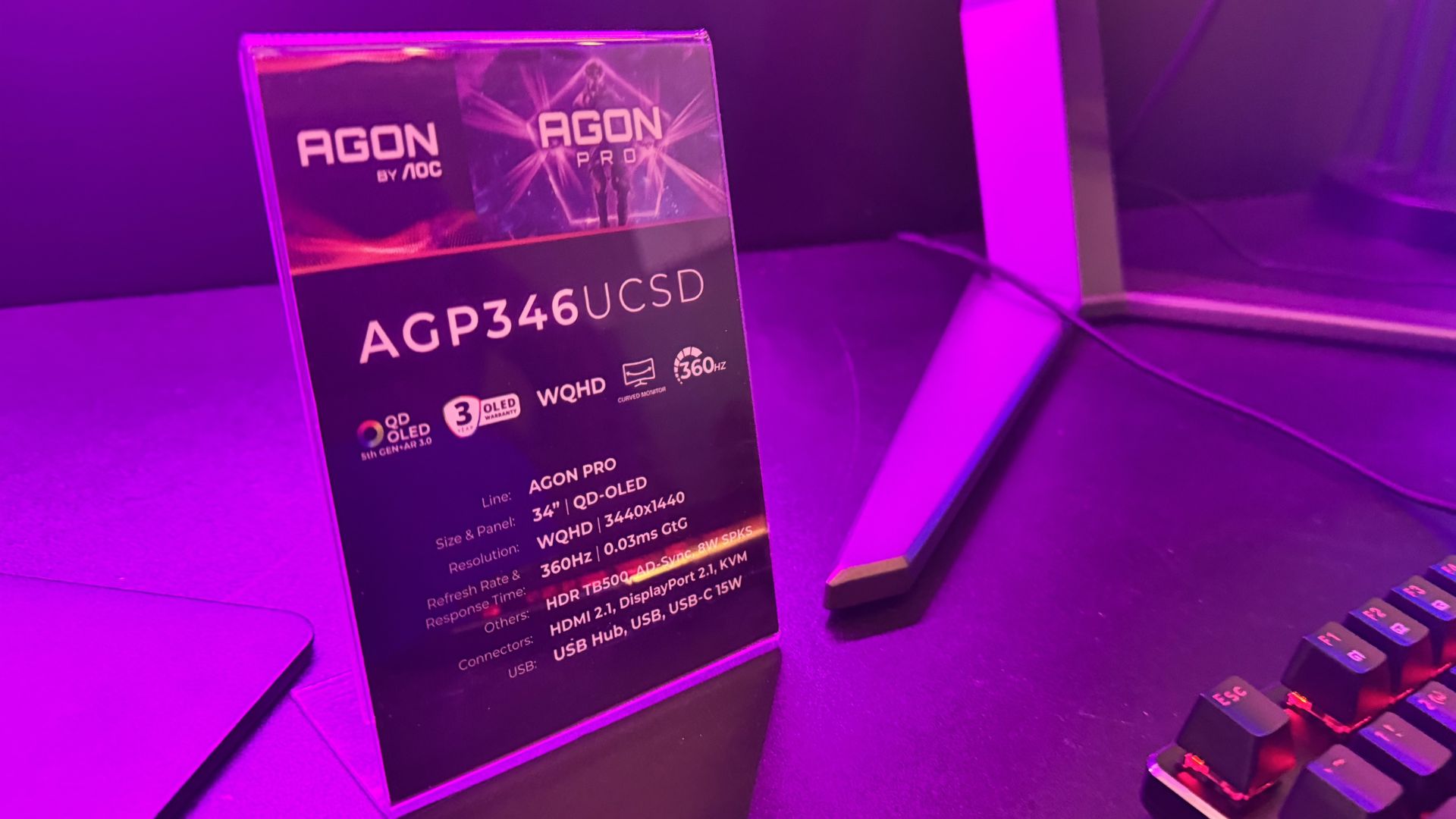
They will both be available in Q3 (July to September, though it seems like July is the target), with the AOC monitor coming in at €999 (roughly exchanges to $1,176) and the Philips selling for €899 ($1,050). I’m told that the AOC Agon Pro range (AOC AGP) is typically recommended for high-end gaming rigs, where the Philips Evnia is supposed to appeal to a slightly more casual market. Hence, the AOC option has a higher refresh rate and better DisplayPort support.
OLED gaming monitors look fantastic, and these two are no different. The higher brightness wasn’t immediately noticeable to me, but the deep contrasts were. They also both have an 1800R curve, which is certainly immersive but slight enough that it didn’t stand out to me like other curved monitors. At 34 inches, a light curve is a great way of getting a bit more out of the screen without forcing you to turn your head to see it all. If it’s possible for a big ‘ole monitor to be so, I’d say its curve is tasteful.
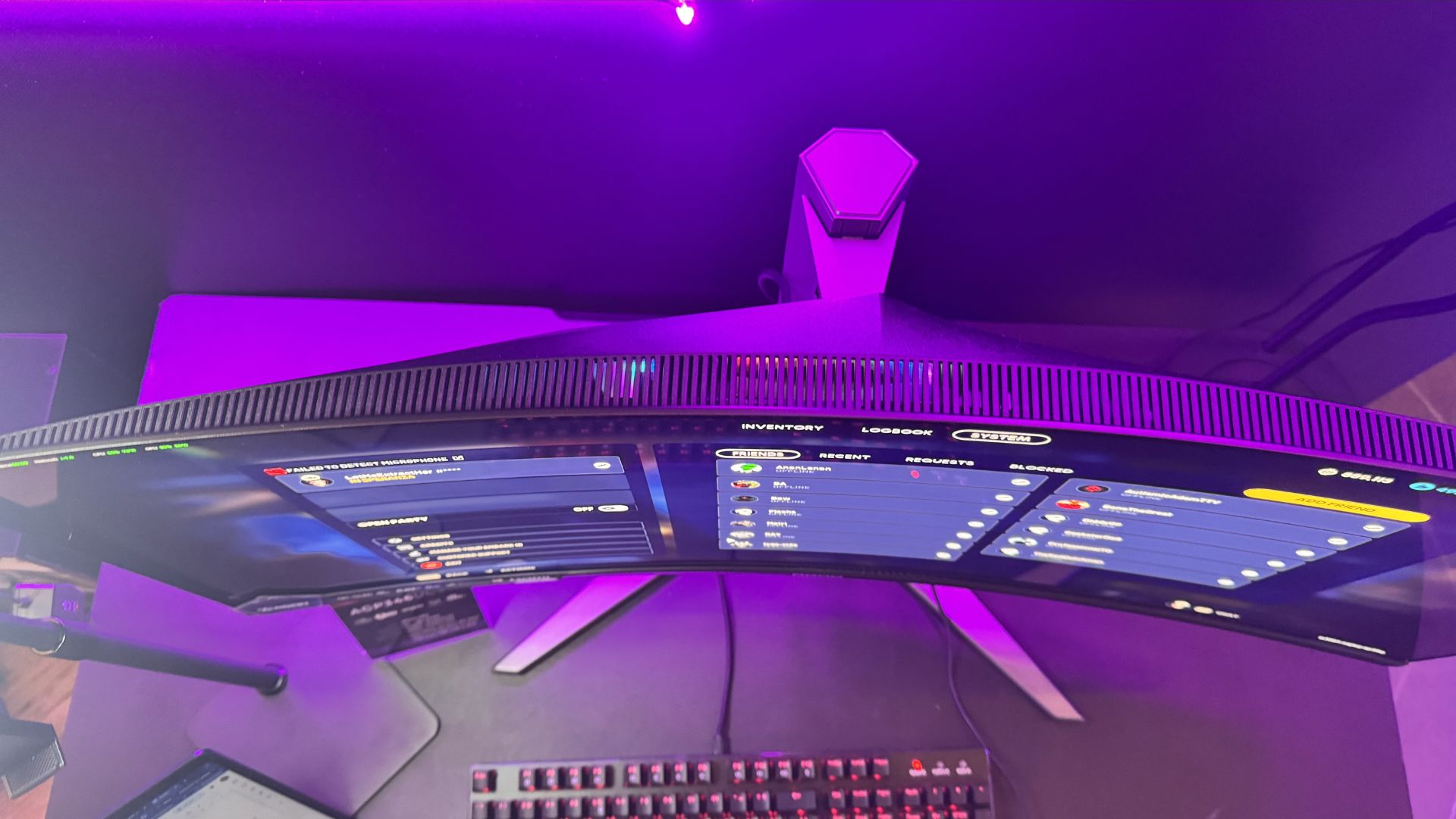
For €100 less, a prettier all-white shell, and Ambilight support, my money would be on the Philips panel in this race. Philips is calling its new smart lighting ecosystem Ambiscape, and its monitors are Matter-compatible and support Philips’ own AI lighting system, which is intended to connect to what you’re playing and provide the right lighting.
If you have smart bulbs, you will be able to connect them all through software to set a tone in your room. Personally, I think I’d take a lower refresh rate for a better look and a cheaper price point. We don’t yet have confirmation of if/when we will see either monitor in the US, but here’s hoping we do eventually.
These two brands aren’t the first to tackle font fringing. The likes of MSI’s MPG 341 CQR uses the vertical RGB stripe pattern to help with rendering that relies on subpixel structure, like font smoothing and clarity. This comes in at $1,100 with a 34-inch 3440 x 1440p screen, 1300 nits peak brightness, and a 0.03 ms response time. It’s a similar monitor with similar specs at a similar price. To me, this is no bad thing. The more monitors that get to the market, the less you are forced to rely on a single company.
And in this case, there are technically two new companies entering the ring—though they share an owner—and they both seem ready for the visual punch-up.

This post highlights some exciting advancements in OLED technology! It’s great to see improvements that address common issues, and I’m looking forward to seeing how these new monitors perform in gaming. Definitely a tempting upgrade for enthusiasts!
Absolutely! The reduction of font fringing is a significant step forward for gaming and content creation. It’s exciting to think about how these monitors will enhance the overall visual experience, especially for those who spend long hours in front of their screens.
I completely agree! The improved clarity will definitely enhance both gaming and content creation experiences. Plus, the vibrant colors of QD-OLED panels should make visuals even more immersive. It’s exciting to see how technology continues to evolve!
Absolutely! The advancements in QD-OLED technology not only reduce font fringing but also improve color accuracy, which is a huge plus for creators. It’s exciting to see how these innovations can elevate the overall experience, whether you’re gaming or working on a project!
You’re right! The enhanced color accuracy and brightness of QD-OLEDs are really exciting for gamers. It’s great to see how these improvements can elevate the overall gaming experience, making visuals even more immersive.