
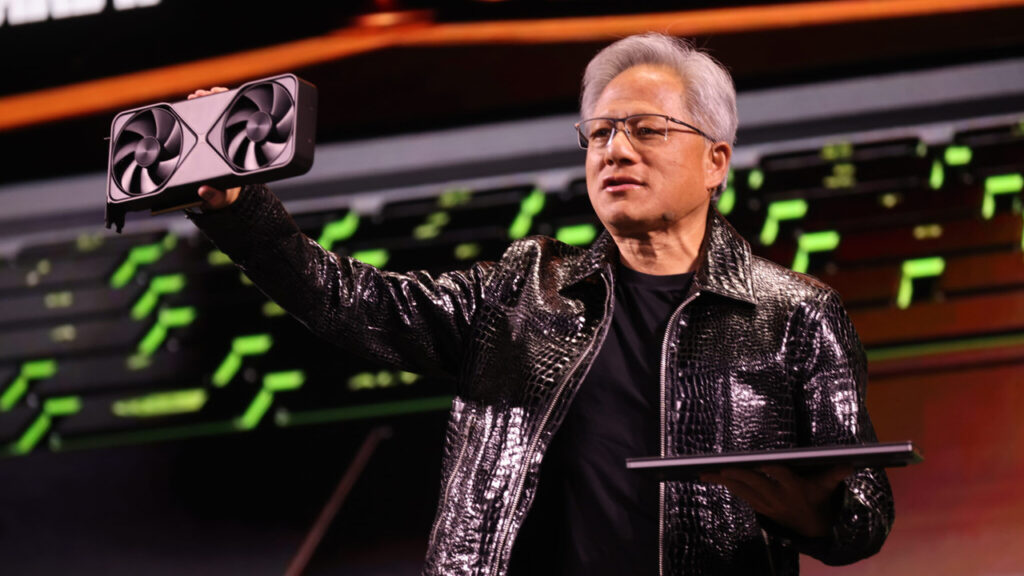

Roughly $6,500 for an RTX 5090. Let that figure settle for a moment.
According to Taiwan’s Economic Daily News, Samsung — the supplier of the memory chips Nvidia puts in its graphics cards — has pushed DRAM prices up by 20%. The report says Nvidia’s response is a price increase of as much as 30% across its own GPUs.
There’s one caveat worth keeping in mind: what’s being reported are supplier-side prices. Those will work their way down to retail eventually. By how much, nobody yet knows.
The mid-range is the real story here
Previous increases this year were largely confined to the top of the stack. That isn’t the case now. The entire Blackwell lineup appears to be in the firing line.
Consider the GeForce RTX 5070. Its launch price was $549 back in February 2025. Today it sells for around $650. Tack on a flat 30% and a mid-range card lands at somewhere near $850.
And that’s where it hurts. Most people file a $6,500 halo card under trivia. An $850 5070 is a build budget coming apart at the seams.
This has been building all year
The first round came in February, when the RTX 5090 rose to roughly $5,000 — and never fell back.
For a while it also seemed as though Nvidia had killed off the RTX 5070 Ti, with memory demand having grown that tight. That one proved to be a false alarm.
Still, the pattern is difficult to ignore. Memory supply puts the squeeze on card makers, and card makers hand it straight to buyers.
Nvidia isn’t the only one bracing
Valve warned earlier this month that the RAM crisis is only deepening. Microsoft, too, seems concerned about additional price rises.
So none of this arrives as a shock. It arrives as confirmation.
We’ve reached out to Nvidia for comment on the price increases and will update this piece if we hear back. For now, the 5070 you’d been saving up for costs $650 — and by the reporting, that’s the bargain version.