

Few games carry a reputation for raising the bar like cult favourite action RPG series Gothic. Despite its ‘block’ graphics and sometimes impenetrable difficulty, the games ooze atmosphere and immersive exploration, breaking new ground for their pioneering style. There’d been calls for a remake for a few years – bringing the poorly aged aspects up to modern standards. Now, some five years-plus since announced, the Gothic 1 Remake is right around the corner. From newly accessible controls, to updated combat and branching narratives, here’s fifteen things you need to know.
Greenlit Following Teaser Demo Success
Back in December 2019, THQ Nordic Barcelona released the Gothic Playable Teaser, a prototype demo which reimagined the original Gothic with modern combat and controls. The idea was to gauge appetite for a full-scale remake, and the response from the community was they were hungry. However, the overwhelming consensus was that any Gothic remake needs to be more faithful to the original than the teaser. So, for Gothic 1 Remake, expect a reboot which honours the original’s gritty atmosphere, opaque characters, and expansive lore.
New Studio Created Specifically
To shepherd this cult-classic RPG into a new era, THQ Nordic felt it prudent to establish a new studio dedicated to realising the original vision through a modern lens. Alkimia Interactive, still based in Barcelona, comprises team members responsible for the teaser’s creation, but has also drafted in original talent – programmers, writers, and a composer – to revert the prototype’s second-rate foundations with assuring authenticity.
What is Gothic?
Released in 2001, Gothic is a dark-fantasy action-RPG renowned for raising the standard of immersion, progression, and reactivity in open world games. Yet, despite its pioneering approach, the original game is widely regarded as held back by clunky controls and technical hiccups. It’s this mechanical friction that makes the series a hard sell to modern gamers, even if contemporary RPGs still struggle to replicate many of Gothic’s defining concepts.
Remake Aims to Be Accessible
So, if the original’s notoriously cumbersome controls were proving an insurmountable barrier for newcomers, Alkimia is demonstrating sound judgment by focusing heavily in this particular area. Gone are the heavy tank controls and complex inputs, replaced by modern systems which aim for fluid, responsive movement and accessibility. Another area the studio has identified for overhaul is UI, with sparse quest logs fleshed out with more useful information. The minimalist HUD is retained, however, preserving the original’s uncompromising aesthetic.
NPC Behaviour Expanded
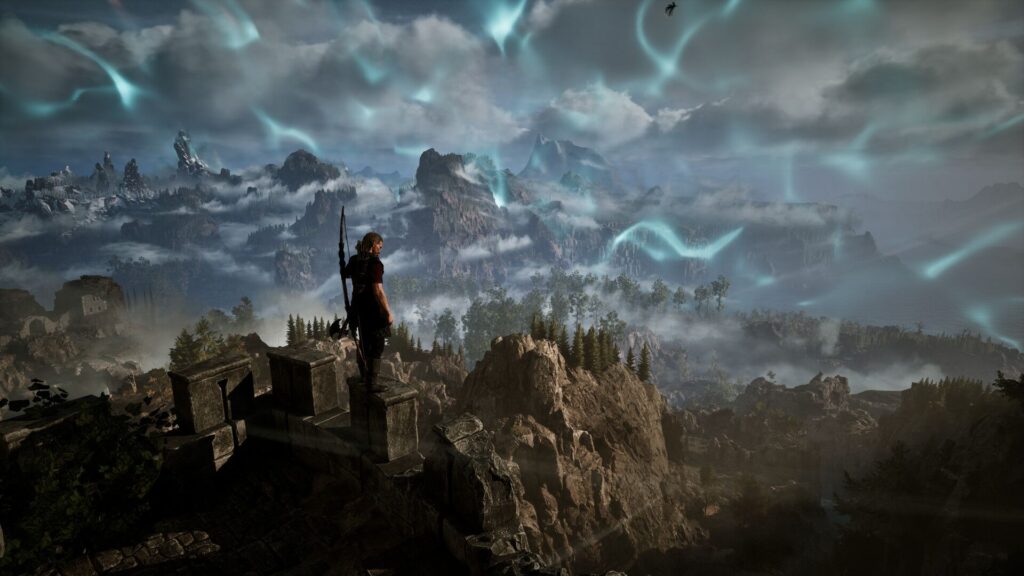
Beyond softening mechanical edges, Alkimia is also zeroing on expanding the elements which make the original so revered. NPC behaviour is one-such expansion, where their routines and social rules created a living, reactive world in 2001. Notable updates for this modern iteration, combining algorithmic AI and motion capture, include deeper interactions and ambient conversations, more detailed daily routines, and reacting dynamically to shifting weather patterns – they’ll take shelter during heavy rain, for instance.
Refined Lore and Orc Culture
Pushing the immersiveness of Gothic 1 Remake’s world further are refinements to its lore, with a distinct focus on re-establishing Orc culture; an area the studio feels was under-represented in the original game. Working with expert linguists, Orcs now have their own fully-functional language which you can study in-game. Orcish backstory has been fleshed out too, with you exploring their traditions, and motivations for war through cultural insight.
Up to 30% Larger Gameworld
Set in the Valley of Mines prison colony, Gothic 1 Remake is based on the original game’s location but it’s been expanded up to 30% larger. This expansion, however, isn’t so much a case of pushing the border outwards to make a bigger surface area, but the locations within the colony have been iterated upon through extra quests, including camp-specific missions and individual storylines. All in all, approximately 30 hours of extra content will feature, some which the developer has confirmed derives from original ideas that never made it into the 2001 game.
Original Quests Also Revised
In addition to extra content, some of the 2001 game’s original quests have been revised too, with additional plotlines, narrative decisions, and possible outcomes aiming to broaden the scope of the original while simultaneously plugging any plot holes. See, according to the development team, the original game’s story needed reworking due to uneven pacing and narrative gaps. Resolving these issues through mission design should produce a more satisfying experience overall.
Again, You’re The Nameless Hero
Whilst the narrative possibilities have been broadened, you’ll still embody the same nameless hero as the original game. However, gracefully, the overly-talkative character you control in the teaser has been dropped in favour of a more serious persona. You’ll start untrained, without skills, and with no idea where anything is, mirroring the refusal to hold your hand as you grow accustomed to the world in the 2001 original. The protagonist’s perceived lack of identity is key to establishing immersion. It’s a core feature of the original which Alkimia are right to revert back to after the teaser’s aesthetic changes.
Sprawling Narrative Branches
The remake is set to follow the same core plot as the original. However, the developers are broadening its scope through a greater concentration of branching storylines. Hinging on your faction allegiance, specific quests and side-character studies will be available, presenting diverging paths which you can follow to their own conclusions, although each branch will eventually re-converge. Furthermore, your chosen faction influences playstyle through training, weapon access, and magic, becoming a cornerstone of mid-to-late game progression.
Modernised Combat System
If narrative and progression showcase the remake’s approach to refining the old, its modernised combat systems, instead, represent a revamp into something new. Directional attacks demand precise timing, specific button inputs trigger combos, and active blocking and parrying systems ensure a streamlined flow to encounters. Updating the original’s combat, the focus now seems to be on skilful timing, although the tactical, high-stakes difficulty appears present; early on, at least, you’ll not want to find yourself outnumbered.
Combat Progression Via Training
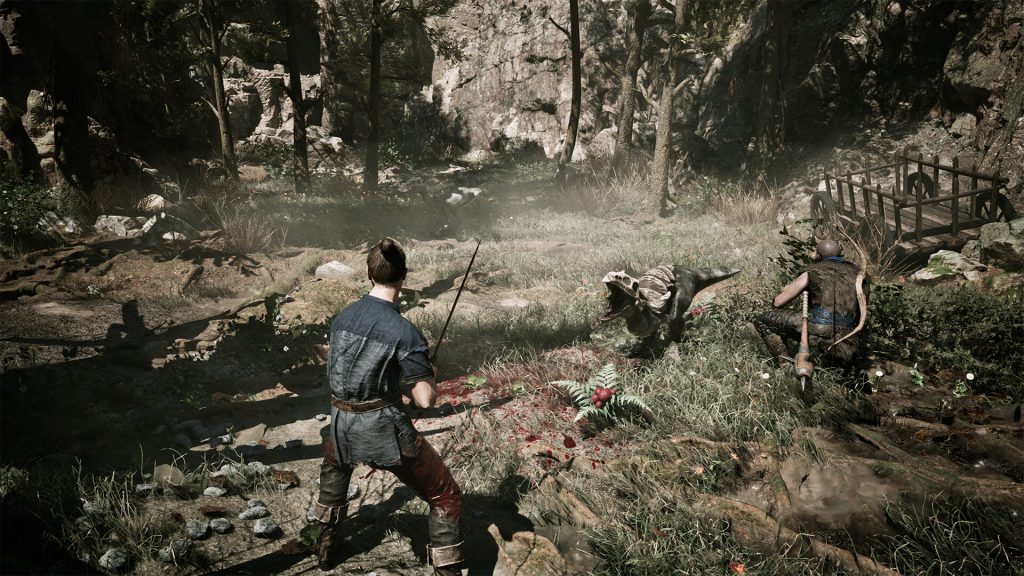
Unlike most modern RPGs which require you to spend XP on buffs for skills and abilities, Gothic 1 Remake continues the original’s progression philosophy, whereby you’ll need to seek mentorship if you want to increase your fighting capability. Trainers are located in camps, and you’ll need to spend Skill Points to learn their abilities. As your capability grows, your combat animations will also evolve, where clumsy sword swings progress to powerful motions.
Reforged Armour System
Armour in Gothic is connected to faction identity, and this characterisation is maintained in the upcoming remake, albeit with new customisations and augmentations. Most armours in the remake cannot be bought from traders, but collected once you’ve aligned with a certain camp. New armours are unlocked as your rank within the faction increases, too. Wearing specific armours influences how NPCs react to your presence, but from what we currently know adding stat-tweaking upgrades such as fire buffs or magic protection won’t affect how others perceive you.
All-New Camerawork
Gothic 1 Remake also introduces all-new camera features to modernise the game’s presentation as well as its mechanics. A dynamic conversation camera shifts perspectives during NPC interaction, plus adjustable field of view and optional target lock-on allow you to tailor the action to your own comfort level. If you’re not a fan of the new over-the-shoulder view, you can choose to play the game from directly behind the character via the classic camera preset.
Unreal Engine 5 Brings Modern Tech
Gothic 1 Remake is being built in Unreal Engine 5, meaning the studio is able to take advantage of dynamic global illumination, photogrammetry surfaces, and lifelike facial animations. Yet, conversely, the developers are also using this modern tech to retain the original game’s visual grit and degradation.