

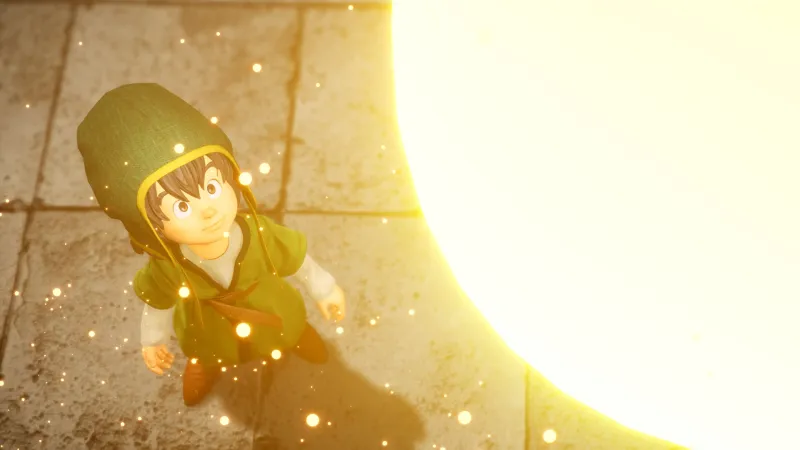
Dragon Quest VII Reimagined is the second time Square Enix has remade the original Dragon Quest VII, which launched in the U.S. on PlayStation in 2001. The first remake happened on the Nintendo 3DS back in 2016, and while it featured considerable visual upgrades, it was by and large a faithful remake of the original. Reimagined is faithful in some respects, but Square Enix has been very clear that it’s meant to be a more streamlined way to play through the 100-plus-hour story of Dragon Quest VII, and it does so by streamlining the main scenario to take considerably less time to complete.
The team is also doing some interesting things in combat to bring the play clock down a bit, but for this feature, let’s dive into how Square Enix is reshaping the story of Dragon Quest VII to be more digestible. Contrary to what you might think, the Reimagined team didn’t start by figuring out what to cut.
Streamlining
“We didn’t really have specific discussions about which parts we wanted to remove from the game,” Reimagined lead scenario writer Sayaka Takagi tells me within Square Enix’s Shibuya, Tokyo, offices, a day after I played through roughly two hours of this remake. “We actually never had any discussions, or like proactive discussions at least, about which parts we wanted to remove from the game, but we did have an extensive discussion about which parts we wanted to keep in the Reimagined version.”
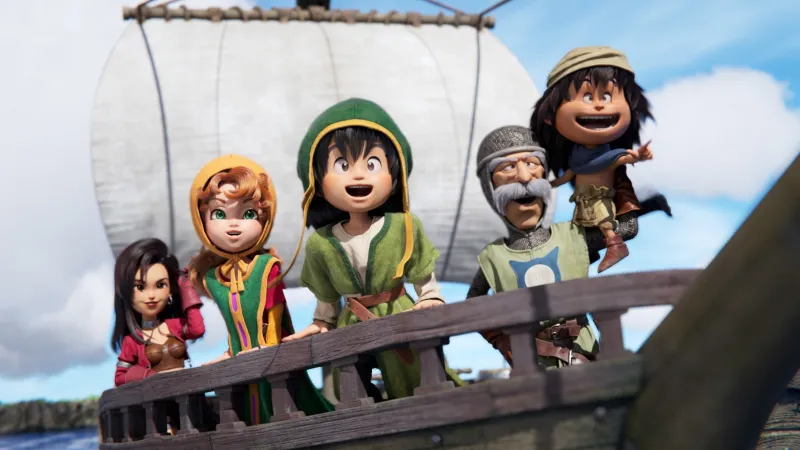
Takagi says one of the big themes of Dragon Quest VII’s story is how it depicts these characters – like Hero, Prince Kiefer, Aishe, Maribel, Ruff, and Sir Mervyn – as facing significant adversity. “But another core theme of the story is that it also portrays the humanity of people in its characters, so with these two core elements in mind, we tried to understand all the essential stories of Dragon Quest VII that we wanted to keep.”
If you haven’t played a Dragon Quest VII version before, the game certainly has an overarching story, but it’s divided into subplots or arcs, if you will. Those “essential stories” Takagi is referring to are the game’s various arcs and how they weave in and out of the main story. With this in mind, Takagi and the team asked other staff members developing the game and throughout Square Enix to lay out their ideas, favorite story moments, and more. “There were a lot of people saying, ‘When I was playing this as a kid, I didn’t really understand what the story was,’ or, ‘I don’t really understand what the themes are, but for some reason, it’s stuck in my head because it’s very memorable,'” Takagi says. “So we laid out a lot of them, a lot of these story moments that fit this description, that criteria, and worked toward keeping those stories in the Reimagined version.”
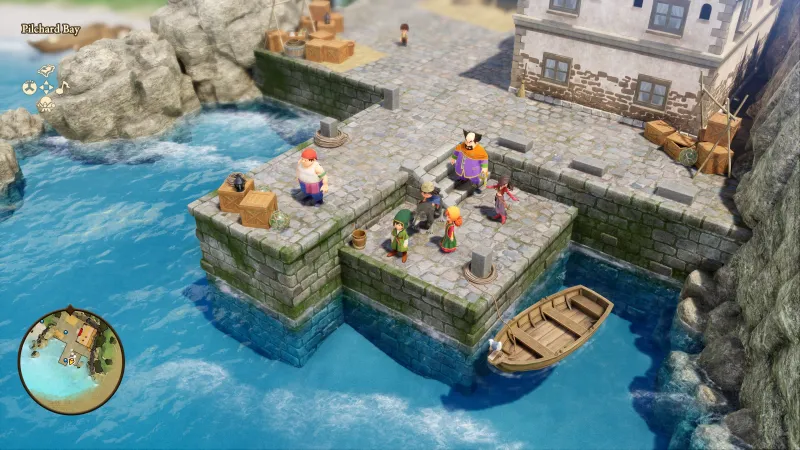
She adds that in this process, the team also identified many story moments that didn’t align with Square Enix’s vision for Reimagined. Narratively, that vision includes giving players some choice in determining how they tackle the story of Dragon Quest VII. In the original release, the island-hopping story is quite linear, but in Reimagined, players have some options to shape which direction they go.
“They get to choose which island they want to go to next, and in the original release, it wasn’t really like that; the story moments were dependent on the order,” Takagi adds. “[Because of the original’s fixed story order], some of the story moments didn’t make sense if we were to keep that in Reimagined […] because in the Reimagined version, we allow players to choose which story they want to move forward with.” Those story moments that didn’t make sense were lowered in priority and eventually cut from Reimagined.
Players can actually see a new, never-before-seen conclusion as a result of these new choices present within Reimagined’s scenario, too.
Rebuilding
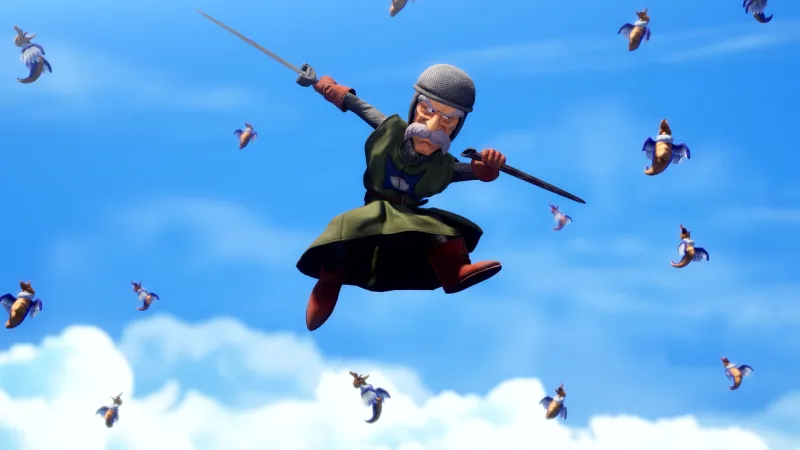
All this said, Square Enix tells me the core of Dragon Quest VII’s story remains intact in Reimagined. In fact, Takagi says the scenario is the one piece of Reimagined that wasn’t built from the ground up.
“While our goal was to reimagine everything and revamp everything from the ground up, […] it was never our intention to put forth significant changes to the story from the original work,” she says. “Obviously, we wanted to respect and honor the original work, and we wanted to kind of maximize how amazing it was. So yeah, we remade everything from the ground up, but as for the story, it was more like rebuilding, taking it piece by piece. We never started from zero.”
I ask if that means putting the original script on a desk and taking what the team likes and leaving behind what it doesn’t, to which Takagi says no. “It wasn’t really like putting the original dialogue or original scenario side-by-side and going off of that,” she says. “What we did was we started with the overview of the plot – the shorter version of the entire scenario of Dragon Quest VII – and laid out some ideas of what we could do to make the story more interesting.”
She says it was like creating a puzzle that the team then had to build, and it did so by switching up the order of story sequences, rewriting dialogue, reshaping plot points, and more. Each time it made a change —like switching the order of a story sequence — it required the team to examine how that affected dialogue and other aspects of the scenario, which led to cascading adjustments.
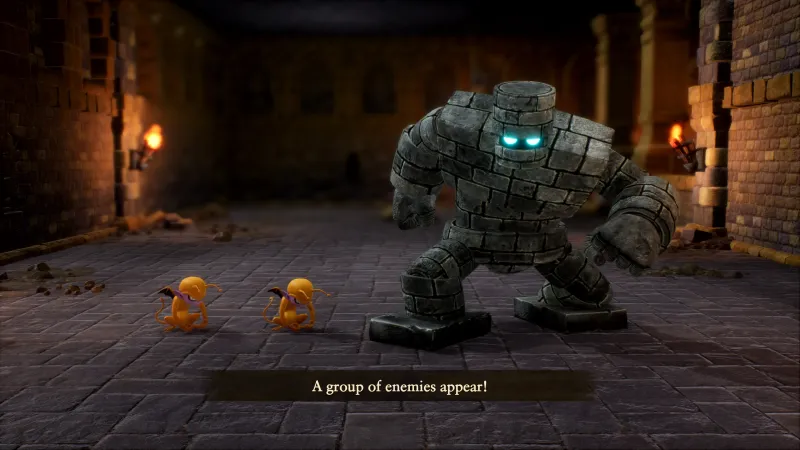
I try throughout this conversation to get some specifics, but Square Enix largely keeps its cards close to its chest. However, Reimagined producer Takeshi Ichikawa, who you can read more about here, tells me one key thing: the first battle in the game will arrive considerably faster.
“The amount of time it takes to get to the first battle in the game is much shorter this time around,” Ichikawa says, as we both joke about how it takes far too long in the original.
Fortunately, we don’t have to wait long to learn specifically how streamlined the story actually is, because Dragon Quest VII Reimagined launches on February 5, 2026, on PlayStation 5, Xbox Series X/S, Switch 2, Switch, and PC.
In the meantime, check out this article breaking down everything in the Dragon Quest VII Reimagined issue of Game Informer, and be sure to subscribe here if you haven’t yet so you can access the Dragon Quest VII Reimagined cover story, our deep dive into Dragon Quest history with creator Yuji Horii, and so much more. Here are some other stories to check out:
- Dragon Quest VII Reimagined Will Have A New Never-Before-Seen Conclusion
- Who Is Takeshi Ichikawa, The Producer Of Dragon Quest VII Reimagined?
What story elements of Dragon Quest VII do you hope remain in Reimagined? Let us know in the comments below!

This sounds like a fascinating look at how Square Enix has reimagined Dragon Quest VII! It’s always intriguing to see how classic games evolve while retaining their core essence. Excited to see how the streamlined story enhances the overall experience!
to see how classic games can be updated for modern audiences. The streamlined story really helps to enhance the pacing, making it more engaging for new players while still honoring the original. I’m curious to see how the changes affect character development throughout the game!
I completely agree! Streamlining the story makes it more accessible, especially for new players. It’s interesting to see how they’ve managed to retain the charm of the original while enhancing gameplay mechanics to suit today’s standards.
I totally see your point! Making the narrative more accessible can really enhance the experience for newcomers. Plus, with improved graphics and gameplay mechanics, it feels like a fresh take that honors the original while inviting a wider audience.
Absolutely! A streamlined story can definitely help new players engage more easily. Plus, it allows returning fans to experience the game in a fresh way, highlighting different aspects of the narrative that may have been overlooked in the original. It’s exciting to see how remakes can breathe new life into beloved classics!
for a more immersive experience without getting bogged down in unnecessary details. It’s interesting to see how modern game design trends are influencing these remakes, making them more accessible for a wider audience.
I completely agree! The streamlined storytelling really helps maintain the game’s pace. Plus, the updated graphics and mechanics make it feel fresh while still honoring the original charm. It’s great to see how remakes can enhance the overall experience for both new and returning players.
Absolutely! The streamlined storytelling not only enhances the pacing but also allows for better character development. It’s interesting to see how these changes can impact player engagement and overall enjoyment of the game.
You’re right! The improved pacing really does help in developing the characters more effectively. It’s interesting to see how these changes can create a more immersive experience for players, making the emotional moments hit harder.