

The 1930s was the golden age for detective fiction. This decade was the most prolific for esteemed crime novelist, Agatha Christie, who published around a third of her crime novels during this era, including many of her most iconic titles. It’s no wonder then that the 1930s is the prime setting for a detective murder mystery.
With Clue: Murder By Death, developer, Cocodrolo Games jumped onto the 30s detective steam train to great effect. Like all good 1930’s murder mysteries, Clue: Murder By Death is set in an isolated, upper-class country estate with an impregnable storm raging outside. The manor house is perfectly characterised with oak-panelled corridors, drawing rooms, libraries and the occasional secret passage to explore. Cut off from the outside world, the circle of characters is made up of the usual suspects; the murdered wealthy aristocrat, his questionably moral family members, the odd shady guest or two, and the gossiping servants.
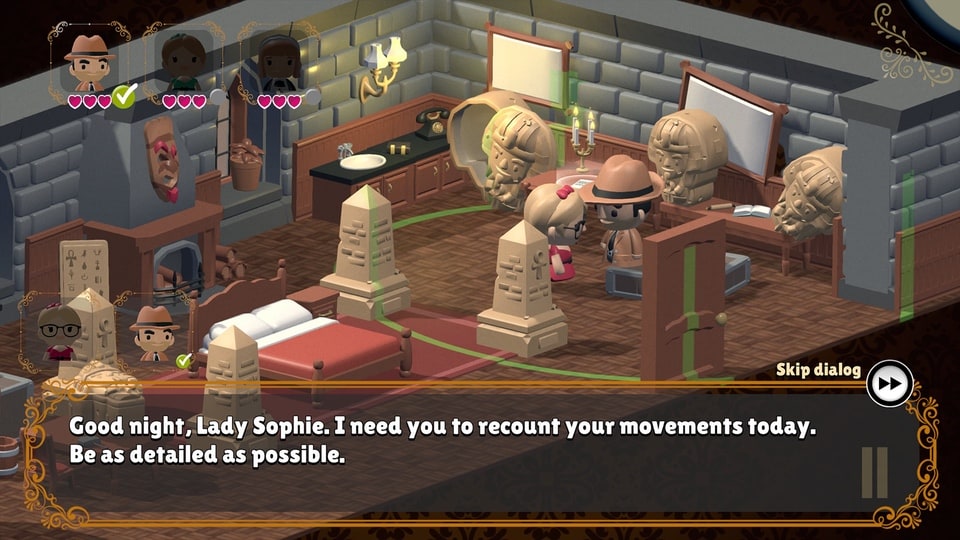
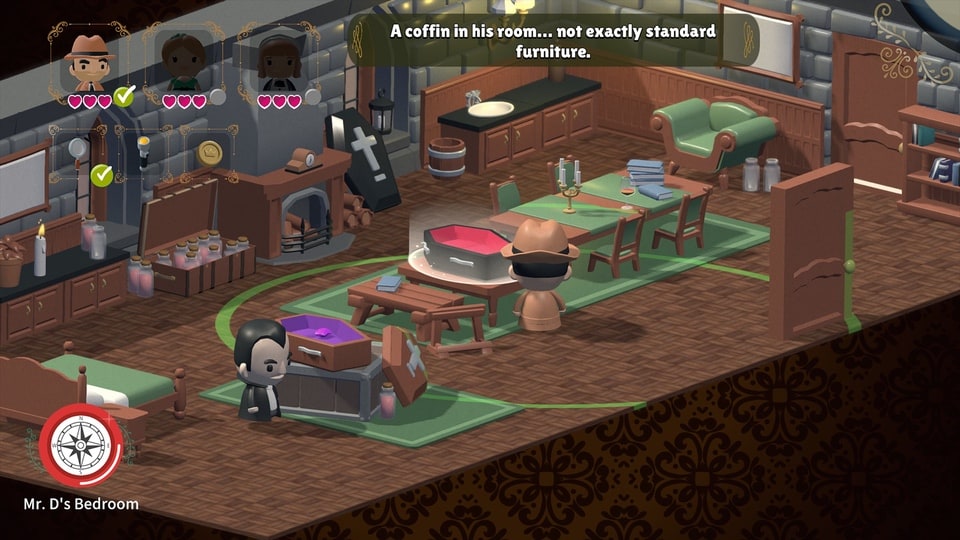
In fact, Clue: Murder By Death isn’t just packed to the rafters with 30’s crime novel tropes, it also pulls in popular trends from other cultural corners of the era, such as Egyptology and the newly popularised Dracula movie. The setting for the game was clearly well researched and planned, making the gamer feel fully immersed in the storyline.
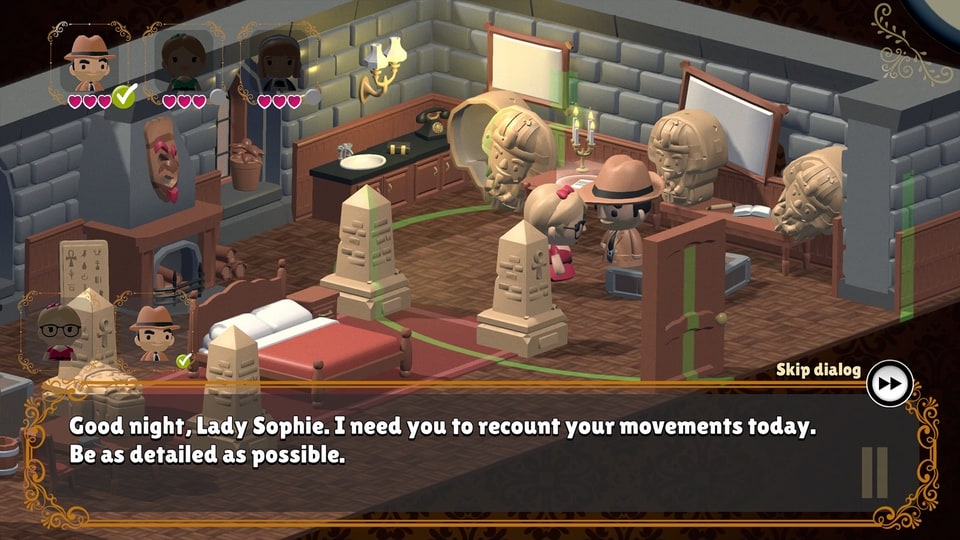
Visually, the game does a nice job of reflecting the popular board game it is based on. Your detective moves from place to place, one room at a time, investigating objects and chatting to suspects. The characters are designed to look like playing pieces, and while their lack of features can sometimes make it hard to tell who’s who – why are there so many indistinct servants?! – the overall look has a welcomingly cute, cartoony appeal.
But what of the gameplay itself? Clue: Murder By Death has a notable two-hour real-time playthrough feature. A thrilling idea on paper, but just a bit awkward in reality. Once you start the game, the timer begins to tick down. From here, the player must complete the game within two hours. Want to eat your tea? It’ll have to wait. Need to put your kid to bed? They know where their own toothbrush is. Come back after two hours is over and the game resets, eliminating all progress you’ve made. There’s no record of anything you’ve discovered or unlocked in that time – you’d better have a good memory – and you have to start all over again from the beginning. The first time this happens is pretty galling, but from then on, it’s just exhausting.
The great irony behind the two-hour real-time feature is the playthrough pacing that goes alongside it. As the timer starts to count down, you prepare to jump into the storyline in a race against time to find the killer, only to find that your detective moves at less than a snail’s pace. Suddenly, the room-by-room exploration becomes tedious as your character pitter-patters along a useless stretch of corridor just to move into the loading screen for another useless stretch of corridor. In fact, nearly every room you visit is preceded by a blank screen, breaking the flow and cause a feeling of disconnection.
As you begin to unlock each section of the map, the dawdling pace starts to grind. You finally find an object that will help to solve a clue on the other side of the manor, but the map is so huge and you’re so darn slow, there’s no way you’re getting back over to that side of the house anytime soon. Forcing you to undertake the journey, knowing full well you’ll have little time left to proceed much further, forcing you to do it all that boring walking again on your next playthrough. The developers clearly spotted this unfortunate setback and included the option to add two of the suspects to your detective team. Although this lets you spread your resources around the mansion, it doesn’t do enough to reduce the tedium of character walk-speed and room-to-room loads.


This sounds like a fascinating exploration of a classic genre! The 1930s truly had some incredible contributions to detective fiction, and it’s great to see reviews that highlight those gems. Looking forward to reading more about it!