

It has been no secret that the gaming industry has been struggling with budgets that keep growing larger and larger. In a social media post, Bloomberg’s Jason Schreier has noted that modern budgets for AAA games tend to hit, and sometimes even go over, the $300 million mark.
While he hasn’t been able to corroborate precise budgets for AAA games, he noted that the current state of the industry, which is seeing many lay-offs and studio closures, could be explained by these incredibly-high budgets.
“Exact budgets of video-game productions can be tough to corroborate (more transparency from publishers would be nice!) but the numbers I’ve heard floating around AAA game dev these days are $300 million or more — sometimes much more! — which I think helps explain the current state of the industry,” wrote Schreier on BlueSky.
He went on to specify that these figures only apply to games being made in the US and Canada. Other regions might see large games despite smaller budgets depending on their market conditions. Along with this, he has also noted that these budgets tend to almost entirely revolve around developer salaries and potential overhead costs. Executive compensation isn’t considered a part of these budgets, since the money there largely tends to involve company stocks.
Back in July 2025, former PlayStation executive Shuhei Yoshida had also made a note of these massive development budgets. He spoke about how companies used to feel that spending more money on things like “beautiful graphics and realistic-looking characters” would lead to more time spent by buyers in a game.
“It may be counterintuitive but, you know, if we spent enough money to make the big game, you know, the chance of success felt increased because everybody wanted to play bigger games [with] more beautiful graphics and more realistic-looking characters, more gameplay hours,” said Yoshida.
However, this strategy had a major downside, with fewer and fewer small-scale games being greenlit thanks to budgets being taken up with major sequels or blockbuster titles. Yoshida also confirmed that games have been more expensive to develop during the PS4 and PS5 console generations than they had been in the past.
“I saw some analysis or estimate of one same franchise released during PS4 era and PS5 era generation double the budget, and that has reached… the point that we cannot recoup this investment,” said Yoshida. “So this generation, PS5 generation, I think is the first time that the industry really, truly believes that you know there has to be something that has to be done.”
Looking outside of US and Canada, it isn’t difficult to spot games made on tighter budgets. Last year’s award-winning RPG Clair Obscur: Expedition 33, for instance, was made with a budget of less than $10 million. This, developer Sandfall Interactive noted, was thanks to it avoiding an open-world approach and instead focusing on core RPG gameplay.
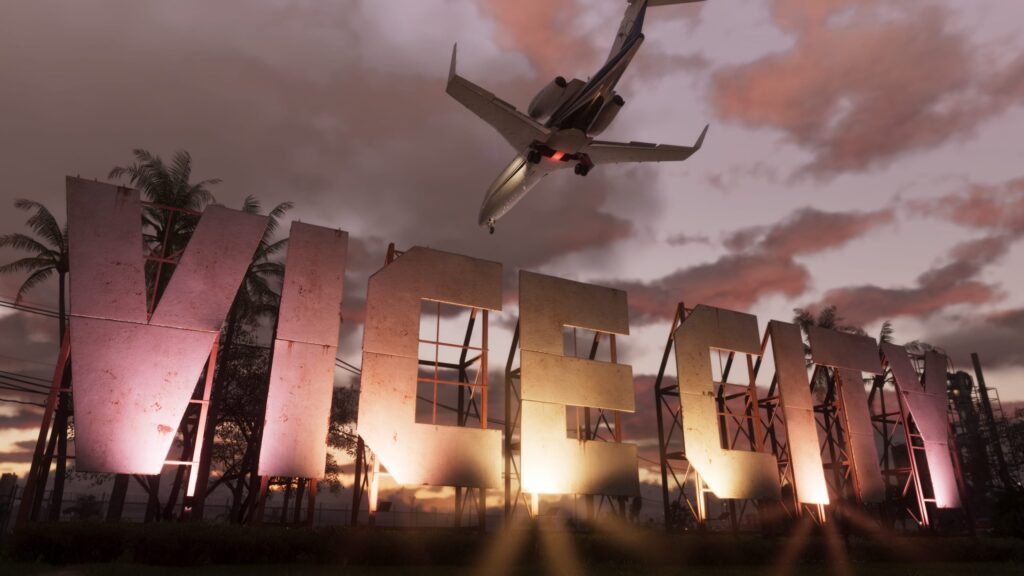
On the other side of the spectrum, Grand Theft Auto 6 will likely be a massive game in more ways than just gameplay. Analysts believe that the title’s development budget will exceed $1.5 billion by the time it comes out on November 19th.
Exact budgets of video-game productions can be tough to corroborate (more transparency from publishers would be nice!) but the numbers I’ve heard floating around AAA game dev these days are $300 million or more — sometimes much more! — which I think helps explain the current state of the industry
— Jason Schreier (@jasonschreier.bsky.social) 2026-03-25T20:38:45.547Z


It’s interesting to see how the gaming industry is evolving with such high budgets. This trend certainly reflects the increasing complexity and expectations from gamers. It will be fascinating to see how this impacts game quality and innovation moving forward.
It’s definitely a fascinating shift! The increasing budgets could also lead to more innovative gameplay and storytelling, as developers have more resources to experiment with new ideas. It’ll be interesting to see how this impacts indie games too, as they often thrive on creativity within tighter budgets.
Absolutely, it’s interesting to see how these higher budgets might push developers to take bigger creative risks. With more funding, we could see a rise in experimental gameplay mechanics and storytelling techniques that wouldn’t have been possible before. It’s an exciting time for the industry!
You make a great point about risk-taking! It’s also worth considering how these inflated budgets can affect the types of games that get greenlit, possibly leading to fewer indie projects getting the spotlight they deserve.
impact innovation in game design. With such high stakes, developers might lean towards safer, tried-and-true concepts instead of exploring more creative or experimental ideas. It’s a tricky balance between financial security and artistic freedom!
That’s a great point! It’s true that high budgets can lead to risk aversion, but they can also push developers to innovate in new ways, like incorporating advanced technologies or unique storytelling methods. Balancing safety with creativity will be key in this evolving landscape.
for greater innovation in game design. With so much at stake, developers might feel compelled to take bold creative risks to ensure their games stand out in a crowded market. It’ll be interesting to see how this balance plays out in future releases!