
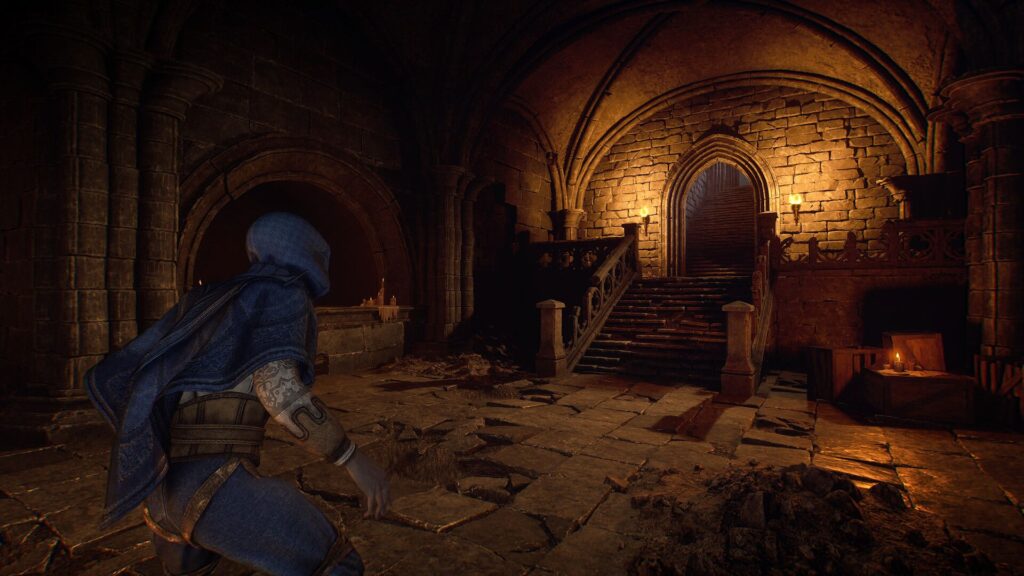

Open-world survival games are far from a new concept today, and we’ve seen studios of all sizes take the genre on from every conceivable angle. With Vampires: Bloodlord Rising, Mehuman Games doesn’t so much try to reinvent the wheel as it does remix, refine, and build on ideas we’ve seen work before. Not all of these ambitions land right away, though, and as an Early Access release, it’ll likely take time for this vampiric take on the survival formula to fully come together.
Mehuman’s entry sets itself apart thanks to its third-person camera, emphasis on automation through minions you will bring to your side, and a more involved social system where you actually get to walk among regular human beings instead of only seeing them as prey. In a little over seven hours of solo play, I got a solid look at several of Vampires: Bloodlord Rising’s core systems.
While many survival games tend to treat their stories as afterthoughts, it matters here. Along with providing the framing device of you and your fellow vampires being forced into hiding when the Inquisition invades, only to awaken years later and start reclaiming the land, we also get a good idea about our protagonist—Dragos—Dragos—who wants little more than to fulfill the wishes of his missing master. The earlier parts of the story also provide some great objectives that essentially serve as the main tutorial.
Sangavia feels like a mash-up of classic dark fantasy and gothic imagery. It is an era of castles, where villagers largely live in stone houses, and where the Inquisition is more than happy to take over a village to ensure that the land is cleansed of vampiric filth. While far from an original setting, Sangavia is still fairly fun to explore thanks to its surprisingly varied biomes. It starts you out in an idyllic zone, but before long you’ll need to expand your influence into nearby regions, each of which represents a specific biome. Hell’s Chasm, for instance, is a fiery land full of minerals to mine. The Fey Marshes, on the other hand, are a swampy zone full of alchemical ingredients.
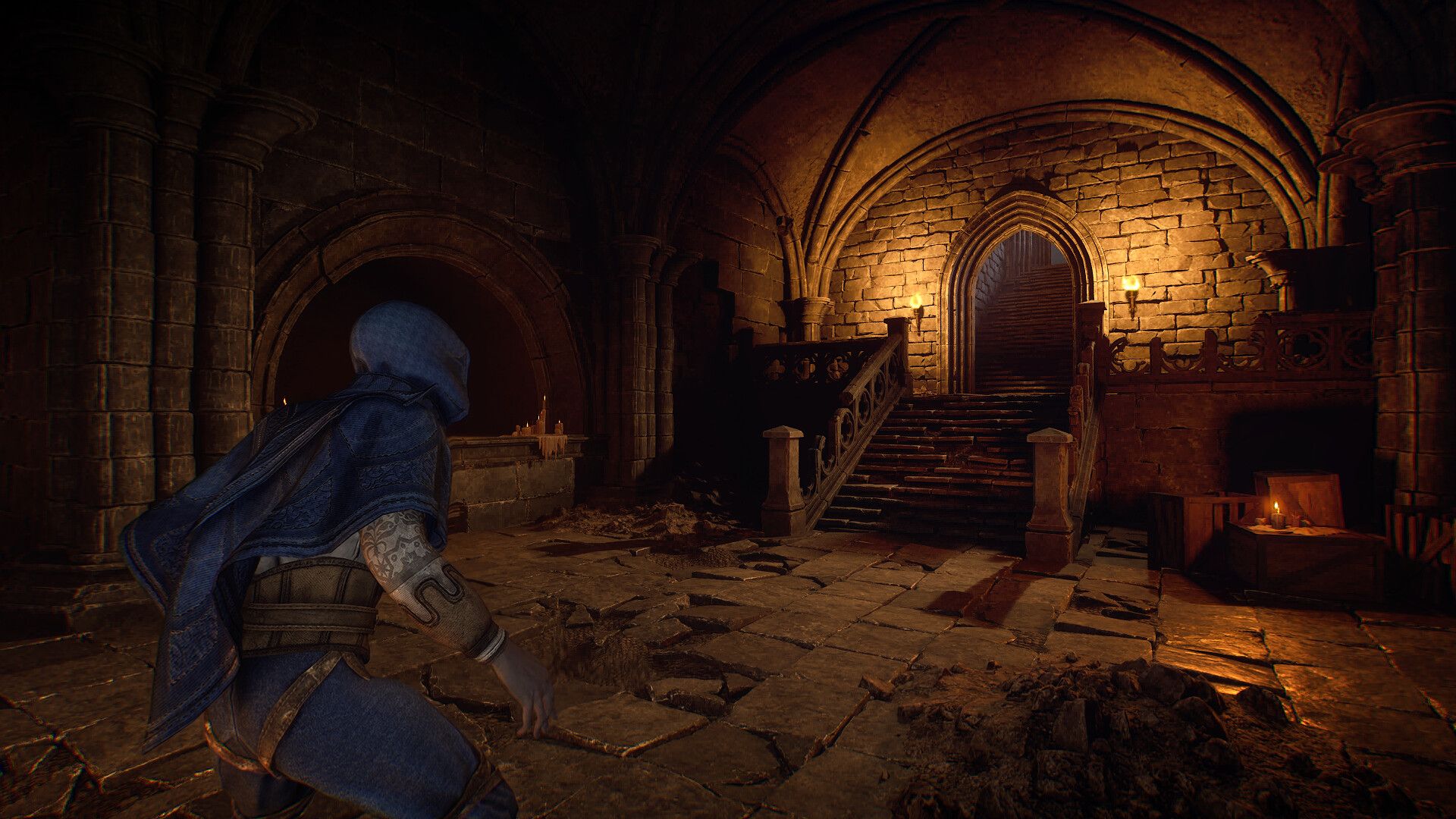
“Sangavia feels like a mash-up of classic dark fantasy and gothic imagery.”
The world is surprisingly large for an Early Access release. Thankfully, however, traveling around never feels tedious thanks to a plethora of fast-travel points in the form of stagecoaches, as well as your own high movement speed. Owing to its size, the world can sometimes feel a bit sparse, and while there are plenty of points of interest dotted all over the map, they also tend to be separated by long stretches of dull scenery. These points of interest are also little more than camps of Inquisitors that you can fight, with your reward being skill points. There’s also a day/night cycle that feels essentially meaningless. You can return to your castle at any moment by holding down a button, which means that you’re never really in danger of being caught out while the sun is shining. That’s convenient, because being out during the day rapidly drains your health and blood reserves until you die or find shade.
Progression is quite gradual, and when you venture into these new zones is left up to you. The Inquisition has cast a spell that blocks you from going to any of these zones at the beginning, and only by continuously feeding your own castle’s core—strongly implied to be your master—can you start slowly banishing this spell, area-by-area.
While you’re at your castle, however, there are still plenty of chores to take care of. You need shelter from the sunlight, for example, which means building a coffin to sleep in. You also need to get your hands on basic crafting materials like lumber, limestone, clay, and mud, which can then be used to create more ambitious structures. The general UI/UX for crafting feels fine. While it does take a bit to get used to, none of the crafting menus feel out of place, and it starts feeling quite intuitive once you’ve got a handle on things and a vision for how your castle should look. While you can take care of all of these chores yourself, Vampires: Bloodlord Rising provides a more fun solution: minions.
At any moment, you can head into town to mingle with humans. As long as you’re wearing your “Noble” attire, they won’t run at first sight, and will even go as far as paying you a nightly tribute. Chatting with townsfolk quickly fills your journal with rumors about potential candidates that you can turn into vampires. These rumors reveal special skills or affinities they might have, as well as any possible bad habits, like stealing. Once you’ve picked an appropriate target and transformed them, they will join you at your castle awaiting orders.
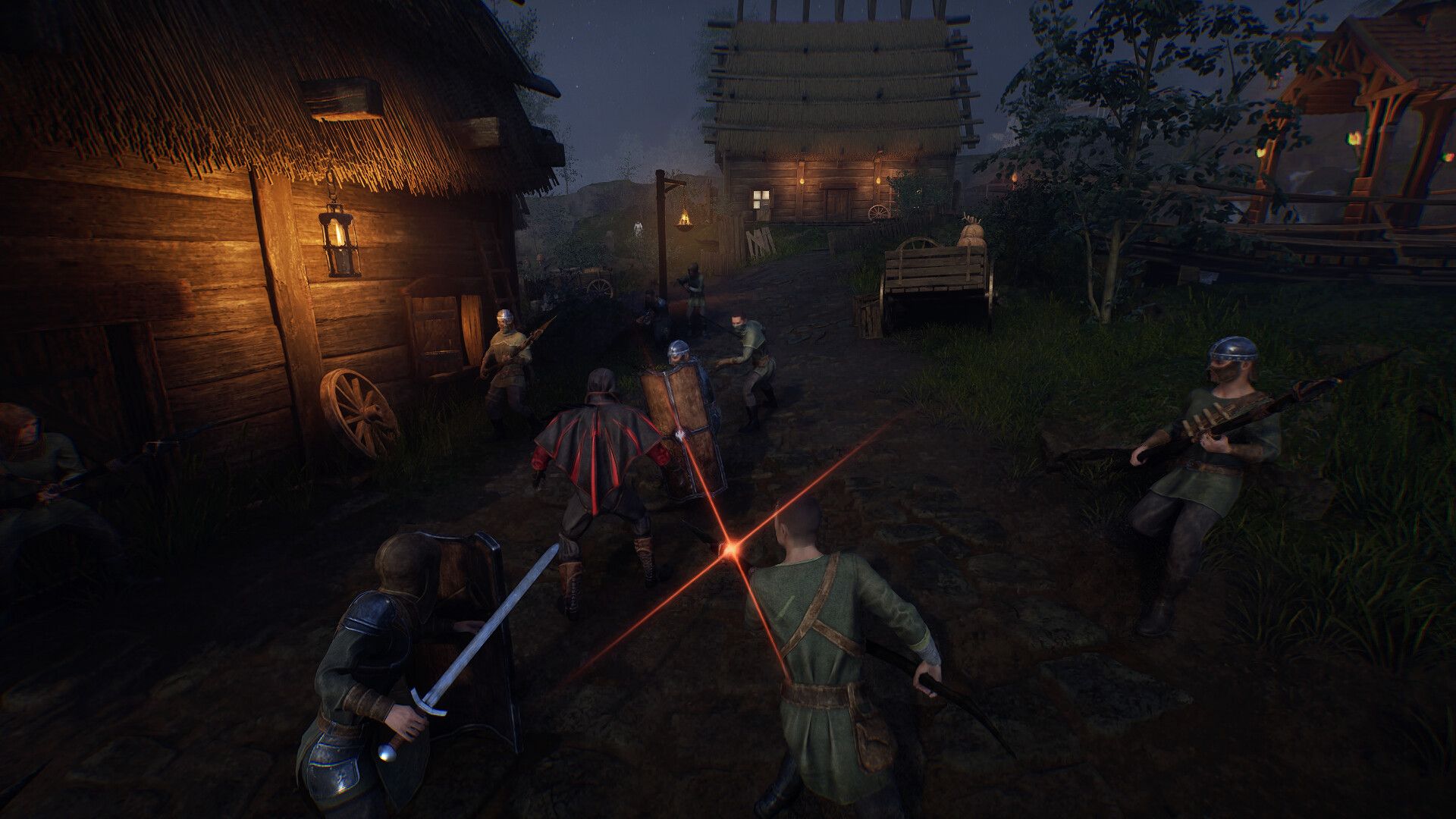
“As long as you’re wearing your “Noble” attire, they won’t run at first sight, and will even go as far as paying you a nightly tribute.”
Once I had two minions running—one gathering materials and another refining them at a workbench—I noticed just how much waiting the game asks of you. Especially early on, where you don’t have access to tools and other equipment that could speed your minions up, they tend to work at a glacial pace. Adding more minions can actually compound the problem, creating bottlenecks that weren’t there before. For instance, if your gathering minion can’t find mud or sand, your clay production will grind to a halt, which in turn means that any building blueprints you’ve laid down aren’t getting built. This also has the annoying side effect of flooding the top-left corner of your screen with messages about how one of your minions can’t find or make something.
Even your own personal crafting-based progression feels quite bottlenecked. You don’t get many options for armor upgrades for several hours, even if you’ve been actively exploring as much of the world as you can. Your only real choice, ultimately, is to rely on the skill point-based progression system, which also feels like a mixed bag. While there are several interesting abilities throughout the skill tree, getting to those nodes requires a fair bit of grinding, and in the meantime, you will be stuck with minor stat gains like increased health or blood capacity.
Speaking of blood—you are a vampire after all—the need to feed doesn’t ever feel particularly pressing in Vampires: Bloodlord Rising. It drains slowly over time, and you’re given the choice of feeding on humans, who will top you up very quickly at the risk of witnesses alerting the Inquisition to your presence, or on animals. The latter, depending on their size, can be a surprisingly sustainable way of maintaining your blood reserves, and offers little risk or effort beyond chasing down a deer or rabbit. The fact that blood doesn’t feel like a resource you have to constantly worry about maintaining is welcome, since a lot of your progression to other zones is blocked off by the blood reserves of your castle’s core.
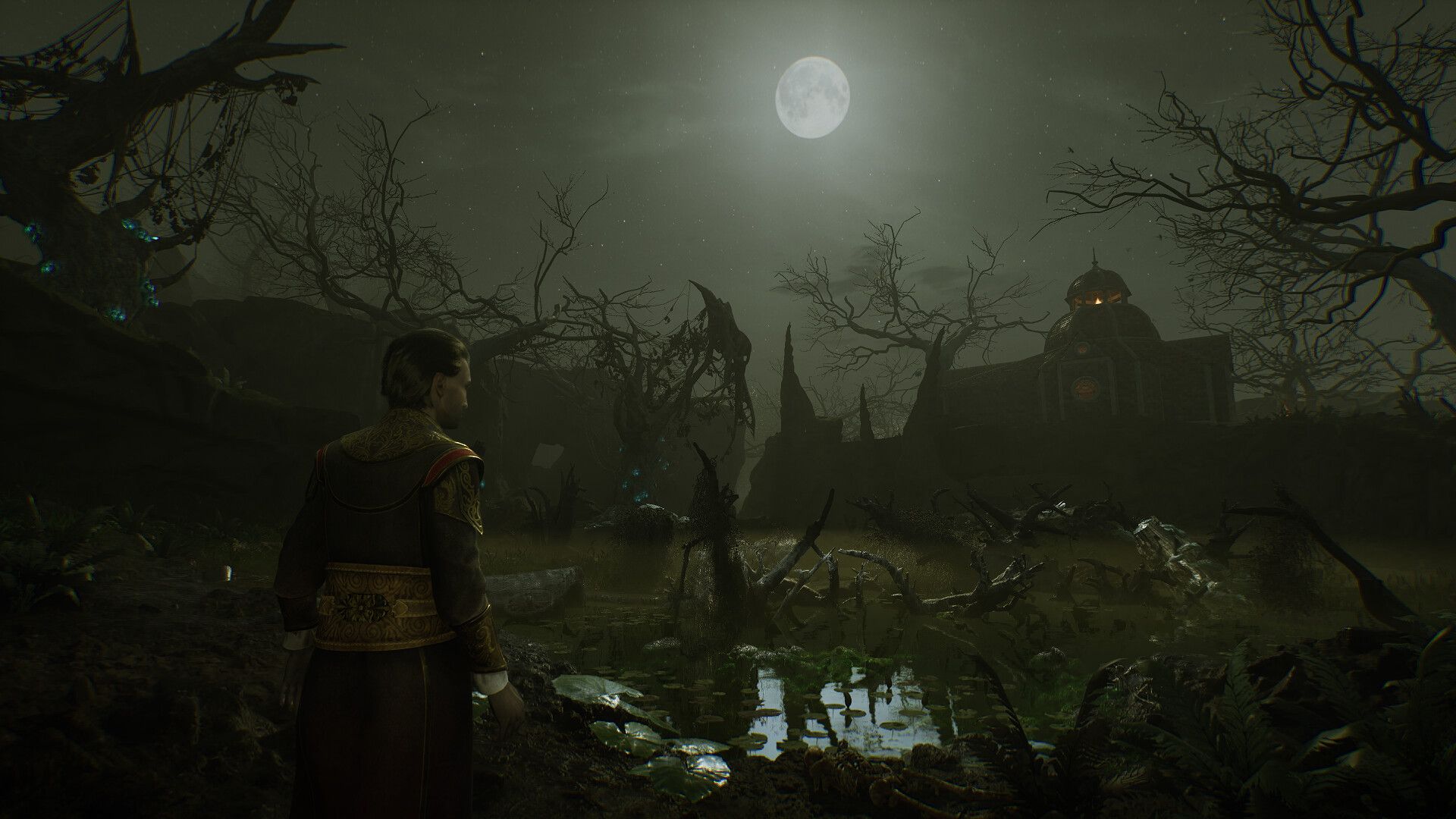
“Even your own personal crafting-based progression feels quite bottlenecked.”
Combat is one of the areas where the lack of polish is most obvious. Fights often devolve into spamming attack strings, punctuated by the occasional counter or dodge. This simple combat system starts feeling even jankier if the terrain you’re fighting on is uneven, with enemies being unable to climb down a rock, and even my own character often slipping off surfaces mid-combo. Beyond packs of Inquisitors, encounter variety is thin right now. For variety, one of them might even be heavily-armoured.
Visually, Vampires: Bloodlord Rising is a mixed bag. While the environment art is often great, and vistas look gorgeous from a high enough vantage point, get up close and you’ll find muddy textures and bland character designs. Even the differences between the biomes don’t really help in this regard, since you are essentially choosing between a bland-looking mountain, or a dull forest, or a green-and-brown swamp. Thankfully, the audio has been fine throughout, and while far from outstanding, at least voice lines don’t randomly clip out mid-sentence.
In its current state, Vampires: Bloodlord Rising can offer anywhere between 10 and 20 hours of playtime before the loop starts to feel repetitive. Playing with friends can extend this playtime somewhat, since there is plenty of fun to be had in collaboratively designing and building a castle. However, the lack of interesting boss fights, along with the grindiness of its survival elements, makes it difficult to recommend just yet. There’s definitely a strong foundation here, but the game simply needs a lot more polish and content, like boss fights, more enemy variety, and a tighter crafting economy.
This game was reviewed on PC.


This review offers an intriguing look into “Vampires: Bloodlord Rising.” The blend of survival mechanics with an open-world setting sounds promising, and it’s always exciting to see how new games put their unique spin on established genres. Looking forward to seeing how this one develops!
I’m glad you found the review intriguing! The survival mechanics really do add a unique twist to the vampire genre. It’s interesting how the game not only focuses on building but also on the strategic management of resources, which can make each playthrough feel quite different.
Thanks for your comment! The blend of survival mechanics with the vampire theme certainly sets it apart from other games in the genre. It’ll be interesting to see how players adapt their strategies in an open world filled with both threats and opportunities.
You’re welcome! The unique twist of incorporating building elements alongside the vampire lore really adds depth to the gameplay. It’ll be interesting to see how that influences player strategies in the long run!
Absolutely, that blend really sets it apart! The crafting system seems like it could lead to some interesting strategies for survival. It’ll be exciting to see how players adapt their building styles to enhance their gameplay experience!
You’re right, the crafting system definitely adds a unique layer to the gameplay! It’s interesting how it encourages players to strategize not just for survival but also for building their own vampire empire. I’m curious to see how the community will adapt to these mechanics over time!
I completely agree! The crafting system not only enhances survival but also encourages creativity in how players approach challenges. It’s fascinating to see how it can influence strategies in an open-world setting!
Absolutely! The crafting system really does open up a lot of possibilities for players to experiment with different strategies. It’s fascinating how it can shape the gameplay experience, making each player’s journey unique.