
Blades Of Old

HIGH ICE-Q 2.0 brings noticeable improvements to star player movement.
LOW There’s just not enough here to justify a full-price upgrade.
WTF How is goaltending still this random?
Here we are again, another lap around the rink. I’ve been reviewing NHL titles for GameCritics for so long that I can practically set my watch by EA’s annual hockey release. As such, I decided to spend more than the usual amount of time absorbing the title. Users may have noticed the game has been out for some time now, but I felt a deep-dive was called for.
Well, after a wealth of hours with NHL 26, I’m still left with a familiar feeling. The game is solid, no question. But calling it a true evolution feels generous when it plays more akin to a polished update.
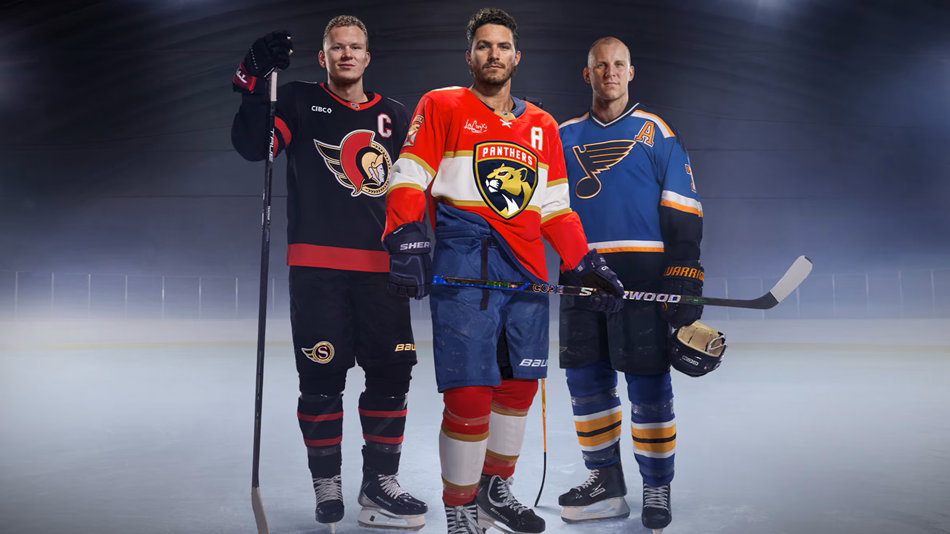
The centerpiece this year is ICE-Q 2.0, EA’s upgraded physics and intelligence system that now pulls from official NHL EDGE tracking data. The idea is to replicate how real players actually move on the ice, whether that’s McDavid exploding into open space, Ovechkin winding up for one of his still-amazing one-timers, or Panarin patiently reading a developing play, waiting for his moment to strike.
When it works, it’s genuinely impressive, even to these jaded eyes. Star players do feel distinct in ways they haven’t before, and transitions from defense to offense flow more naturally. Skating has an organic quality to it now, passes carry believable velocity, and body checks finally have satisfying weight behind them again.

Here’s the catch, though. For every sequence where ICE-Q 2.0 shines, there’s another where the illusion breaks, and users are quickly reminded that this is still very much a videogame. Puck pickups still stutter at inopportune times, passes go “elsewhere” for no apparent reason in open lanes, and defensive AI swings wildly between laser-focused and completely checked-out.
The Goalie Crease Control system improves positioning and reactions, but I’m still seeing far too many random goals that have no business getting past an NHL professional. It’s progress, I’ll give EA that much, but it’s not the reinvention they seem to think it is.
Visually, NHL 26 continues to look great on current-gen hardware. The arenas drip with genuine atmosphere, the lighting captures that unique texture of real ice (and more realistic wear, to boot) and player models have more personality than I’ve seen in previous entries. Little touches like jersey flex during movement, reflections on skate blades, and bench animations during stoppages all add up to make the presentation shine.
In turn, the broadcast package feels tighter, though I noticed the audio cycling through the same predictable lines after just a few games. Presentation fidelity has clearly hit a new high for the franchise, but it’s all built on a framework that hasn’t fundamentally changed in some time.

Be a Pro mode gets some attention this year, and honestly, it’s about time. The revamped career system introduces spontaneous story events and gives seasons a better sense of momentum. Dialogue choices feel more dynamic than before, and player progression is marginally less of a grind thanks to tweaked XP pacing. That said, users are still confined to the same “rookie-to-star” structure that’s defined story modes since the dawn of time. It’s still enjoyable, but I keep thinking about how much better it could be with a complete overhaul instead of these incremental nudges.
Hockey Ultimate Team gets restructured with HUT Seasons, which aims to give online play more consequence. Matches now feed into seasonal divisions and milestone progression tracks, rewarding win streaks and consistent play. The interface is more intuitive, onboarding feels smoother for newcomers, and I noticed better online stability. Unfortunately, the core problem persists — microtransactions still dictate how quickly I can build a competitive team, and while the grind is dressed up more attractively than in NHL 25, it’s still the same treadmill fans have climbed for years.
The World of CHEL hub continues serving as the series’ social centerpiece. Loadouts and X-Factors have been refined, matchmaking is more reliable, and there are new customization options to play with. It’s reliable, and regular players will appreciate the consistency.
In terms of gameplay balance, NHL 26 maintains what worked in its predecessor. Skating remains responsive, puck battles can get authentically scrappy, and offensive flow benefits from improved stickhandling animations. But (and regular readers know where this is going) this is still very much the same foundation as the previous five editions, just refined instead of reimagined. Veterans of last year’s release will recognize most of the same rhythms.
The series still nails the fundamentals. The atmosphere is terrific, the on-ice action can be thrilling, and when everything clicks — like when users string together a perfect passing sequence, thread a needle through traffic, and beat the goalie’s weak spot — it’s genuinely satisfying. But those highs are too often surrounded by familiar frustrations and gameplay repetitions that have been hanging around the franchise for years.

EA markets NHL 26 as “the most authentic hockey experience yet,” and that’s not entirely wrong. The physics refinements, data integration, and visual polish make this the best version for anyone who skipped last year. But the improvements are incremental, not transformative. If you already own NHL 25, you’ve seen nearly everything this has to offer… it’s just a little smoother, a little prettier, and a little harder to justify at full price.
Rating: 7 out of 10
Disclosures: This game is published by EA Sports and developed by EA Vancouver. It is available on XBO/X/S, PC, SW2, and PS4/5. This game was obtained via publisher and reviewed on the XBX. Approximately 26 hours of play were devoted to the single-player mode, and the game was not completed. Approximately 9 hours of play were devoted to online multiplayer.
Parents: According to the ESRB, this game is rated E. This is a realistic representation of professional hockey. Some animations and injuries may concern some parents.
Colorblind Modes: Colorblind modes are available in the Game Settings menu.

Deaf & Hard of Hearing Gamers: NHL 26 features subtitles, speech-to-text, and numerous tactile feedback features in all modes. The game is easily playable without sound and is fully accessible.

Remappable Controls: No, the game’s controls are not remappable.

The post EA Sports NHL 26 Review appeared first on Gamecritics.com.