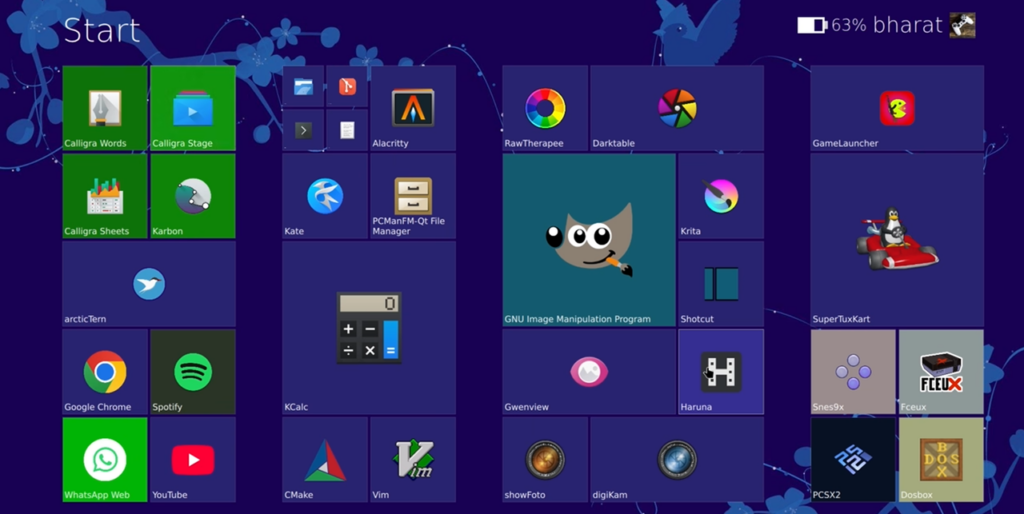

Windows 8 debuted in 2012, introducing desktop users to the blocky Metro design language that had previously worked a treat on Windows Phones and Zunes. However, sans a touch screen, the blocky UI looks cluttered and even feels a smidge claustrophobic on a traditional PC monitor. A lukewarm consumer reception led Windows 8 to drop the blocks from later releases, though some apparently feel a misplaced sense of nostalgia for the funky, chunky interface.
Win8DE is an attempt to ‘revive’ Microsoft’s tile-based interface, but for Linux. Developer [er-bharat] describes the project as “a shell for wayland window managers like Labwc Hyprland” (via Hackaday).
The developer offers a quick video demo via the project’s Github page, highlighting that classic, crowded start menu, an app list, a wallpaper utility, a lock screen, plus onscreen displays for volume and brightness controls.
The only thing this Shell doesn’t have is the ‘Charms’ bar overlay you could bring up by either a keyboard shortcut or mousing over to the right hand edge of the screen. From this sidebar in Windows 8, you could access search, share, and screen casting functions, return to the Start menu, or dive into desktop settings. [er-bharat] chose not to include this little sidebar menu because they always thought it was “useless.”
Now, no matter what our Josh says, I wouldn’t necessarily want this on my gaming rig (or my corporate laptop). However, I can see the appeal of dusting off an ancient tablet and giving it a new lease of life with something like Win8DE.
While we praised the recently wound down Windows 10 for simply not being Windows 8, back in the day we described the Windows 8 beta as ‘brave but flawed.’ Perhaps the OS simply made its debut in the wrong place, at the wrong time.
No, I’m not really convinced by that either—though I also wouldn’t be surprised if a particular substrate of cyberpunk fiction turned to the blocks for a fresh throwback look. Physical hardware interfaces threatening to make your futuristic dystopia seem just a little too cool? What better way to communicate a societal sense of disconnection than an over reliance on dodgy touch screen interfaces!