


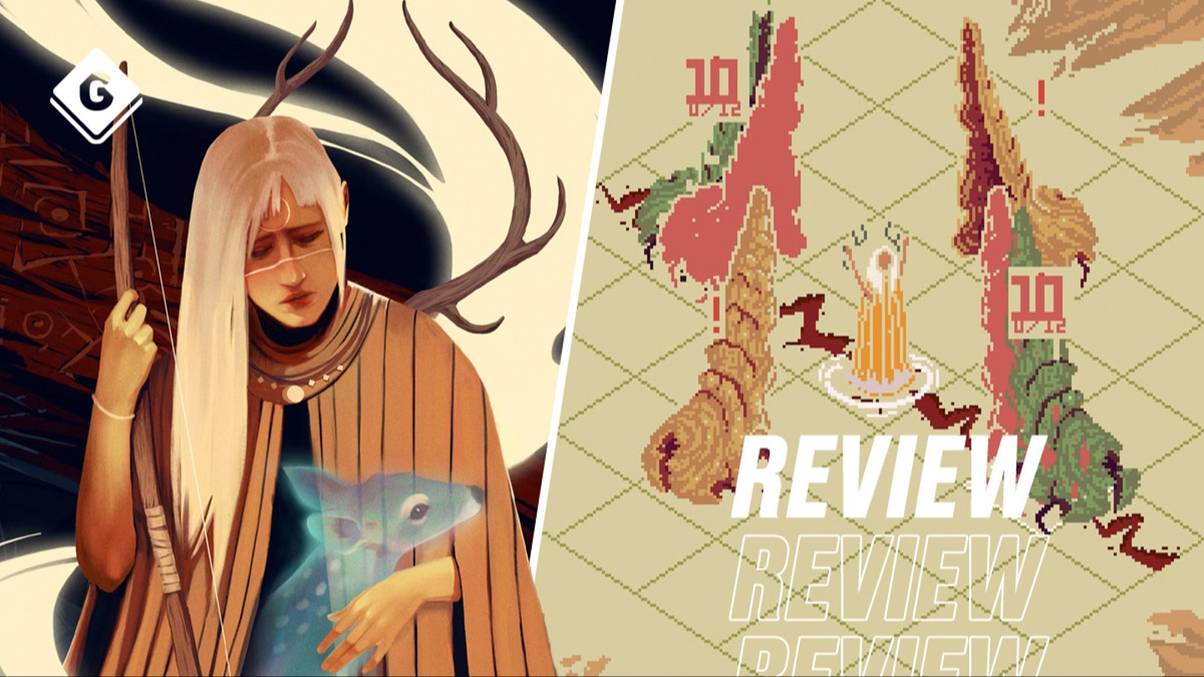
I wasn’t particularly amazed by The Outer Zone’s previous game, Mind Scanners, a game that I felt lacked the substance to tackle the themes it was dealing with, while also having some rather frustrating gameplay elements. But what I liked about the developer’s process was in the way it combined rather opposing genres to make something that was at least interesting on paper.
It’s what made me excited to try the developer’s next game, Death Howl. The game is best described as a “soulslike deck builder”, blending the most notable elements of both genres into an experience that is difficult and deep, but also fair and rewarding. On the surface, I had no idea how you can mash these two genres together in a way that doesn’t feel like a disaster. And yet, I think it does it well.
Set in a mythic land, Death Howl is about Ro, a mother who is pushing through grief and decay in search of her lost son, Olvi. This journey takes her through various different regions, where she must take on powerful opponents as she gets stronger. She achieves this by crafting cards to use in combat, all while collecting rare materials and upgrades. Each of these regions are fairly different in the type of biome they represent, and Ro’s path is filled with all manner of encounters and hazards which prevent her from easily reaching her goal.
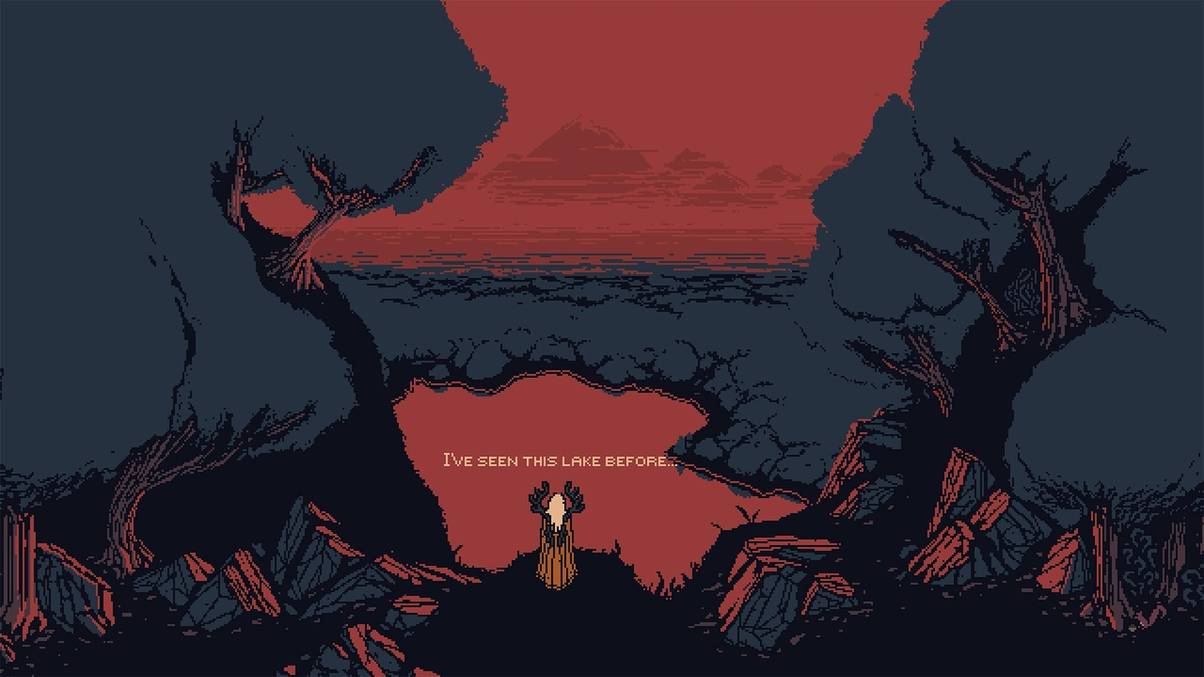
While you can explore the world as you please, each section of the game is broken up into fairly challenging combat sections. It’s here where you can no longer freely move about, and are instead thrown into a grid-based stage where you must defeat a group of enemies to proceed.
If you’ve ever played a turn-based deck builder, you should know what to expect here. You perform an action, whether that be an attack, a special ability, or simply movement across the grid. Then once you’re out of mana (essentially the number of actions you can do), your turn ends and enemy units make their moves.
Enemy AI in Death Howl feels rather complicated to get the grasp of. Each one has dynamic responses to how you play during battle, meaning they can adapt to your moves and exploit any weaknesses. Just like a soulslike, you need to learn their patterns and ensure you have a solution for every possible move they could make.
Some enemies have certain moves that can poison you, for example, so it’s best to bring a card that can cure poison in case that happens. Others will have ranged moves and prefer to keep their distance, forcing you to either try and close that gap, or hit them with your own ranged card attacks.
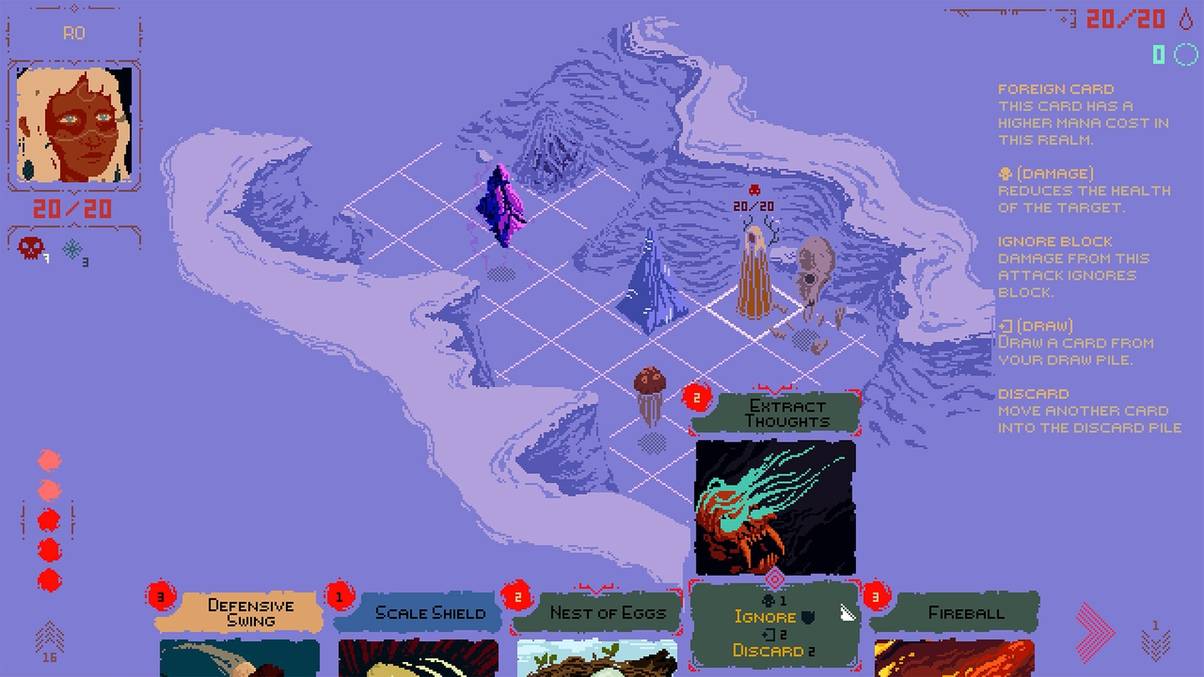
In my first couple of hours with Death Howl, I was facing defeat after defeat in the very first region. Some of those early game combat encounters are tough, and if you’re still getting used to how the game functions then it can be quite tricky to enjoy. However, once I had done a few of the early game battles and had a strong deck of cards at the ready, it started getting easier for me. It clicked for me once I had finished the first region, and the game understood this by throwing me into tougher situations once I’d left the biome.
It dawned on me rather quickly that the best defense in Death Howl is knowledge. Essentially, knowing how an enemy can react in any given situation, and then adapting my strategy to avoid any unnecessary damage. In a way, with a lot of forward planning and a bit of luck, it’s possible to beat any battle without taking any damage at all. And the more I play, the more I realise that’s probably what The Outer Zone intends with battles that appear later on into the game.
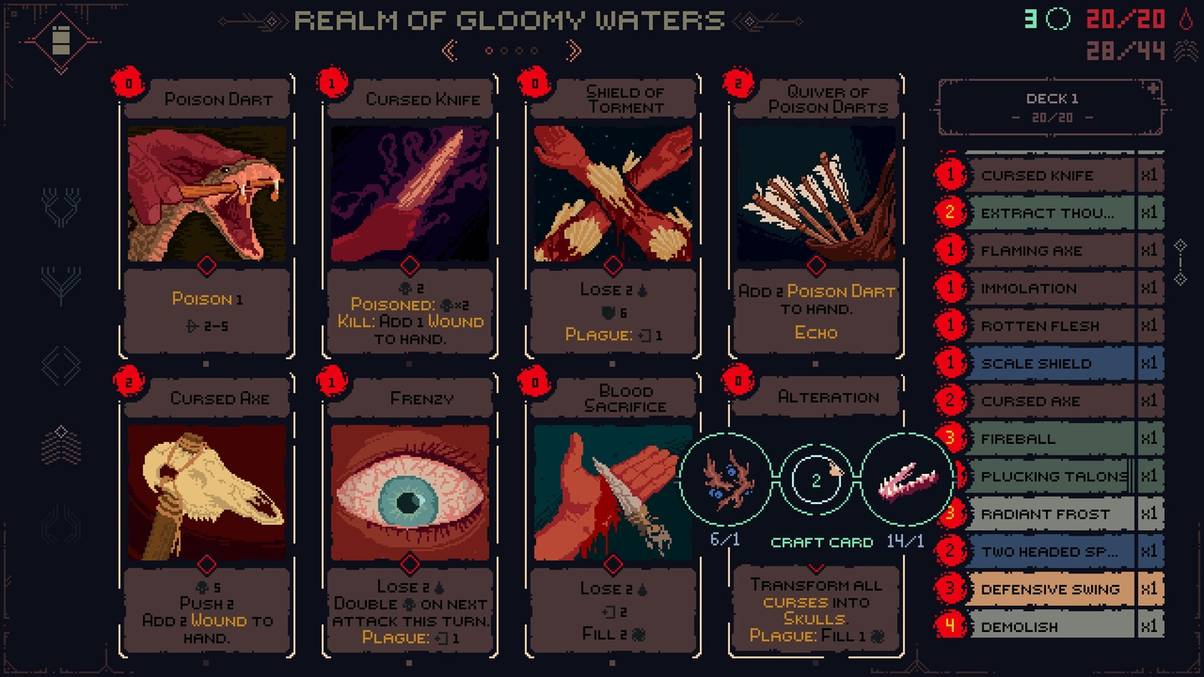
And then once you’ve got that nailed down, it becomes about finding the best combination of cards to use during each battle. Over the course of your playthrough, you’ll pick up various cards to use in your deck which are incredibly powerful. However, the true potential of these cards is unlocked once you realise they make for extremely powerful combinations with other cards. Cards that increase the damage you’re outputting, for example, pair really well with ranged attacks, allowing you to stay out of immediate danger while also dealing heavy blows to enemies.
The soulslike elements also come into play when you reach Sacred Groves. Think of these as like Dark Souls’ bonfires, where you can rest, save your game, and grab new upgrades for Ro. It’s also here where enemies respawn, giving you the chance to go back and defeat the same mobs you did before to gain more rewards.
But what I really liked most of all about the Sacred Groves is how calming they feel. In a world that feels so oppressive and dangerous, it was always a relief to come out of a battle knowing there’s a new Sacred Grove just ahead for me to rest at. The Outer Zone uses very minimalist colours and pixel graphics for Death Howl’s art style, but it’s animated in such a simple yet gorgeous way. I found many of the game’s regions to be rather pretty to look at, even if there isn’t much to look at. But the combination of these simple visuals and immersive sounds made each Sacred Grove feel really safe.
Death Howl has been a fantastic time for me, and it’s been a wonder to slowly piece together how The Outer Zone managed to fit two rather opposing genres in a way that feels tangible and engaging.
Pros: Lovely art style, engaging combat, excellent mix of genre tropes
Cons: huge difficulty spikes
For fans of: Dark Souls, Into The Breach, Slay the Spire
9/10: Exceptional
Rue Valley is out on PC (version tested) on 9 December. PS5 and Xbox Series X/S versions are coming in 2026. A review code was provided by the publisher. Read a guide to our review scores here.

This review highlights some intriguing aspects of Death Howl! It’s interesting to see how it combines elements of Soulslike games with deckbuilding mechanics. Looking forward to hearing more thoughts on it as players dive in!
I completely agree! The blend of Soulslike and deckbuilding mechanics in Death Howl really sets it apart. It’s fascinating how the strategic elements can enhance the challenge, making each encounter feel unique and rewarding. Have you tried any of the different deck combinations yet?
Absolutely! It’s fascinating how the combination of those genres creates such unique gameplay strategies. The challenge of managing resources while navigating tough enemies definitely adds an extra layer of depth. Have you noticed any particular deck combinations that work well against specific bosses?