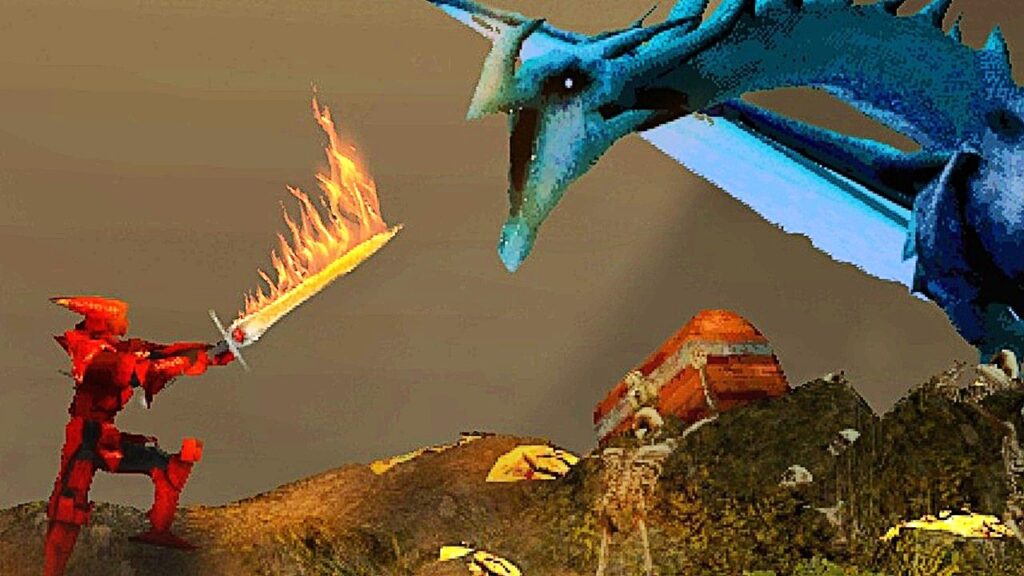

Sword Hero is the type of game I was put on this Earth to play: A hyper-ambitious, systems-driven RPG set in a bracingly weird fantasy world and, until now, largely made by a single guy. An open world, complex physics interactions, deep character building with multiple viable play styles, and—apologies to stone cold classics like Morrowind or Gothic—actually good combat.
After being blown away by Sword Hero’s demo (twice), I had to get creator Csaba “ForestWare” Székely on the horn. I was surprised to learn that the Hungarian developer was working full time as a chef until the Covid-19 lockdowns. ForestWare had previously dabbled in Gothic and Dungeon Siege modding, always having an eye toward the games industry.
With an abundance of free time in the early 2020s, he figured, “if not now, then when?” Embracing a lifelong love of Gothic and games like it, ForestWare decided to create his own ode to “eurojank,” the beautifully messy cult classics of the 2000s, made by European developers attempting to advance ’90s PC gaming design. Gothic is one example, as are the early STALKER games, The Witcher 1—even, I would argue, Larian’s output before the 2010s.
“I started out from pretty much nothing,” he recalled. “I didn’t have any background or anything, aside from creating custom maps in level editors and stuff like that.” ForestWare’s pitch would be a tall order even for a full team of seasoned developers, let alone a new programmer working on his first project.
Team size and the “solo developer” label can be a contentious topic, but until now, ForestWare has been a studio unto himself. The demo’s credits list Discord moderators, voice actors, and playtesters in addition to ForestWare, while publisher Crytivo has primarily assisted with marketing.
But programming, art, design, scripting, everything else? One guy. He’s not averse to bringing on help—ForestWare told me that Sword Hero’s already-successful Kickstarter will let him hire an artist and a musician—but said that keeping things small does come with its advantages.
“One of the big things I discovered in this journey was the devious thing called logistical costs, and the fact that, with more team members, progress may not necessarily become quicker,” said ForestWare. “It may get more economical, but it’s not necessarily quicker, because with more people, you get vision fractures, people you need to work around, occasionally work together.
“Meetings and a lot of things that overall, just cost time—these things really add up. And there is a very thin line, I feel, where the amount of people will amount to faster work. It’s an interesting thing.”
Eurojoy
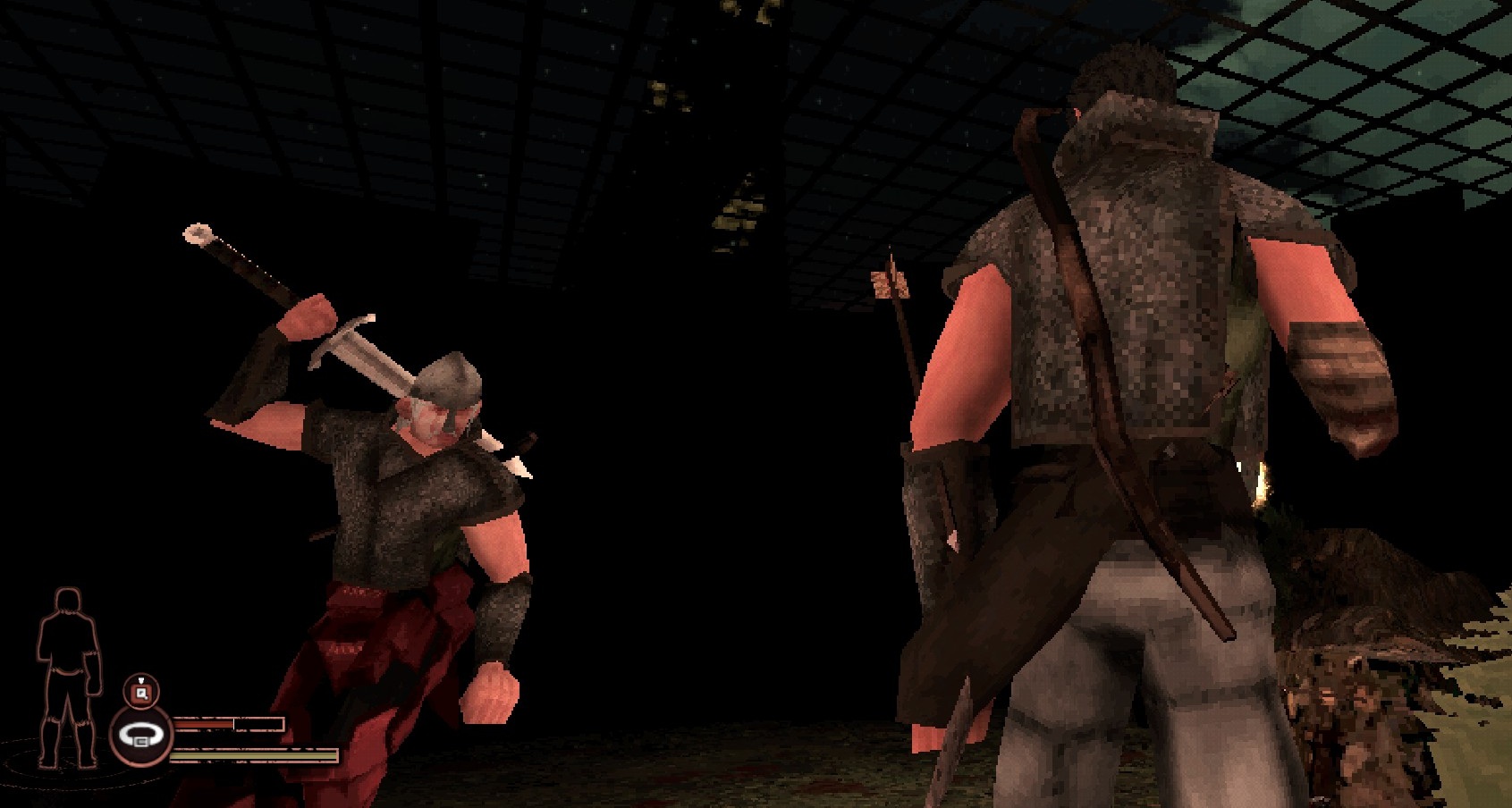
ForestWare has demonstrated that he can deliver on big promises. Those combat demos are the most immediately compelling proof, duels with the weightiness and knife’s edge stakes of a FromSoftware joint coupled with the snappy aiming and targeted swings of the Jedi Knight series.
ForestWare’s dev diaries, meanwhile, show the nitty gritty of programming NPC schedules, physics interactions, and a procedural vengeance system where even minor NPCs might try gearing up to get back at you for stealing a vase or killing their spouse.
Another big ticket feature: Procedural dismemberment and prosthetics, straight out of the freaks-only classic, Kenshi. Sword Hero’s first trailer shows a narrative I first assumed to be the game’s scripted intro: Our hero’s arm gets chopped off by bandits, and they have to take on adventuring work to afford the cost of a Berserk-style mechanical replacement. But it’s not scripted, or at least it won’t be in the finished game—it was meant to show off the sort of emergent narrative you might encounter while playing.
“Prosthetics will only be one of the possible ways to replace your limbs,” said ForestWare. “There will also be one of the factions among the three, the Peltfolk, who will have a spell which will be able to regenerate limbs altogether.”
The Prince of Persia wallrun shown in Sword Hero’s first trailer will be gated by an optional perk (“feat,” for the D&D-inclined), and ForestWare told me it will be usable on any wall, but with platforming challenges designed for it specifically. Ditto for Sword Hero’s climbing system, another sick as hell feature buried in ForestWare’s many devlogs, one I wasn’t even aware of before we spoke.
And immersive sim stealth sickos can rest easy (I’m immersive sim stealth sickos): ForestWare outlined ambitious plans for how he’ll be “making stealth a fully blown playstyle,” hopefully hitting the same highs as the combat.
2026 games: Upcoming games
Best PC games: All-time favorites
Free PC games: Freebie fest
Best FPS games: Finest gunplay
Best RPGs: Grand adventures
Best co-op games: Better together
“The custom lighting I created for the game was so that I can quickly get data back from the GPU to the CPU, so I can let creatures know the amount of light they are in easily,” the dev explained. “You could shoot down and break the torches—that actually puts out their light source, and they would actually react to being in a low light place. They wouldn’t be able to see you, which will also affect combat.
“The routine system of the NPCs is tailored towards stealth, so the NPCs aren’t roaming randomly, but they have a set schedule. You can plan ahead with these schedules, and they go to sleep at night. So you can use your knowledge of these systems to plan ahead and just sneak into a rich merchant’s house and just grab up everything and sell it in the next city.”
With 12 days left to go, Sword Hero has already well exceeded its initial $35,000 Kickstarter goal, boasting over $223,000 in the warchest at the time of writing. The lone remaining stretch goal? A zesty expansion to the RPG’s open world at the $400,000 mark. If you’re curious about the game, you can wishlist Sword Hero and try out its generous combat demo over on Steam.