
O Romeo, Romeo – wherefore art thou Romeo? Well, according to Grasshopper Manufacture and Goichi Suda, it’s in order to – but that would be getting into spoilers. For everything that the developer’s latest over-the-top hack-and-slash action title offers, there is a point where it all kind of, sort of makes sense, if you sort of pay attention. However, this is a Suda51 production – turning your brain off isn’t always a guarantee of a good time.
Nevertheless, I was utterly enthralled by Romeo is a Dead Man. Seeing how it would end is one thing, but also because of the utter sense of style and the killer music.
Let’s start at the beginning, though. Once upon a time, Romeo Stargazer, a member of the Deadford Police Department, encountered a woman on the road, simply named Juliet. The fateful encounter turns Shakespearean tragedy, however, as Romeo is beset by a monstrous creature that horribly mangles him. It’s only thanks to the intervention of his grandfather, Ben Stargazer, and a device known as DeadGear that he’s brought back to life, becoming DeadMan – still living but also dead.
“In the midst of all this is Romeo, who tries to make sense of it all, and more often than not, fails. Then again, the interactions feel so surreal and non-serious that I find myself circling back to digging deeper, searching for something, anything, more substantial.”
That’s the least of his worries, however, as it seems Juliet’s presence caused the world to suddenly disappear from space-time. Working with the FBI Space-Time Police, he investigates anomalies and other notable events, helping to nab criminals while also seeking out Juliet. To what end – and the truth about her identity – is where the most interesting bits of the plot unfold.
And I do mean “bits” because in between, you’ll have to deal with a whole myriad of maniacs, not the least of which includes your crew aboard the spaceship, Last Night. Oh, and Romeo’s grandfather somehow died, but still lives on the back of his jacket, and don’t worry about it, please and thank you. The personalities of each crew member vary between one-note and endearing, whether it’s Deputy Director Kimberly constantly calling Romeo by his real name before correcting himself and saying DeadMan, BrownRed insisting she’s a cat despite looking very much like a person with a cat head, and GreenRiver whose aloofness and lack of care reflects her importance to the plot (which is to say, nil).
Look, it’s not like I hate these characters. It’s just that they feel more like props than anything else, though Luna, Romeo’s sister, has a bit of heart to her. Even the villains oscillate between charismatic and inconsequential. In the midst of all this is Romeo, who tries to make sense of it all, and more often than not, fails. Then again, the interactions feel so surreal and non-serious that I find myself circling back to digging deeper, searching for something, anything, more substantial.
Of course, many may find humor in much of what’s happening or simply marvel at the imagery. Romeo is very UltraMan-esque in his design; cutaways and transitions evoke rock album art, and comic book covers (even Edward Hopper’s Nighthawks painting in one particular instance). Some key exchanges are presented in comic book form across a surprising number of styles, befitting the mood of the mission. Even the menus, from the Rotter farm with its Day of the Dead aesthetics to the machine that turns space scrap into upgrade materials, are bustling with charm and heart.
“This can result in some rather annoying fights in the beginning, and it doesn’t help that Romeo can’t dodge past enemy bodies. Get swarmed on all sides, and you may end up very dead, especially since he’s very easily staggered.”
It’s almost enough to make you forget about the dreary environments that actually constitute the game’s levels. The texture work isn’t particularly impressive, and the anti-aliasing can look outright terrible in some places (do NOT shine a flashlight at all the chains hanging overhead in the dark). On the flip side is subspace – a blockier, trippier alternate location that feels almost as hypnotic as it does surreal. While it’s interesting to venture to and from subspace to traverse levels, it can feel downright annoying to backtrack in some places, especially when the man in the TV yaps on and on every time. A note on the final level: It’s easily one of the most tedious and frustrating in recent memory.
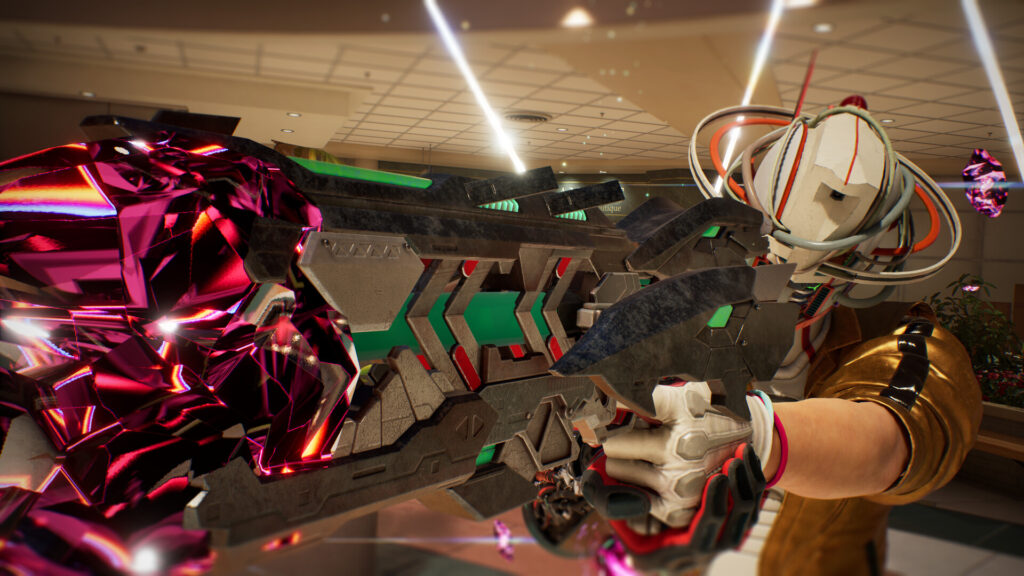
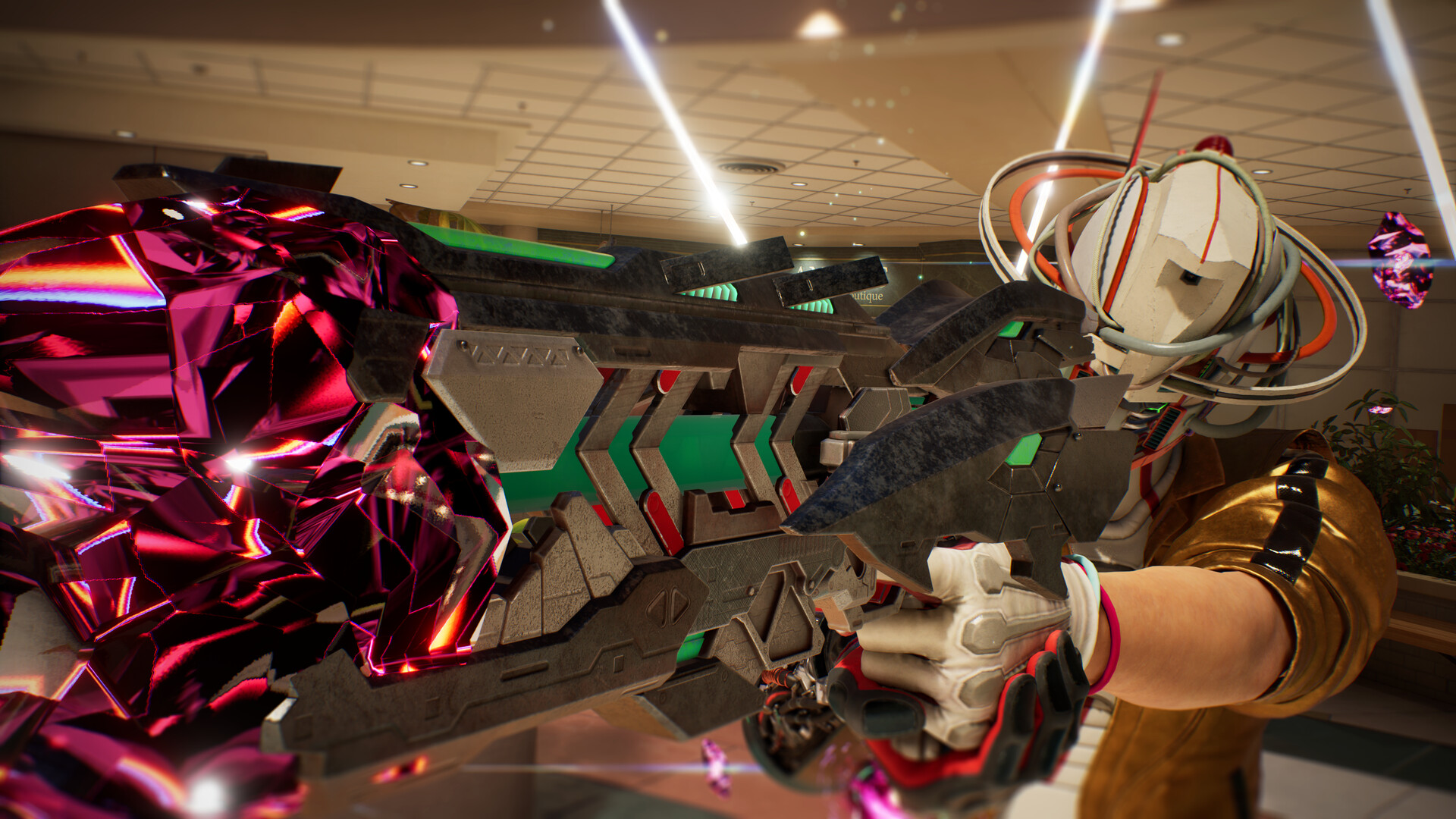
Things improve slightly with the combat, but only just. Romeo has access to four melee and four ranged weapons with the ability to swap mid-combat. You’ll more than likely stick to an option or two throughout, given that there’s only enough upgrade materials for a healthy chunk of the game. Each weapon has unique combos, but they’re all broken into light and heavy attacks, and depending on the recovery frames for the latter, good luck trying to dodge when you need to.
This can result in some rather annoying fights in the beginning, and it doesn’t help that Romeo can’t dodge past enemy bodies. Get swarmed on all sides, and you may end up very dead, especially since he’s very easily staggered. Bloody Summer, a super attack that also regenerates health, comes in handy. Just don’t use it against an early boss until you’re confident their combos have ended – there’s no invincibility window when it activates, meaning you’re still prone to damage.
Playing the PacMan-like Cannonball to spend materials and upgrade stats reduces this frustration, especially when every couple of hits feels less likely to endanger your well-being. Unlocking Rotters, who are essentially summons with unique abilities, also helps, and the mechanics for unlocking, upgrading, and improving them can be enjoyable (if not completely original). It would be nice if they weren’t so easily stunned, or took so long to unleash after certain actions, or blocked your attacks (and your movement in some places).
Further adding to the customization are Badges, allowing for improved damage depending on the weapon, shorter cooldowns for the Rotters, and more. Straightforward, but it works fine, and provides an incentive to dive into the optional dungeons dotting space-time. You could also cook some katsu curry with all the ingredients gathered, netting some time-limited buffs in combat.
“While some elements feel strictly “take it or leave it,” as expected with any Suda51 title, some much-needed polish and quality of life could make Romeo is a Dead Man into a far less annoying experience.”
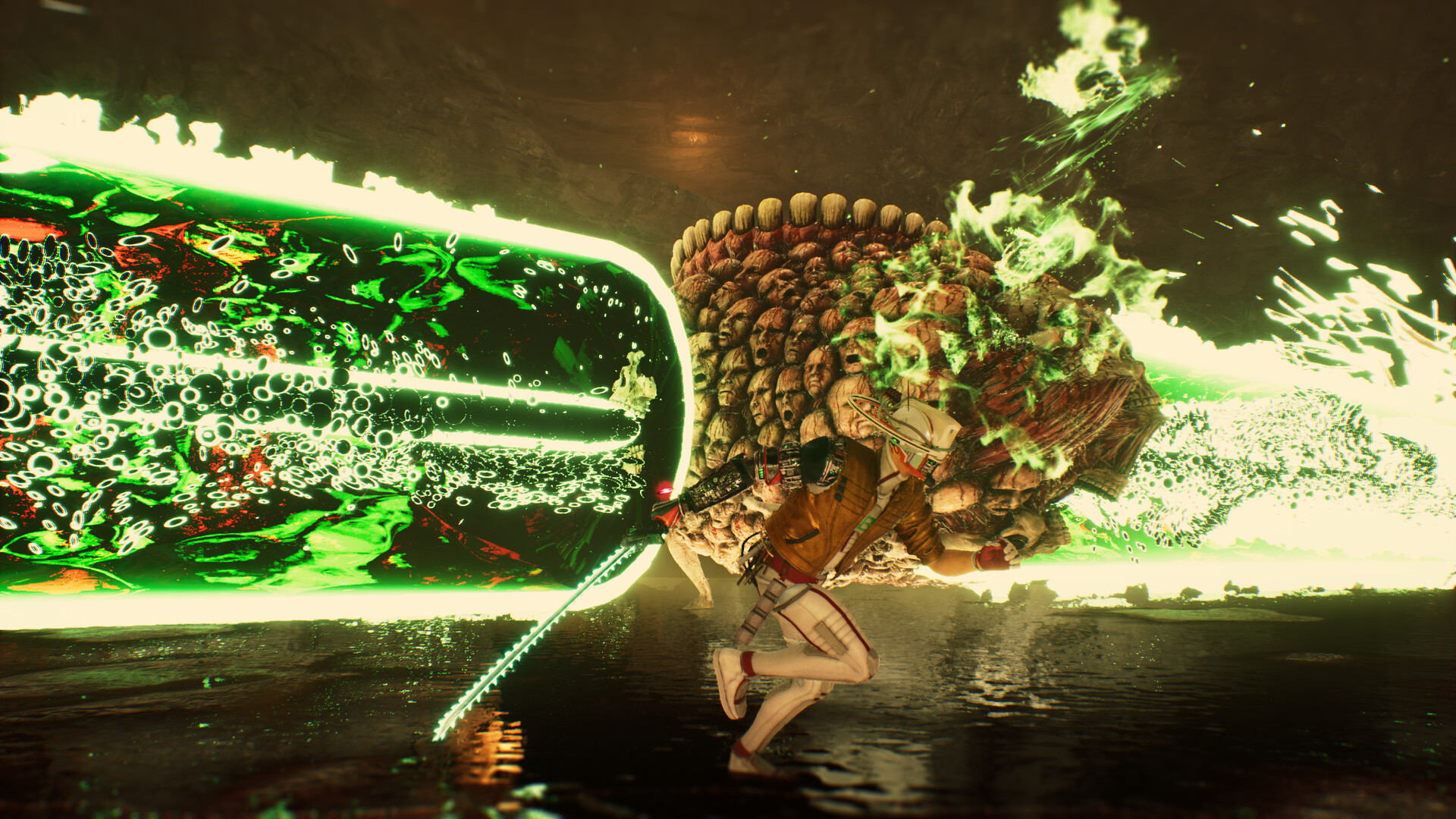
Aside from the iffy nature of combat itself, the bosses are pretty fun. Each one sports unique attack patterns and, more importantly, incredible themes that serve as more than blood-pumping excitement. It’s a testament to the excellent soundtrack that it throws in some fresh rock and roll beats alongside moodier and chill mixes, and ends up working great.
Performance is also, you guessed it, a mixed bag at times. While starting well enough, it starts to experience dips as more enemies and particles fill the screen. It’s downright horrendous in the optional dungeons, and coupled with the low lighting (even with brightness cranked up), can result in some headache-inducing action. As the environments become more intricate and larger in scale, you don’t need to enter combat to see the frame rate struggling to keep up.
Even with those caveats – and some others, like the overall repetitive nature of combat or the lackluster enemy variety – I can’t say that I entirely despised my time with Romeo. The plot compelled me to keep going, even in places where the sheer pretentiousness or seemingly unexplained twists threatened to lose me. And as one-note as the combat could sometimes feel, I can’t deny the joy of unleashing three stages of Bloody Summer to reduce my enemies into bloody puddles. While some elements feel strictly “take it or leave it,” as expected with any Suda51 title, some much-needed polish and quality of life could make Romeo is a Dead Man into a far less annoying experience.
This game was reviewed on the PlayStation 5.