

The creators of Little Nightmares present a new but very familiar looking game, with co-op gameplay that’s even darker and more disturbing than their previous work.
Sweden’s Tarsier Studios is something of a creative powerhouse. They worked with Media Molecule on LittleBigPlanet for years, before making the excellent Tearaway Unfolded, and were also responsible for the grossly underrated, and brutally black-humoured, Statik for PlayStation VR2. Despite that considerable success, there’s no doubt that they’re best known for Little Nightmares and its first sequel.
While the third in the series was handled by Supermassive, Tarsier’s latest, Reanimal, retains a distinct Little Nightmares flavour. That includes its unsettling atmosphere, childlike but faceless protagonists, adult-sized enemies, co-op friendly gameplay, and a reliance on environmental puzzles solved in concert with a partner – whether human or otherwise.
The ability to switch in and out of co-op seamlessly is extremely useful and when you don’t have a player two in tow, your teammate automatically cooperates with whatever you’re doing, while waiting for you to take the lead in exploration and puzzle solving. You do miss having human company when you’re running around its sad and derelict environments, but it’s a system that works well. Most of the time at least.
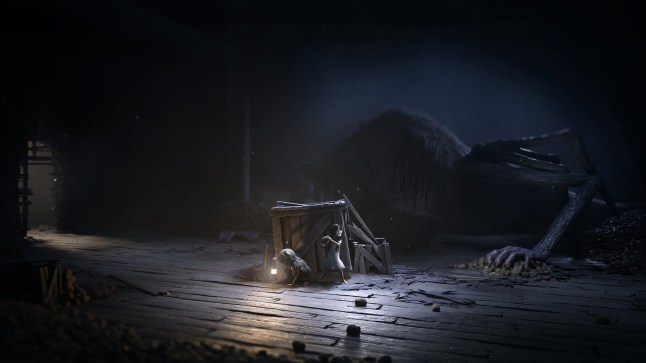
It’s no surprise that Reanimal absolutely nails the atmosphere, which is never less than delightfully disturbing. Other than showing you the controls, nothing is explained, leaving you to infer everything about what you’re doing, the setting, and its inhabitants from your own observations as you progress; the game’s meek little heroes rarely saying more than is necessary to beckon the other to an open door or gap in a wall.
There are certainly plenty of oddities to get your head around in the bleak, almost monochromatic world. That includes enemies who appear more like grown-ups, albeit horribly twisted ones, and others that look like the deflated skins of corpses whose flesh and bones have been removed.
Expert, exclusive gaming analysis
Sign up to the GameCentral newsletter for a unique take on the week in gaming, alongside the latest reviews and more. Delivered to your inbox every Saturday morning.
You’ll see them hanging from the branches of trees or over furniture in the opening scenes, before the sickening discovery that they can all simultaneously come to life, slithering towards you snake-like along the ground, their mouths seeking out your characters, killing them in quick meaty crunches.
There’s something about the immaculately motion-captured movements of your heroes, who walk, climb, and stand like little children, juxtaposed with the disquietingly unnatural lurches of enemies, as they lunge towards them with murder in mind. The gloom that hangs over both interiors and exteriors is often only punctured by the cigarette lighter and lantern carried by Reanimal’s young protagonists, adding to the menace.
Where things start to go awry is the puzzles. Although always cleverly incorporated into the game’s environments, few of them turn out to be all that involved or interesting. Instead, the game relies on multiple bouts of trial and error. You’ll die over and over again while attempting to figure out what exactly it wants you to do to escape the jaws of whatever predator or swarm has you in its sights.
In Soulsborne games, the reason dying repeatedly rarely gets irritating is that it’s always your fault. You’ve been greedy and tried to get one extra strike in before rolling away or failed to have your shield up when you rounded a corner. In Reanimal, dozens and dozens of deaths occur without you really understanding what you’re supposed to be doing, or because the lighting’s so bad you blunder into yet another sea mine in your tiny motorboat. You eventually learn those sections by rote, a process that’s far from entertaining.

The combat can be at least as enervating when undertaken solo. Since only one character has a crowbar to defend the duo, when you’re attacked by creatures that you’re actually able to kill, success relies on the defenceless partner doing their best to stay out of harm’s way.
There are points where your AI-controlled sister seems to have absolutely no care for her wellbeing, and without a fellow human present to help, fights can be highly frustrating, a problem exacerbated by only being able to hold one item at a time. Put away your lighter to wield the crowbar and your AI partner automatically stashes her lantern, plunging you into near darkness.
At other times though, it’s more like a walking simulator, the oppressive sonic backdrop and purposely dismal visuals letting you really soak up the casually nightmarish atmosphere. There are collectibles in the form of masks for your lead character to don, which are purely cosmetic, making him look a bit more sinister, or in the case of the bucket, quite a lot sillier. There’s also concept art to find, the very laziest variety of unlockable, even when the art department is this skilled. It’s disappointing for a game that’s also unusually brief.
There are all too few couch co-op games this console generation, and Reanimal should be applauded for including the option, even if it doesn’t come close to the dizzying heights of Hazelight’s It Takes Two and Split Fiction. And while its sound design and mise en scène absolutely fulfil on their promises, the many weak puzzle elements and tedious dependence on trial and error undermine the integrity of an unusually evocative and atmospheric game.
Reanimal review summary
In Short: A darkly atmospheric horror puzzle game from the original developers of Little Nightmares, that’s undermined by dull puzzles and too much trial and error.
Pros: Unsettling environmental storytelling and sound design. Local or online co-op throughout. Motion-captured main characters look distressingly like actual children.
Cons: Too many rote-learned puzzle solutions and occasions where not having a human partner gets in the way of progress. Expensive for a game that only lasts around six hours.
Score: 6/10
Formats: PlayStation 5 (reviewed), Xbox Series X/S, Nintendo Switch 2, and PC
Price: £34.99
Publisher: THQ Nordic
Developer: Tarsier Studio
Release Date: 13th February 2026
Age Rating: 18

Email gamecentral@metro.co.uk, leave a comment below, follow us on Twitter.
To submit Inbox letters and Reader’s Features more easily, without the need to send an email, just use our Submit Stuff page here.
For more stories like this, check our Gaming page.