
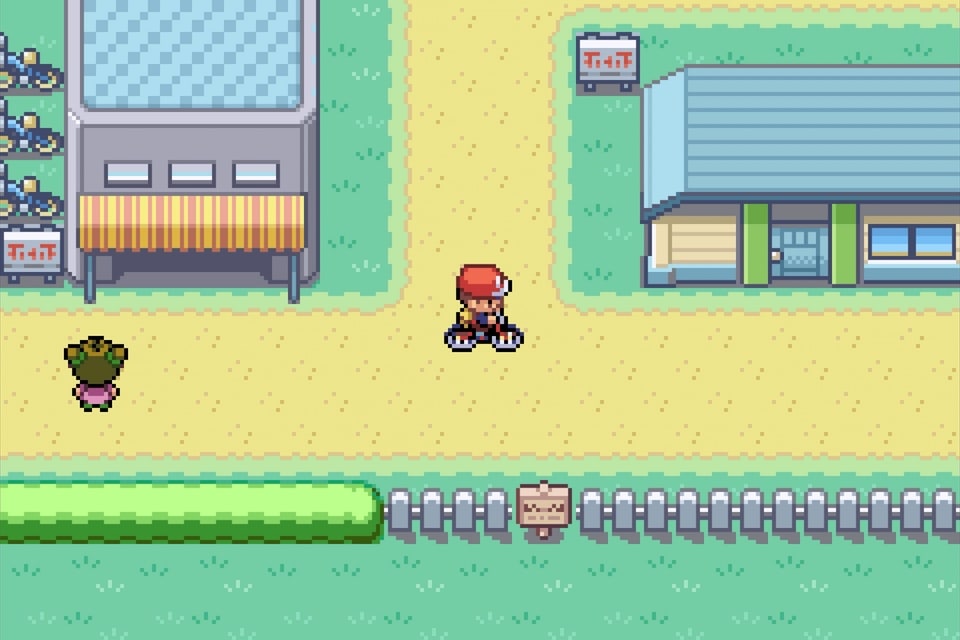

The year was 2004. You got home from school, you did your homework and you sat down in front of the TV. You couldn’t load up your GameCube because your sister had the remote, so you grabbed Pokémon FireRed on the Game Boy Advance instead. Life was good.
A lot has changed since those heady days and the latest Pokémon games are a far cry from these pixel art classics. The last main-series game, Scarlet and Violet, is significantly larger in terms of geography and contains hundreds more Pokémon. What was commonplace 20 years ago looks either quaint or antiquated, depending on the tint of your glasses.
So how do Pokémon FireRed and LeafGreen hold up today? Is it worth Shelldering out £17 or $20 for a 22-year-old game?
The long and short of this is that the game holds up very well, if you can get past the historical quirks and want to take a deep hit of that good old nostalgia.
For the uninitiated, Pokémon FRLG, as it’s commonly abbreviated, is part of what’s called ‘Gen 3’ (the third generation in the franchise, releasing after Ruby and Sapphire on Game Boy Advance, but before Gen 4’s Diamond and Pearl on the Nintendo DS). It was seen as a mini reset for the franchise, partly thanks to FRLG being a soft remake of the original Red and Blue, but with some huge quality of life upgrades for the early 2000s. You got Leaf, the female player character option, updated moves and mechanics and, most notably, a new region for the post-game where you could catch Gen 2 and 3 Pokémon. Instead of the original 150, there’s a whopping 386 Pokémon on offer here!

Image credit: Nintendo
It’s understandable that people will be coming to FRLG in 2026 with some very heavily rose-tinted glasses.The good and bad news is that the game is virtually untouched. For all the updates it got in 2004, it does now feel incredibly dated by modern standards. Playing with an item bag that you can’t sort is a nightmare in 2026, having TMs break after one use is frustrating, and there are countless other things that I really didn’t miss. Zubat in Mt. Moon, for example.
However, if you put all of that to one side and lean into the nostalgia, it’s really cool to see what we grew up with on a modern screen. Some games (Final Fantasy 8, for example) look horrid when emulated, but the linearity that comes with pixel art means this really holds up well.
It was great to see the pixelated GBA pop up the first time I did an in-game trade with an NPC (you can also trade on local wireless if you have a second Switch), and it was amusing to see that the Nugget Bridge exploit still works perfectly. There have been some tweaks, such as rewarding you with previously exclusive event tickets once you beat the game, a fix for a notorious bug, and there’s now a naughty word filter when trying to input names.
Sitting down with my wife, who also grew up on a steady diet of Pokémon games, and passing the controller back and forth as we played on TV, we had an absolute blast working our way through Kanto’s gyms. Unfortunately, things are a little different in handheld mode, where the whopping great black bars feel far more noticeable. Extending the aspect ratio would have been too extensive for this style of release, but it’s a shame that there’s no pixel grid filter, integer scaling options or graphic surrounds, which are so common for classic game releases.
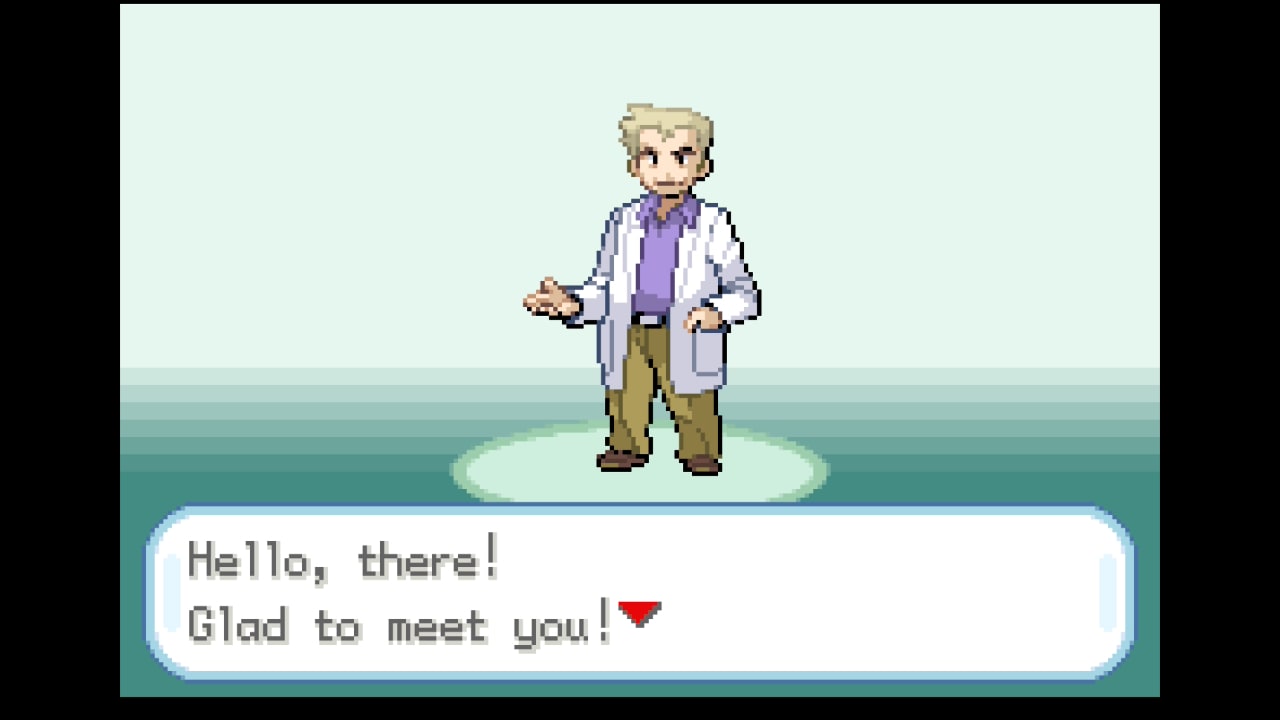
How the game actually uses the Switch 2 screen – image credit: Nintendo
What I found worse was the lack of quality of life improvements which could have taken this from a straight port to something more modern Pokémon player friendly. I can get past the bag issue and the one-use TMs as part of video game history, but the lack of online play is disappointing, and while it’s nice that support for Pokémon Home is coming to export from FRLG to Pokémon Home, it’s disappointing that this link isn’t bidirectional — especially once you realise this locks you out from completing the national Pokédex. FRLG was great, but to the absolute hardcore, this risks feeling less than complete. Had they added online trading and bidirectional Home access, they could have made it something really special for people coming back to it after two decades.
Moreso when you consider that this isn’t a straight emulation and — much to the dismay of some people on the internet — name censorship has been added. There’s some minor button remapping, which is nice, and (to my dismay) a soft reset put over the ABXY buttons. I was disappointed when they weren’t on + and – like the old Start and Select buttons, but I was horrified when I accidentally reset the game at an inopportune time. I’d like to say I learned my lesson… my wife can attest I did not.

Image credit: Nintendo
Ultimately, a lot of the discourse around this game has been about its £17 price tag and whether the game is worth it. The game would have been £30 22 years ago, so £17 isn’t nothing when Nintendo has otherwise been so keen to lure you into the Switch Online + Expansion Pack subscription for other GBA games. That said, buying an authentic cartridge these days is much, much more expensive (and avoiding fakes a chore), and if you’re the kind of person to drop £40 on a pack of Pokémon cards, it’s worth noting that you’ll get a lot more for your money here… All in all, I’m happy with it — if you grew up with these games, it’s worth picking up.
The year is 2026. You get home from work and get the kid to bed. You sit down in front of the TV and your wife passes you the Switch 2 controller. You boot up Pokémon FireRed and pass the controller back and forth as you chat about 2004. Life is good.