
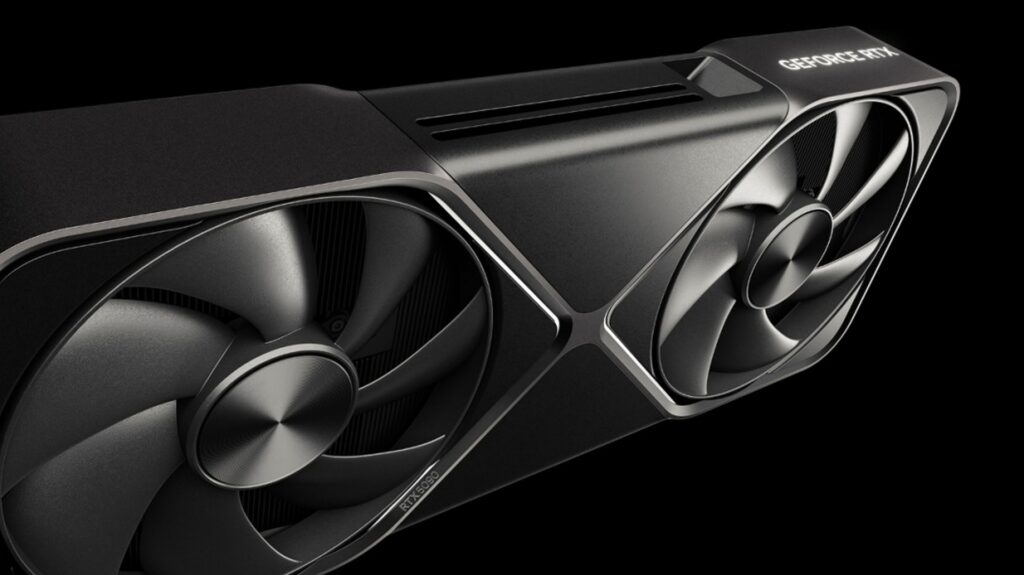

One of the biggest selling points of an Nvidia graphics card in this day and age is the company’s DLSS technology. According to a new report by VideoCardz.com, the company seems to be on the verge of announcing a major update to the tech, which currently sits at DLSS 4, dubbed DLSS 4.5. This update is expected to bring major improvements to DLSS 4 with a “2nd generation transformer” for image quality, as well as a new “Dynamic Multi Frame Generation” system for higher refresh rate displays.
The new transformer is slated to be part of DLSS 4.5’s Super Resolution features, and has been described as featuring more failure cases and a larger data set as part of its training pipeline. This, according to the report, will lead to improved temporal stability, along with less ghosting and cleaner anti-aliasing in scenes with a lot of moving parts. The presentation accompanying the announcement is also expected to include a slide comparing DLSS 4 with DLSS 4.5.
As for Dynamic Multi Frame Generation, the technology will now no longer be tied to a single multiplier when generating multiple frames. The report indicates that it will be capable of generating between three and six times more frames than before, depending on the user’s and game’s settings. Through this, Nvidia wants to offer better support for displays that have refresh rates as high as 240 Hz.
While DLSS 4.5 Super Resolution is slated to be available on day one of the update through the Nvidia App, Dynamic Multi Frame Generation is set to be released at a later date. The new version of Super Resolution will also be available across all Nvidia RTX graphics cards, including the aging 20-series and 30-series GPUs, as well as the more current 40-series and 50-series ones. Dynamic Multi Frame Generation, on the other hand, is expected to be exclusive to the 50-series GPUs, and is slated for release in Spring 2026.
The announcement for this major upgrade to DLSS 4 is expected to happen tomorrow, with more details coming in later in the week.
DLSS 4 was initially unveiled last year during CES 2025. Along with a new transformer-based image generator, the technology also brought with it Multi Frame Generation, which could make use of RTX GPUs’ Tensor cores to generate multiple frames in between the ones rendered by the games themselves. This, claimed Nvidia, could multiply a game’s frame rate by up to eight times over traditional rendering techniques.
The technology also brought with it other new features, including an upgrade to Super Resolution, as well as Ray Reconstruction and DLAA, all of which now run on a transformer architecture similar to what we see in large language and image generation models like OpenAI’s ChatGPT and Google’s Gemini.
Vice president of applied deep learning research at Nvidia, Bryan Catanzaro, eventually also confirmed that the new transformer model could also be used to enable frame generation on older Nvidia RTX graphics cards, including the 30-series ones. The frame generation feature first made its debut in Nvidia’s 40-series RTX GPUs.