
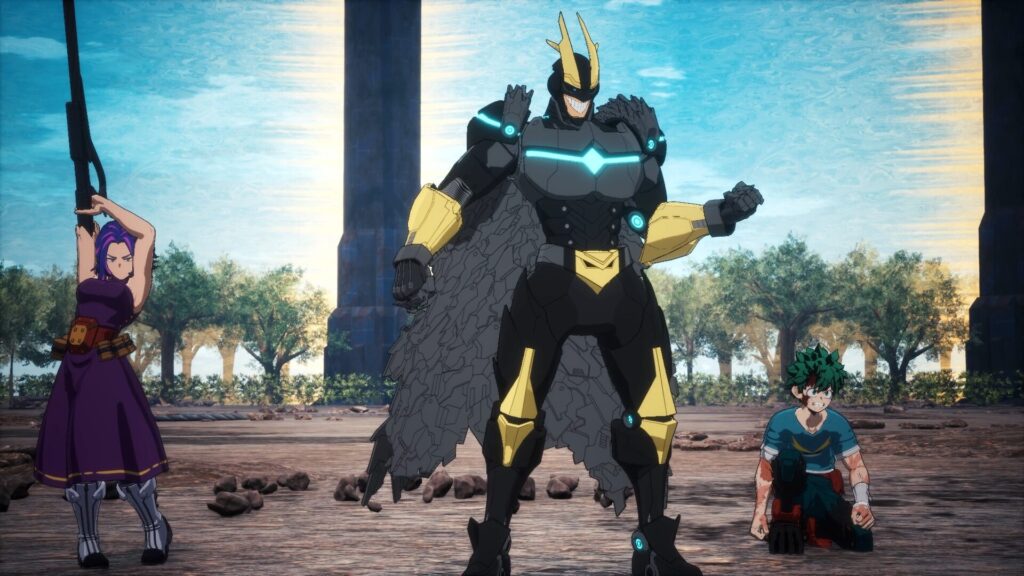

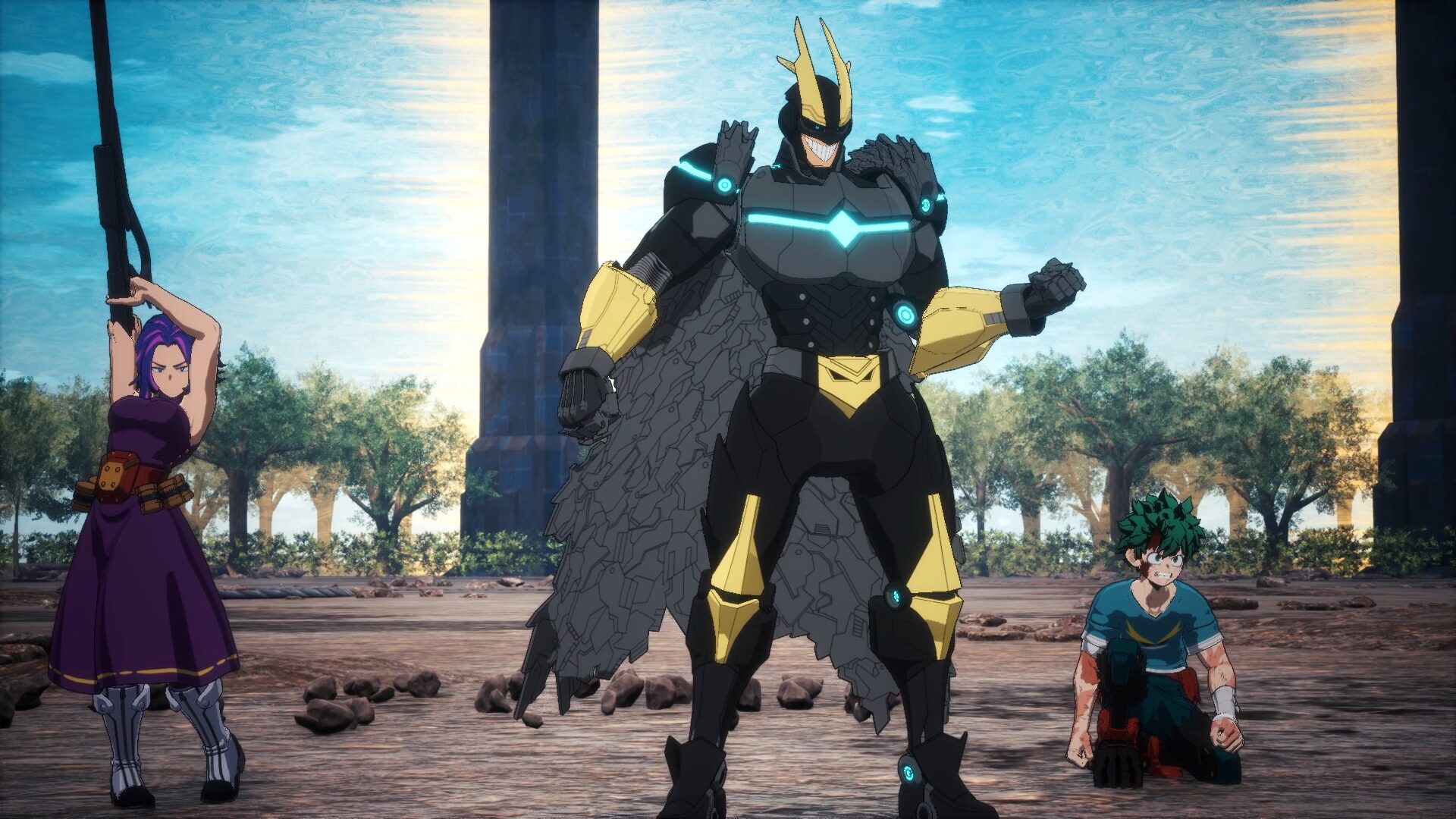
My Hero Academia: All’s Justice launches on February 6th, 2026, a great way for the main series fans to play out the greatest battles from the final main series arc that just finished airing. This is a perfect drop time as it also coincides with the airing of the spin-off My Hero Academia: Vigilantes. Bandai Namco reached out to us to try out three specific parts of the upcoming game.
Like its predecessor games, My Hero One’s Justice 1 and 2, this is a 3D arena fighting game. However, the My Hero One’s Justice games are 1v1 battles; My Hero Academia: All’s Justice features a 3v3 tag-team format—containing free character swapping, dropping the assist system for a more dynamic, team-focused gameplay, building on the expanded roster and improved features of its predecessors. This upcoming game aims to do all this while covering the manga’s epic final arc with cinematic story elements.
Bandai Namco describes the game: “Smash through My Hero Academia’s final story arc and triumph over your foes in spectacular 3v3 battles! Follow Deku and the journeys of other characters in the Final War between Heroes and Villains, and experience the world-shaking, climactic clash between One For All and All For One in My Hero Academia: All’s Justice.”
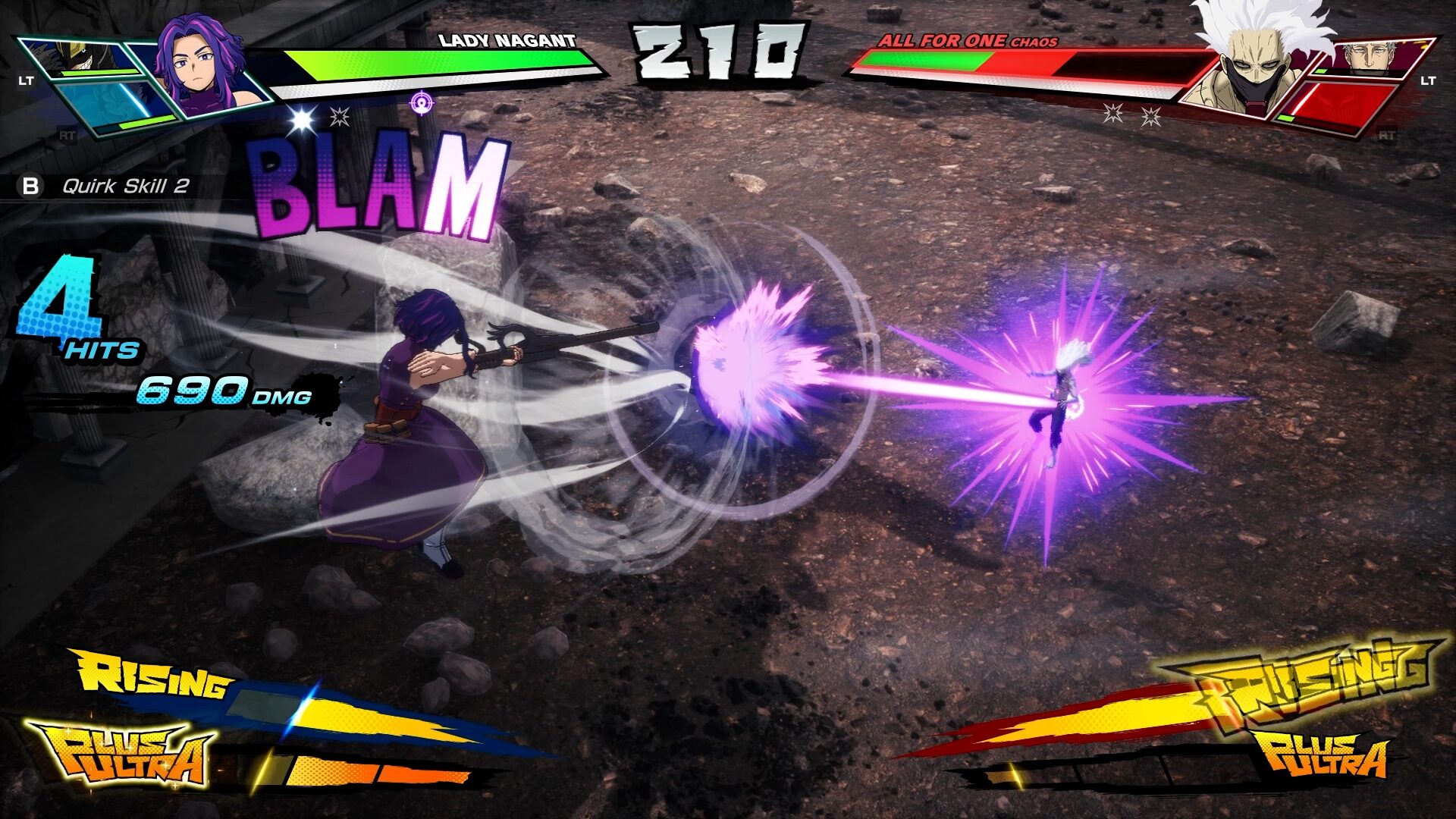
This game features classic fighting game controls and special abilities. One key caveat, however, is the Rising gauge. Rising mode enhances a character for a limited time, allowing players to use special actions that are available only while Rising is activated. As in similar fighting games, Plus Ultra is a separate gauge beneath the Rising gauge, and it activates the character’s ultimate ability.
For this first look at My Hero Academia: All’s Justice, we were able to try Story mode, Team Up Mission mode and Hero’s Diary mode, along with extended time exploring characters and stages in Battle mode. Story mode lets players relive many of the anime’s major battles, including clashes such as Ochaco Uraraka and Tsuyu Asui versus Himiko Toga. A central hub ties the experience together, with players assuming the role of protagonist Izuku Midoriya.
“One of the cool things is how Present Mic announced a win with a knockout with the Ultimate ability.”
Set in a semi-open-world structure, the game allows players to move freely through the city and interact with familiar faces from the anime. Team Up Mission mode expands on this by focusing on navigation and exploration around town. One standout mechanic is swinging through the city using Black Whip, one of the One For All quirks Deku can use.
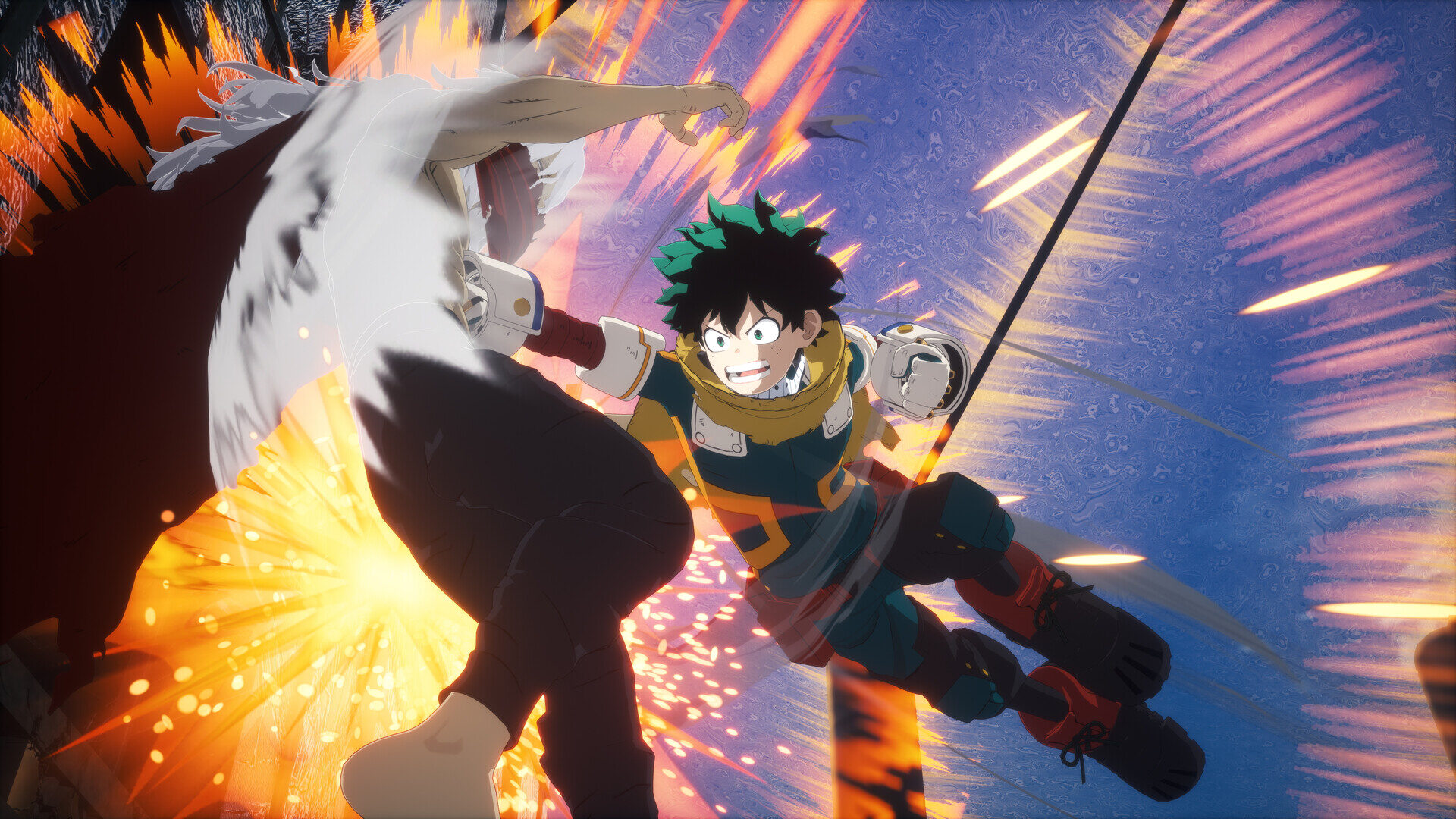
In this preview build, we went hands-on with Katsuki Bakugo versus All For One in a climactic final battle. The matchup required focus and finesse, which is fitting given All For One’s role as one of the anime’s final bosses. Whether players are new to fighting games or seasoned veterans, there are still ways to deal consistent damage to All For One. These strategies rely heavily on long-range attacks, combined with well-timed, repeated strikes. A win is still a win, and the game’s control options help make that possible.
“My Hero Academia: All’s Justice appears to be shaping up as a well-crafted, expansive time capsule to the anime series.”
One of the standout control features in My Hero Academia: All’s Justice is the inclusion of two distinct control modes. Normal Control mode is described as allowing certain actions to activate automatically when attack commands are input. In this mode, the game can link Quirk skills, character swaps and Plus Ultra moves with a single button press. This setup is well-suited to beginners and players who do not regularly play action games. More experienced players can switch to Manual Control mode, which allows for greater freedom when chaining moves and executing combos. This option gives skilled players more precise control over timing and strategy.
Another memorable touch is how Present Mic announces a knockout achieved with an Ultimate ability. If an opponent is defeated with a Plus Ultra attack, he shouts “Plus Ultra!” on the victory screen. The 3v3 tag team battle mechanics also work well, with maximum damage possible when switching characters at the moment an enemy is locked in a damage animation. Not every fight follows a 3v3 format. Battles can also play out as 3v1, 2v1, 1v1 or 2v2 encounters.
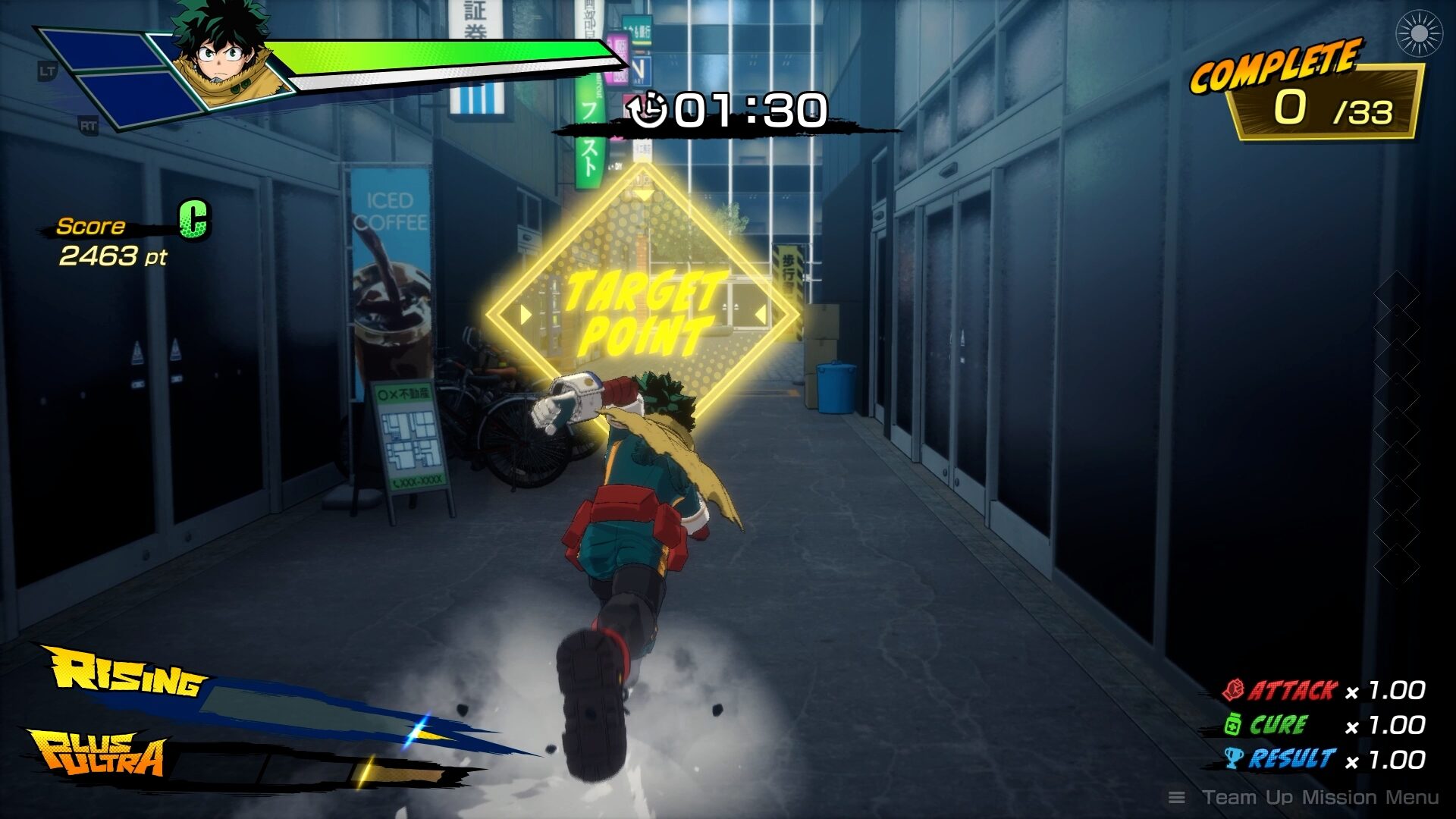
For most of Story mode, the game relied on original-resolution footage, largely made up of still images, with original audio played over top. Given how Bandai Namco successfully recreated the Demon Slayer: Kimetsu no Yaiba anime in a refreshed form in Demon Slayer: Kimetsu no Yaiba – The Hinokami Chronicles and its sequel, I expected a similar level of care for My Hero Academia: All’s Justice. It is possible the final version of the game will present a cleaner, more polished look.
The game features dynamic camera work and action lines inspired by titles such as Dragon Ball: Sparking! Zero and the Dragon Ball Z: Budokai games. Environmental destruction also helps sell the impact of each fight, reinforcing the sense of power behind every hit. Being able to play as members of Class 1-A or pro heroes who receive limited screen time in the anime is a major bonus, particularly since most characters are presented with near-maximum power levels. Team Up Mission mode and Hero’s Diary mode help expand on this appeal.
While we could not capture and check out everything the game has to offer, My Hero Academia: All’s Justice appears to be shaping up as a well-crafted, expansive time capsule to the anime series. The fights and attacks felt true to the show, given the current move sets available. There is still plenty of room for improvement, but I look forward to seeing what the final version will look like.


This sounds like an exciting update for My Hero Academia fans! It’s always interesting to see how the series continues to evolve. Looking forward to seeing what All’s Justice has in store!
Absolutely! It’s great to see how the game will capture the essence of the series. The character designs and gameplay mechanics could really bring the story to life for fans, making it feel like you’re part of the action.
Absolutely! The character designs really play a crucial role in bringing the story to life. It’s exciting to think about how they might incorporate iconic moments from the series into the gameplay, allowing fans to experience their favorite scenes firsthand.
I completely agree! The character designs not only enhance the visual appeal but also reflect the personalities and growth of each hero. It’s exciting to see how they’ll evolve in the upcoming game!