
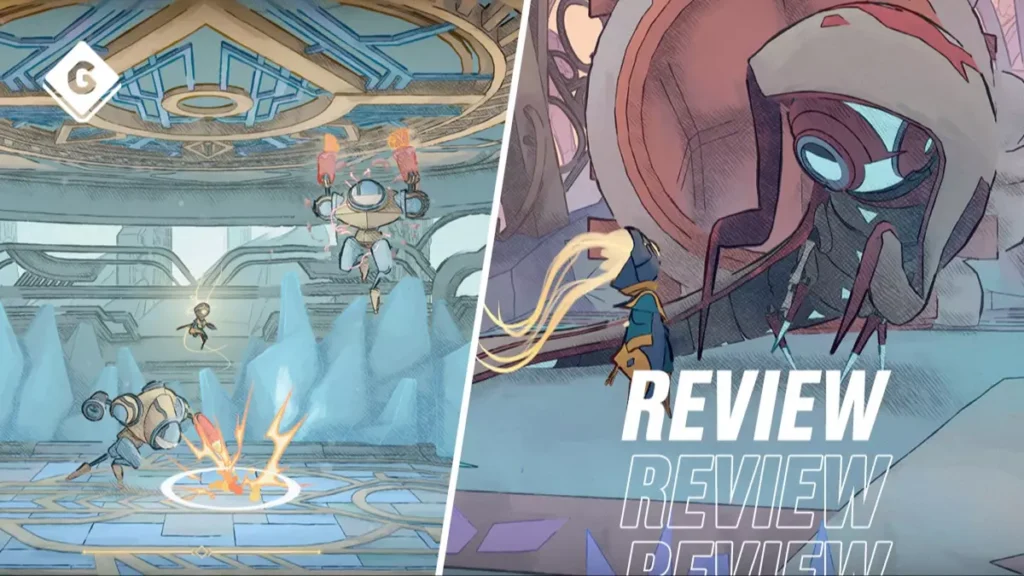

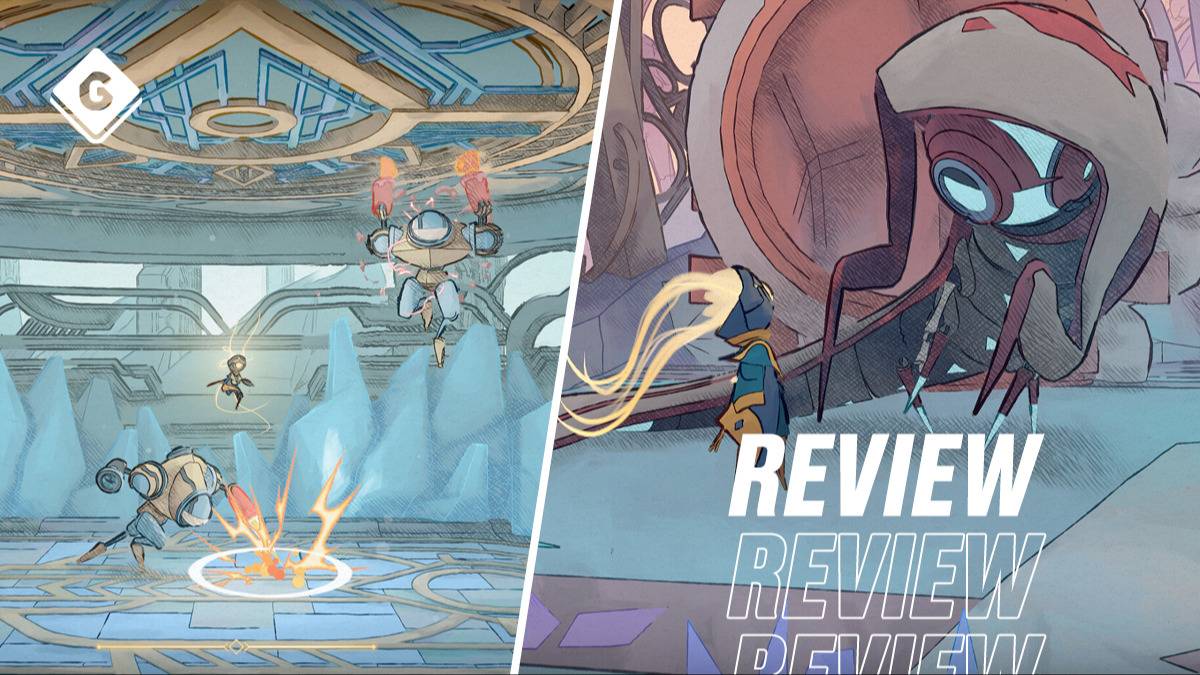
I love a good metroidvania, but I always find myself dropping them rather quickly instead of seeing everything they have to offer.
Considering this is a genre where the longer you play them, the more rewarding they become, I always end up feeling guilty when I’m just not vibing with a certain game and want to drop it. Thankfully, this was never the case with MIO: Memories In Orbit, a game that might be 2026’s first major banger.
MIO: Memories In Orbit is set on The Vessel, a huge space ship currently drifting aimlessly throughout space. You play as MIO, a humanoid robot who gains a series of powerful abilities as you explore the Vessel, who slowly hunts down the ship’s AI caretakers in an attempt to discover the centre of this mystery.
MIO: Memories In Orbit is a metroidvania at its heart, similar to games like Hollow Knight, Rain World, and Blasphemous. The game features an interconnected world, where you’re rewarded for finding shortcuts, discovering secret loot, and defeating bosses to gain new abilities, all while utilising a 2.5D presentation.
MIO: Memories In Orbot Is One Of 2026’s Most Gorgeous Games
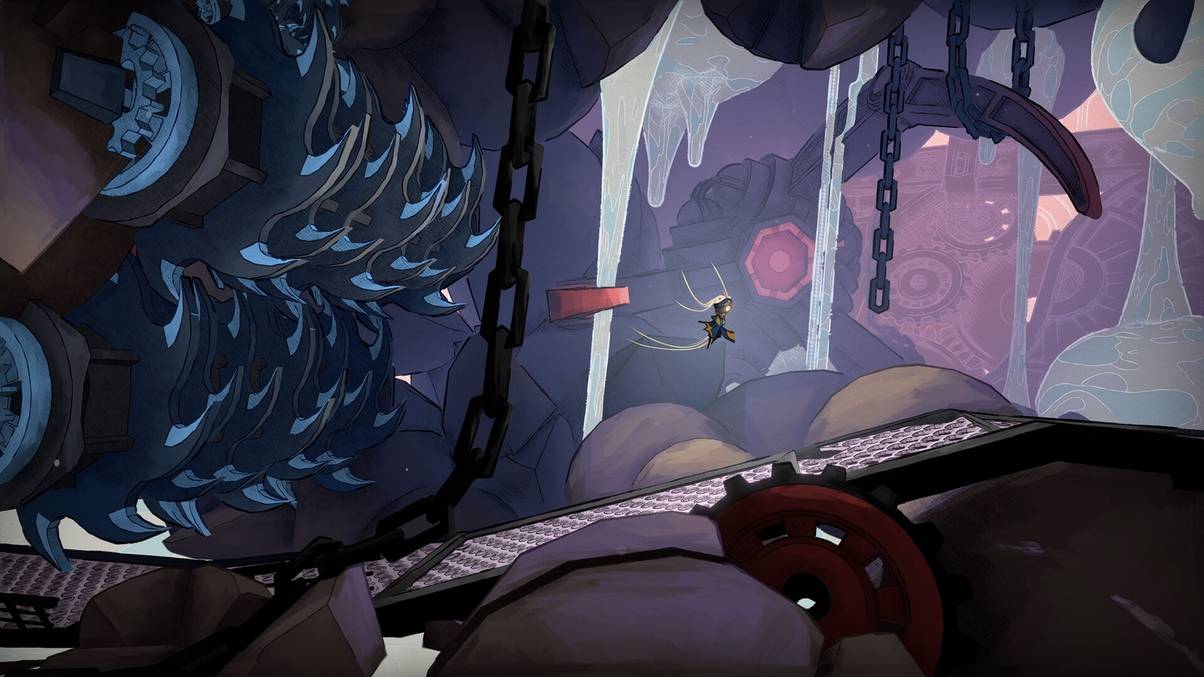
From the first hour of play up until the game’s climax, MIO: Memories In Orbit features a lot of gorgeous visuals. The Vessel is not a place that simply utilises one aesthetic, but has many different climates depending on where you are. Lower areas of the game are derelict, overgrown, and host a whole range of unknown dangers, while higher areas are in more pristine condition, but its threats are equally as real. But despite the different variations in appearance, the game uses a rather consistent watercolour art style, where soft colours juxtaposed with hard technological subjects creates an appealing clash in visuals.
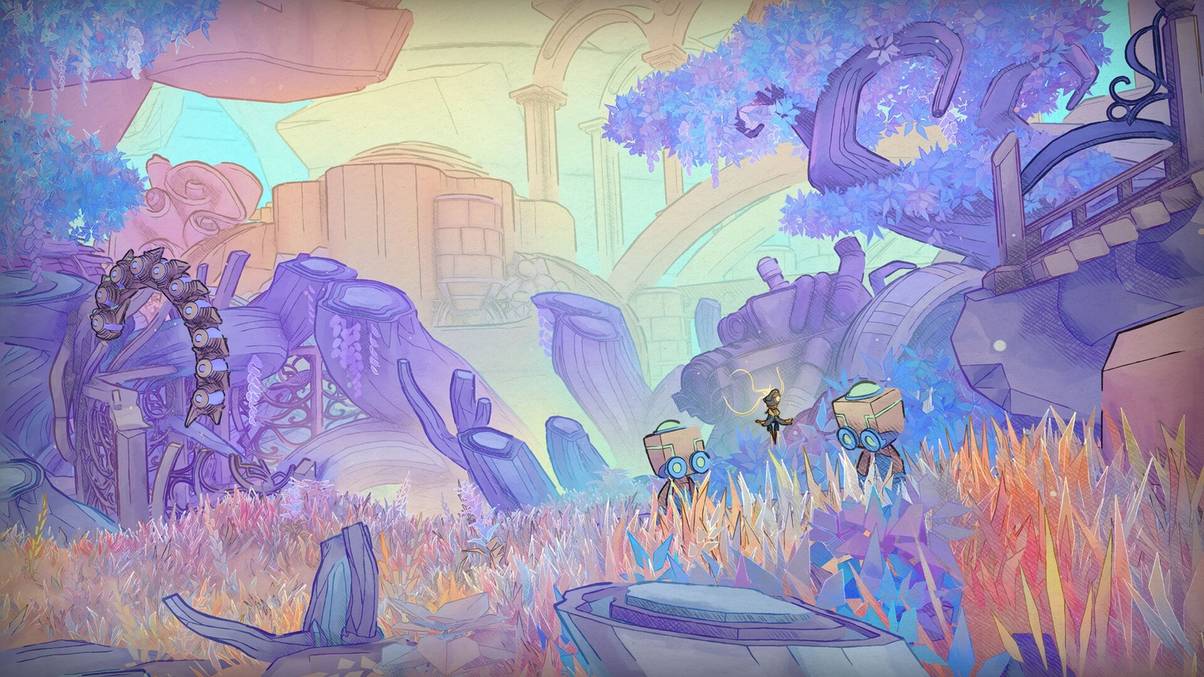
In particular, I really love that the game doesn’t hold your hand when it comes to exploration. There are many ways to discover alternate routes and hidden passageways in The Vessel, but a lot of them are hidden away from view, or require you to really pay attention to the environment in order to find them.
In true metroidvania fashion, the game clearly communicates to you the areas it wants you to explore and the powers you’ll need to unlock those locations. There’ll be areas you come to where you realise what kind of ability you need to get there, and it’ll become a case of hunting down a specific boss you need to defeat in order to acquire that ability. As the game progresses, more areas become available to you as you find these powers, and you reach a point where you have multiple options open to you at any given time.
My only real dislike about it was that there weren’t many save points dotted throughout the world, with each area usually only having one. It makes the runbacks to bosses a little too long, an aspect that I also don’t like in other metroidvania games, so when you’re constantly dying over and over again to a difficult baddie, you end up wasting a lot of time simply trying to get back to the boss room.
MIO’s Bosses Can Be Pretty Brutal
In addition to that, it’s also a pretty difficult game. When you’re not frantically searching for a new route to open up, you’re at the constant mercy of the various enemy types that are littered throughout the game. MIO’s enemy variations aren’t too dramatically different from each other (there are around 30 types, according to developer Douze Dixièmes), but the way they are placed within each level and how they react to your attacks makes them rather cleverly placed, and creates some tough combat encounters if you’re caught off guard.
The same can be said for the bosses, which start off simple and gradually get more complicated as the game progresses. The more abilities you unlock, the more these bosses serve as training grounds for mastering them. And as a result, you find new opportunities to use them in combat, opening up a palpable way of tackling each tough encounter. By the time you reach the late game bosses, you’re more than prepared to take them on thanks to the steady difficulty curve, which I’d say is a lot more generous than games like Hollow Knight or the Ori series.
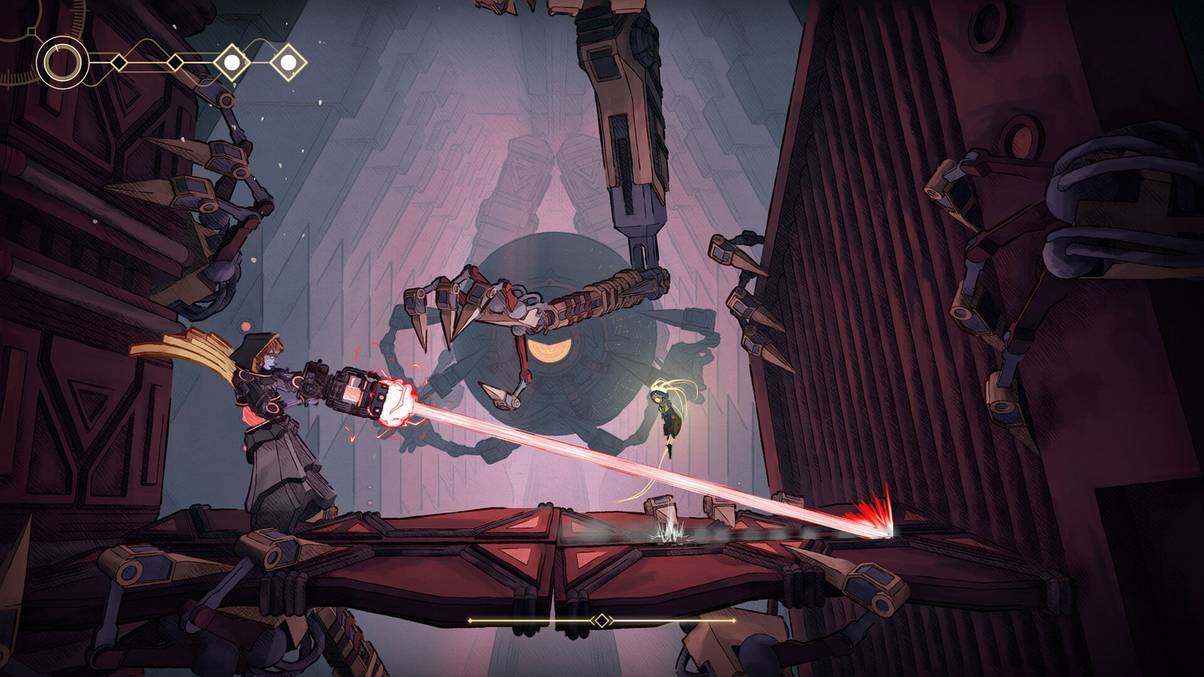
These powers range from a temporary shield which can deflect attacks and help you move through dangerous areas, to a grappling hook which you can use to fling yourself around each level. These abilities are varied in the playstyles they open up, and with each one you unlock you get a sense of MIO becoming a much more powerful character. Areas that were previously a pain to traverse through suddenly become a lot cleaner, and it makes the learning curve feel a lot more forgiving.
If I had one gripe about this, I’d say the controls sometimes run the risk of feeling a little floaty. You move in a certain direction, and the character occasionally doesn’t quite ‘snap’ into place where you intended for them to go to. This applies especially to the powers, where some just simply didn’t behave in the way you expect them to due to awkward timings. This got me killed by a boss on more than one instance, and it felt like it added to the overall difficulty of the game for a reason that wasn’t completely under my control.
The Assist Options Are A Nice Touch
If you are having a tough time though, MIO: Memories In Orbit also features a few assist options for accessibility purposes and to give you a little advantage during combat. These optional features serve to make the game a little easier in some areas where players may be struggling, without completely trivialising the difficulty.
For example, you can activate an option which makes each boss a little weaker each time they defeat you, meaning you’re still encouraged to learn the boss’ patterns and weaknesses, but in a way where you won’t be continuously bashing your head against a wall when faced with loss after loss. Another feature gives MIO an additional shield that she can recover when remaining stationary, giving you a slight boost to your health but not making you completely invincible.
But ultimately, these options don’t trivialise the game. They’re simply there to help you out if you’re struggling. Instead, it’s the various modules you can install in MIO which will help you out. You can find these mods while exploring the world, where unlocking them will give you new passive enhancements, such as more health or the ability to see an enemy’s lifebar. Provided you have enough free module slots, you can create some really powerful module combinations for use while exploring The Vessel.
If you’re keen to check out MIO: Memories In Orbit, Xbox Game Pass subscribers will be able to play it tomorrow when it launches. I’ve played the Steam version, so I can’t comment on the quality of the console versions. However, the game does feel like an appropriate release for subscription services like Game Pass or PlayStation Plus, due to its slow appeal as something you can drop into, play for 20 minutes, and then come back to it another time.
It doesn’t do much to reinvent the wheel, there’s nothing massive here that separates it from a game like Hollow Knight, but it doesn’t need to, either. I liked that it kept its features and ideas down to the simple fundamentals of the Metroidvania genre, where its appeal rides by on vibes alone. Even after reaching the end of the game, I’m excited to go back and see what I’ve missed, because I’ll bet there’s quite a lot of content I’ve still not seen yet.
Pros: excellent world design, fun combat, gorgeous visuals
Cons: Frustrating boss runbacks, floaty controls
For fans of: Hollow Knight, Metroid, the Ori series
8/10: Excellent
MIO: Memories In Orbit is out tomorrow on PC (version tested), Xbox Series X/S, Nintendo Switch, Nintendo Switch 2, and PS5. A review code was provided by the publisher. Read a guide to our review scores here.


This post highlights some interesting points about MIO and its potential to rival Hollow Knight. It’s always exciting to discover new games in the metroidvania genre, especially when they offer engaging gameplay. Looking forward to hearing more about others’ experiences with it!
Absolutely, it’s exciting to see how MIO incorporates unique mechanics that could set it apart from other titles in the genre. The art style and atmosphere seem to promise an immersive experience, which might keep players engaged longer. Have you had a chance to try it out yet?
I completely agree! The way MIO blends exploration with its innovative mechanics really does make it stand out. I also appreciate how the art style complements the gameplay, adding to the overall immersive experience. Can’t wait to see how it evolves!
Absolutely! The visuals and atmospheric soundtrack also play a huge role in keeping players engaged. It really enhances the overall experience and makes you want to explore every corner.