

It’s been almost a decade since Bungie, the acclaimed studio behind Halo and Destiny, launched its last video game. To say that a lot has changed in that time is a severe understatement, whether we’re talking about the company disentangling itself from Activision and being acquired by Sony a few years later, or the rise and fall of myriad multiplayer trends.
One such trend that has ballooned into its own beloved subgenre is the extraction shooter, popularised by titles such as Hunt: Showdown and Escape From Tarkov, not to mention last year’s breakout hit, Arc Raiders. However, for each success story, there are plenty of would-be contenders that either arrive late to party or lack a certain sauce. With so much build up to Marathon, and some stinging critiques along the way, has Bungie managed to thread the needle?
First things first, what even is an extraction shooter? This subgenre might have emerged around the same time as the battle royale, and shares common ground in some ways, but has long played second fiddle to the immediacy of being the last player standing. Extraction shooters still shove players out into large maps stuffed with all kinds of random loot, but this is loot that you get to keep and reuse, so long as you manage to extract without dying. That’s no small feat when you begin to factor in various hostile elements such as roving bands of AI-controlled enemies, environmental hazards and, of course, other players.
Extraction shooters have a reputation for being pretty hardcore, and Marathon is no exception. This isn’t really the kind of multiplayer game you can play casually, dipping in and out for some low-stakes fun. Instead of trying to create a gateway or something more accessible for a wider crowd, Marathon is gunning for the genre’s frontrunners. What that means is a steep learning curve and accepting that your first few hours with the game will be punishing. Extraction shooters are, by their very nature, a rollercoaster of euphoric highs and devastating lows but, if you’re up to the challenge, there’s an incredibly rewarding multiplayer experience waiting here.

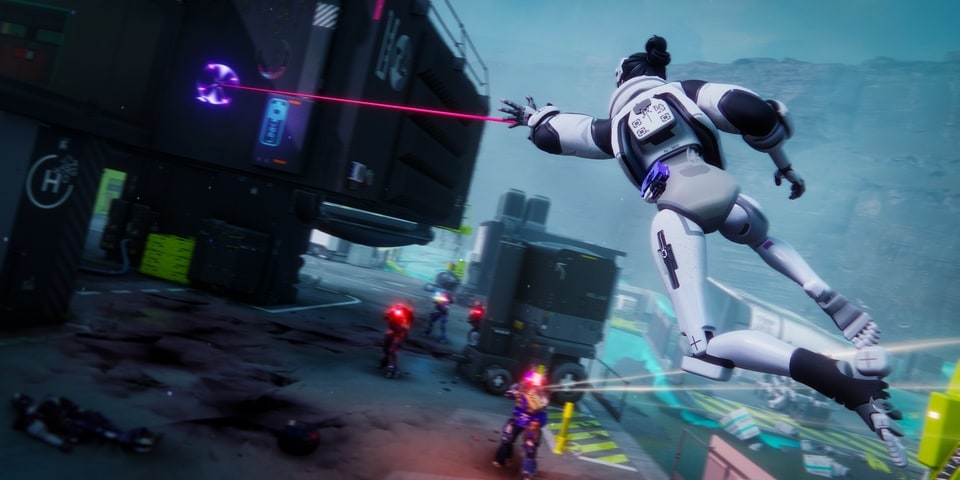
Marathon differentiates itself in a number of ways, one of them being it Runner Shells. Selecting a Shell is like picking a character in a hero shooter – they each have their own pool of unique active and passive powers, such as the Assassin’s ability to turn invisible whenever he enters a smoke cloud, the Thief’s remote-controlled drone, or the Triage’s healing capabilities. They also differ in terms of raw stats, like the speed at which health and shield items take effect, or how quickly their Heat gauge builds. Runner shells help diversify the number of viable playstyles in Marathon while also adding a layer of complexity when it comes to squad compositions.
It’s not forced down your throat, but there’s a rich narrative that underpins Marathon, building on the legacy of Bungie’s original trilogy of 90s shooters. Between runs, you’ll interact with various Factions who help you get a better understanding of what’s happening on Tau Ceti IV, or you can dig into the game’s ever-expanding codex of lore entries.
Speaking of Factions, these dovetail into Marathon’s main progression system, offering objective-based contracts that offer experience points, loot, and permanent upgrades. While entirely optional, they help add a sense of purpose to each run beyond scavenging for gear with which to outfit your Runner shell.
But that’s enough of the setup, what is it like to actually play Marathon? To no-one’s surprise, the movement and gunplay are slick and snappy with some Runner shells having more mobility than others thanks to quirks such as a double jump or grappling hook. Traversing your environment to find solid vantage points and escape routes is key, though there isn’t an emphasis on parkour-style moves or intricate cover systems. The combat gameplay is pretty straightforward in that sense – a no-thrills approach that feels very Bungie.

Whether riding solo or playing within a team of up to three, each run follows a familiar pattern as you drop in and survey your surroundings, before deciding where to go. Marathon’s maps are pretty big with a good mix of interior and exterior areas. Firefights between squads can happen anywhere, though they’re most likely to occur near named landmarks where the best loot can be found, as well as contract objectives.
It isn’t just other players you need to look out for. Hazards such as poisonous spores, landmines, turrets, and lasers all pose a threat alongside alien wildlife and UESC patrols. There are so many things on Tau Ceti IV just waiting to chip away at your health bar and death can come for you quickly. As punchy as Marathon’s PvP combat is, the time-to-kill (TTK) is a little on the short side. It encourages camping on landmarks and executing well co-ordinated ambushes, rarely giving the defending player(s) enough time to react, fall back, and prepare for a counterattack.

Even if you do manage to break away, restoring your health and shields can take the best part of a minute, poking yourself with various injectors and praying that your pursuers aren’t just around the corner. Item management as a whole can be a bit tricky, but this is more of an inherent issue with extraction shooters in general.
The sheer amount of items that can be found out in the field or purchased from vendors is overwhelming and it will take a good few hours to learn which items you need in specific scenarios and which ones can be left behind. Not only do you need to keep a stock of health and shield items, you’ll need to think about ammunition, which can be hard to find at times. Then there are weapons, attachments, Cores, and Implants, all of which can be optimised to greatly improve your chances at survival. Whatever remaining space you have in your inventory can then be dedicated to contract-specific items and upgrade components, as well as valuables which can be sold for some easy cash. So long as you extract, that is.
If your squad is wiped out, or if you fail to reach an exfiltration point in time – or, as happened to us when playing without a mic, one of your extracts while the others rush off to scrounge for more loot – you will lose everything your Runner was carrying. At the same time, the further into a match you get, the more chances you have at bagging some rare and powerful loot that could make subsequent runs just that little easier. It’s this risk/reward factor that drives players to the extraction shooter genre and it can be felt in full force when playing Marathon.

One final differentiating factor is the game’s art direction. Whether it’s Tarkov’s gritty military trappings, Hunt: Showdown’s Southern Gothic aesthetic, or the industrial sci-fi style of Arc Raiders, having a strong visual identity is key. Bungie clearly got the memo as even those earliest glimpses at Marathon showcased a bold palette of contrasting colours, strong geometric shapes, and slick character silhouettes. Every pixel of the game’s presentation has been carefully considered, bolstered by a pared back soundtrack that adaptively kicks in and fades out at just the right times.
We’re not quite ready to slap a score on Marathon just yet as we continue to get a feel for the game’s more challenging map and advanced systems. We’re also waiting to see how its first big content drop fares later this month with the arrival of the Cryo Archive endgame zone. With that said, it’s quickly shaping up to be a viable contender in the extraction shooter space – one that is unapologetically hardcore and oozing with style.