


The laptop landscape is constantly changing, with the balance among power, longevity, and performance constantly shifting to deliver the best experience for users. This is where Intel is looking to innovate. With the new Intel Core Ultra Series 3 Processors—Panther Lake—the company is changing what is possible on a laptop that can last all day, while still delivering performance that overshadows some of the best mobile chips on the market.
After talking with General Manager of Intel Canada, Asma Aziz, it is clear that Intel is focused on being a one-stop shop for laptop users, bringing power, performance and AI to gamers, creators, and productivity users everywhere. “We’re laser-focused on delivering what I call the ‘true AI PC experience’ for everyday users,” she said.
CES 2026 is here, and several companies are already announcing their new Intel-based devices. But what does that mean for everyday users? We wanted to go beyond the numbers and dive into what makes Intel’s Panther Lake so exciting.

Intel is positioning Panther Lake as the moment the “AI PC” becomes something users can actually feel in their day-to-day lives. Instead of AI being a feature users activate or a mode they switch into, Intel says this generation is designed so AI becomes part of the natural rhythm of using a computer. According to the company, Panther Lake is more than just a faster processor we have seen released year over year. It marks a shift in how a PC understands users, adapts to them and works alongside them.
Intel suggests the most noticeable change will be how your device begins anticipating what you need. The platform is designed to learn your habits, understand which tasks require performance and which can be handled quietly in the background, and adjust in real time. In Intel’s vision, this means apps open faster, multitasking feels smoother, and your PC behaves more like a responsive partner than a passive tool.
Intel has been working to make its latest generation of chips stand out in several areas, including battery life and graphics, strengths the company has highlighted across recent generations of Intel Core Ultra processors. With Panther Lake, however, Intel has significantly raised the bar. Based on early figures provided by Intel and its OEM partners, this new generation of Core Ultra laptop processors is already exceeding what many viewed as an insurmountable lead held by Qualcomm. Intel has not only caught up, but surpassed its rival across several key benchmarks.

Creative work is another area where Intel promises a meaningful difference. The company says that with Panther Lake’s new graphics architecture and AI acceleration, tasks like video editing, photo enhancement, and design work should feel far more fluid. Effects are expected to apply quickly, previews should run smoothly, and large files shouldn’t interrupt your flow. Everyday enhancements—cleaning up audio, improving lighting in a photo, generating variations of an image—are meant to happen instantly and quietly, without slowing down the system.
Aziz explained how this is different from previous generations, “AI isn’t just an add-on anymore — it’s baked into the DNA of the chip. Users get real-time AI features like background noise cancellation and deepfake detection running locally on their device, not in the cloud. It’s the difference between having AI as a feature versus having a truly intelligent PC.”
Gaming is also an experience Intel promises will feel more effortless. Portable gaming has always involved trade-offs, but Panther Lake is designed to reduce them. “The moment you power on a Panther Lake AI PC, you’ll feel the difference. We’re talking about over 50% faster CPU and GPU performance compared to our previous generation,” Aziz explained, meaning users can expect smoother gameplay, richer visuals, and better battery behaviour, all while keeping devices cooler and quieter. The idea is that you spend less time adjusting settings and more time actually playing.
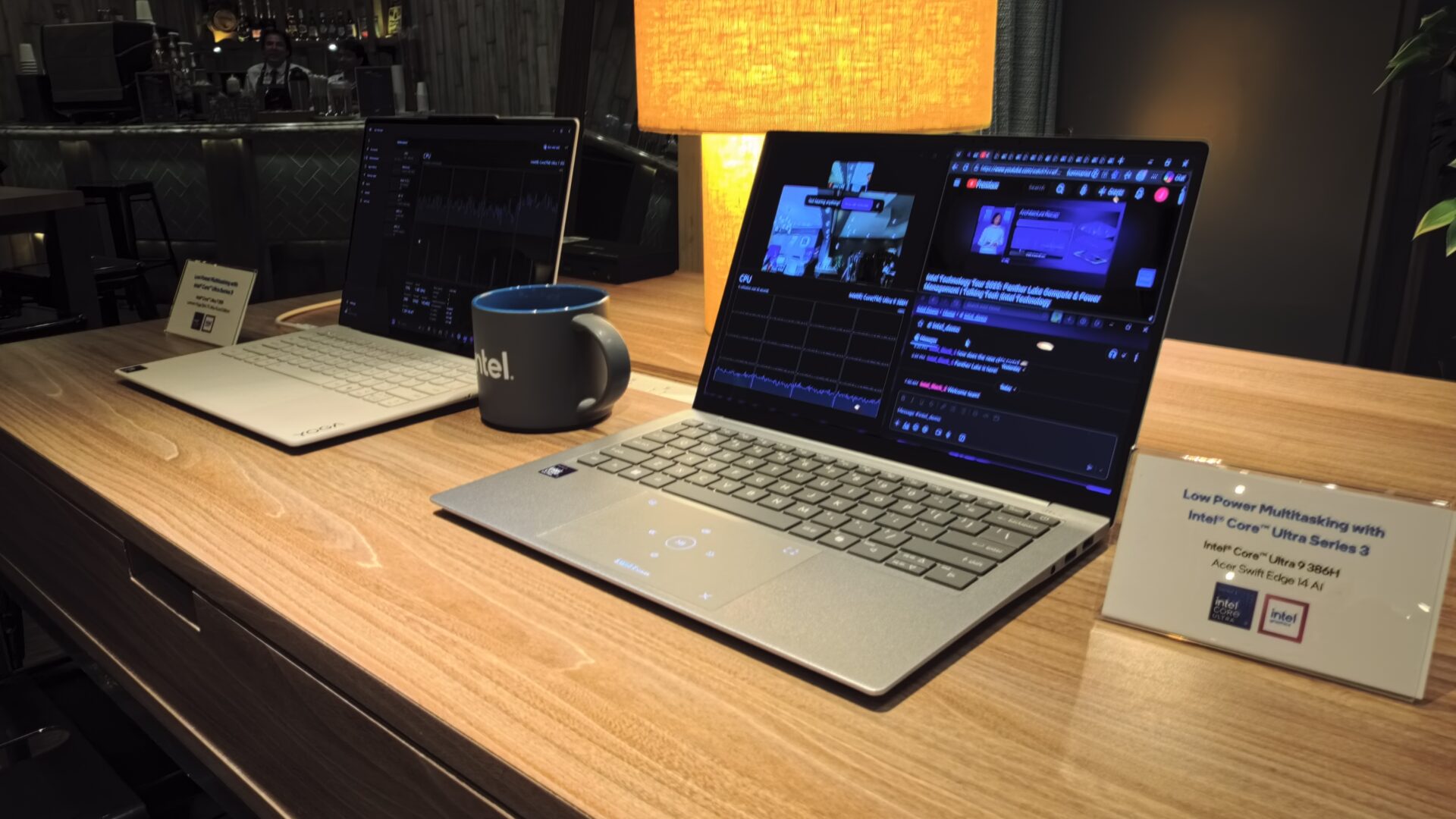
Where Intel places the biggest emphasis, though, is on how AI will weave itself into everyday tasks. The company highlights scenarios like real‑time translation during video calls, automatic photo enhancements, on‑device writing assistance, and AI‑powered organization tools—all running locally, without relying on the cloud. These are the kinds of features Intel believes will become invisible but indispensable, because they’re built directly into the hardware and optimized to run efficiently.
We discussed with Aziz how Panther Lake’s AI capabilities will benefit the everyday user, “Our Series 3 processors are designed for the multi-purpose user who needs one device that excels at everything—browsing, video calls, light gaming, content creation. The magic is in the balance: if you are a regular user who just wants to stream your favourite shows and movies, you can have up to 27 hours of battery life when streaming, for instance. It’s about giving mainstream users pro-level capabilities in a device that just works, all day long.”
Intel has the data to back up what they are saying, too. “Our new Xe3 integrated graphics with up to 12 Xe-cores delivers over 70% faster gaming performance compared to prior generation Intel CPUs,” says Aziz. Looking over the numbers ourselves, there is a lot to get excited about, especially if you are a gamer, content creator, or just someone who pushes their hardware as far as it can go.
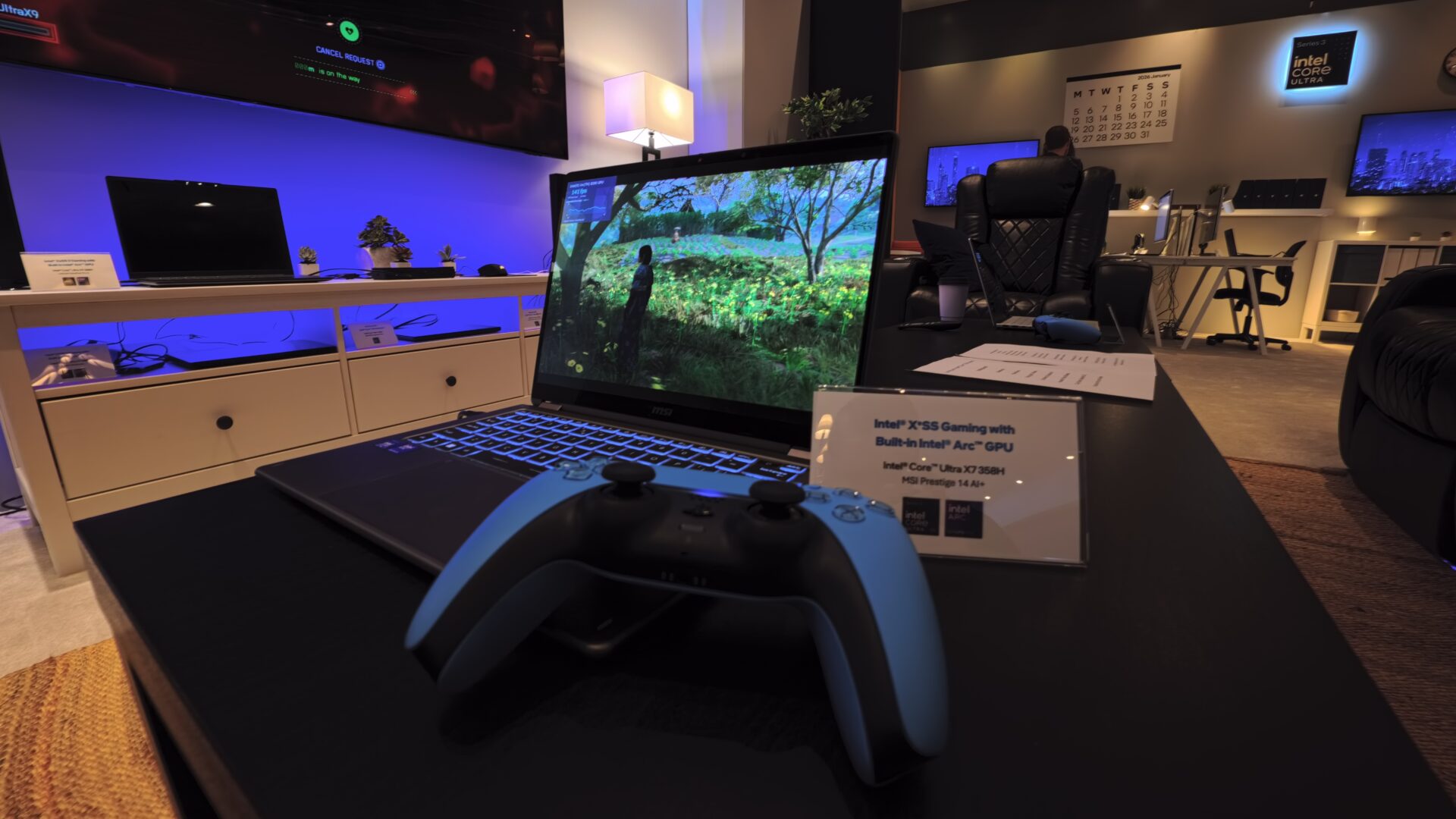
What this means in real-world testing is impressive. Cyberpunk 2077 at 1080p averaged 104 fps on low settings and reached 60 fps on high settings without frame generation. The story is similar in Shadow of the Tomb Raider, with high settings reaching 117 fps with frame generation and 88 fps without it. That is a solid showing for a mid-range GPU, especially on a laptop without dedicated graphics. Even F1 25 delivered a strong performance, reaching about 141 fps on low settings. This makes it an extremely playable experience for anyone wanting to race while on the go.
Intel is announcing significant improvements that deliver multilayer effects across your device, creating a more unified experience that pushes beyond the previous limits of onboard graphics. Aziz gave us a glimpse of what this looks like in real-world use: ”You’re getting discrete GPU-level performance from integrated graphics, which means thinner, cooler devices that don’t sound like jet engines when you’re gaming or rendering.”
Intel’s Panther Lake marks a turning point: the moment when AI becomes something users feel rather than something they’re told about. The company envisions devices that are more intuitive, more responsive, and more capable of helping people create, play, work, and communicate in ways that feel natural. If Intel delivers on its promises, this could be the first generation of AI PCs that do more than compute. They collaborate.