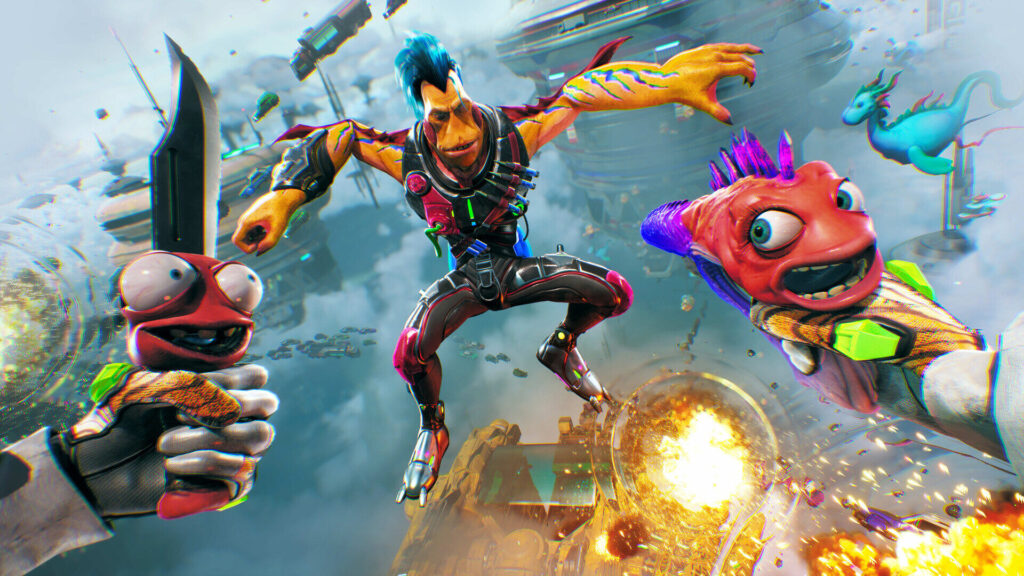

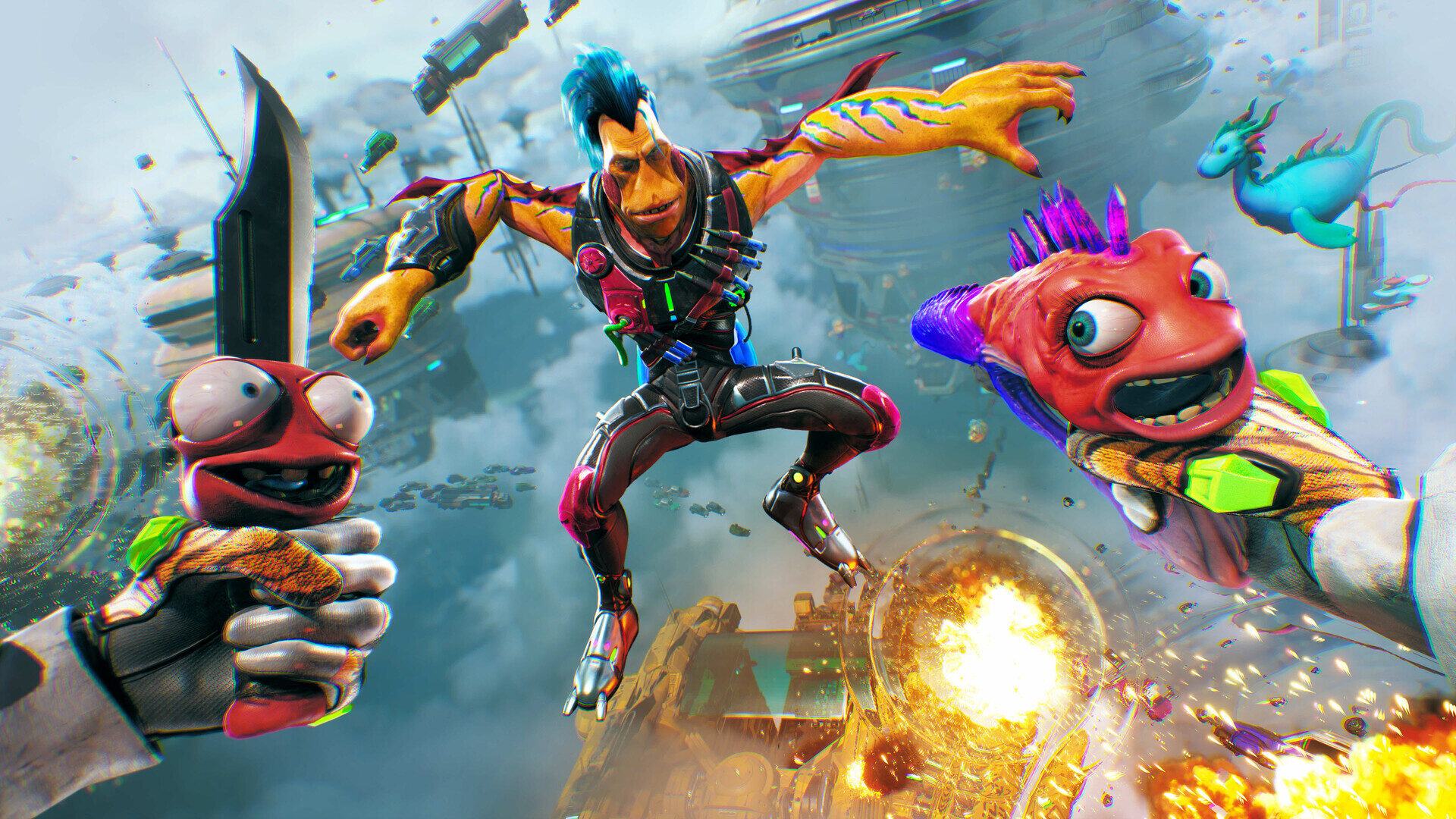
High on Life 2 is almost here, picking up three to five years after the first game and promising bigger guns, wilder comedy, and even more over-the-top intergalactic chaos. We sat down with Michael Fridley, one of the creative minds behind the sequel, to talk about how the team balanced ridiculous sci-fi ideas with relatable gameplay, how they keep one-upping the humour from the first game, and what fans can expect from story, mechanics, and surprises in the sequel.
High on Life 2 Takes Place After the First Game; How Soon After?
Michael Fridley: So it happens between three and five years after the events of the first game. So the G3 cartel, you take them down. And then the backstory, I’m trying to avoid spoilers a bit from the beginning of [High on Life 2], but we do kind of catch you up on what’s been going on in your bounty hunter life in the last three to five years.
And you’ve become like a super-famous, universally known bounty hunter at this point. There’s a whole museum that’s got a bunch of your accomplishments. You’re king shit. And the spoilery part is kind of how you transition from being a bounty hunter to being a bounty.
Were there ideas from the first game or DLC that the team wanted to save for the sequel?
Michael Fridley: Yeah, for sure. I think those conversations become more frequent the closer we get to the end of the development cycle. So we’ve got this grand plan, and we scope the whole game out. And like anything, as soon as you meet any kind of resistance, the plan falls apart. So we’ve got three years of planning to go into this game, and we start figuring out as we go along, and the scope gets bigger, but time doesn’t get bigger.
So then we start getting to more cool ideas that we can’t really flesh out enough, but we don’t want to get rid of because they’re cool. And we’re like, well, this idea is one for the third game, or this is one for the second game, whatever. It’s like we kind of have that thought where at least Mikey and Eric, our creative leadership at the studio, they’ve got the whole thing kind of mapped out in their head where they want the whole franchise to go.
So it becomes like, “Oh, this is going to pop up in the second game. We should tease it here because this is where the connection is going to happen.” So a lot of that does happen. And it’s not an Easter egg. It’s almost just part of a story that we’re telling that you guys haven’t seen all the bits of yet. So it makes sense for it to be there in our heads because we know the whole story.
But some of it’s intentional too. Some of it, like we do a lot of dumb shit in our games. Like we do, just red flags or red herrings. And there are all kinds of stuff there that’s just like, we found amusing, so we did it. And there’s no further deeper meaning to it other than that. Like we thought, it was just funny in the moment, and then sometimes it does have connective tissue, so you never can tell.
So High On Life has this interesting mix of grounded reality, Sci-Fi and Comedy. Where does the inspiration come from to be able to mix all those so well?
Michael Fridley: I think Mikey came up with it early on, that it’s a cross between Jim Henson and Blade Runner.
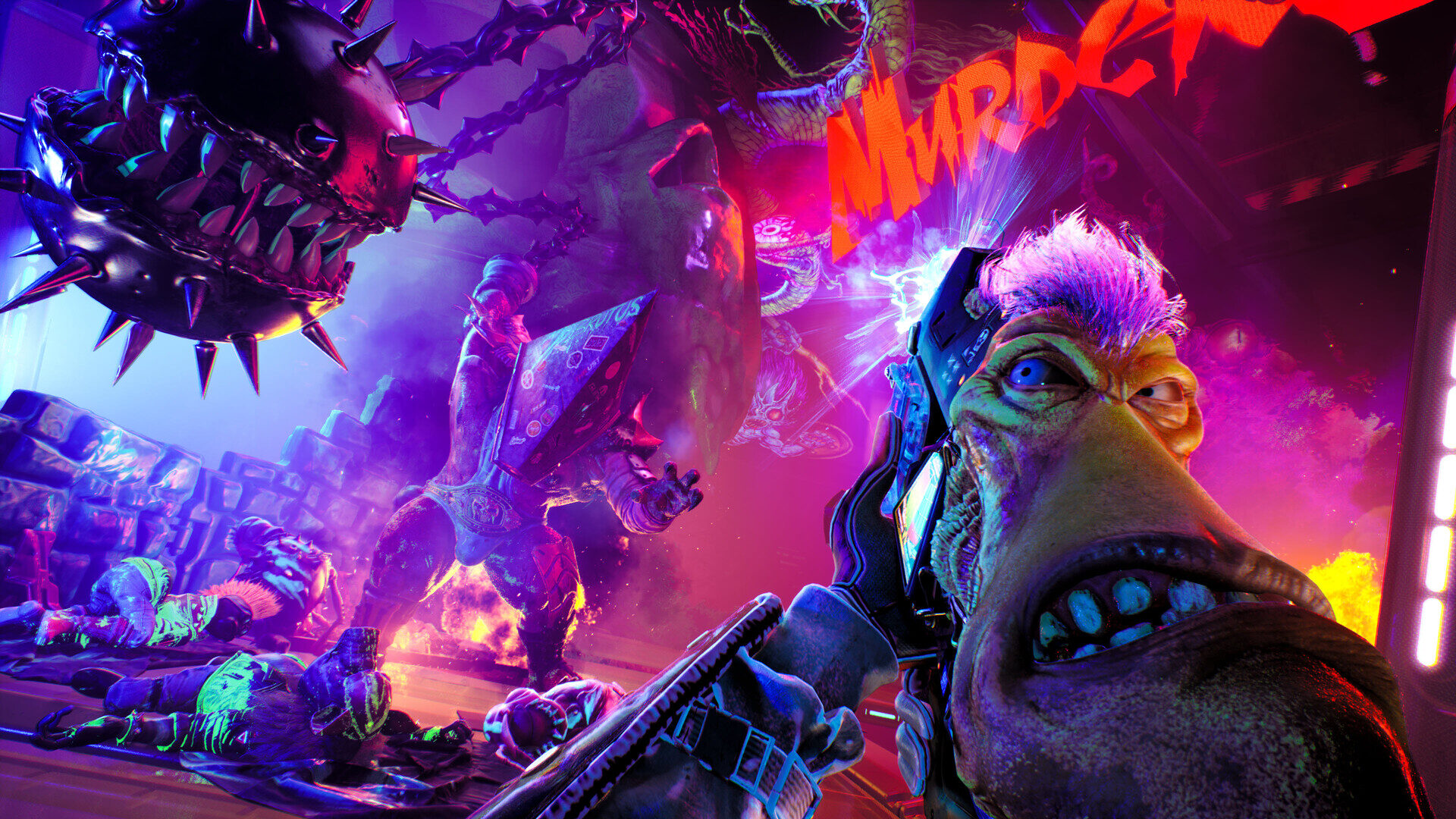
So, what that means is that yes, the sci-fi can get crazy. Yes, we can have crazy like, like Duffalo’s from the DLC that carry people around inside them. It’s like crazy, weird sci-fi stuff, but almost all of it is relatable in some way. It has to be relatable to the human experience because humans are playing this game. It’s not made for aliens. So there, it has to be relatable in some way.
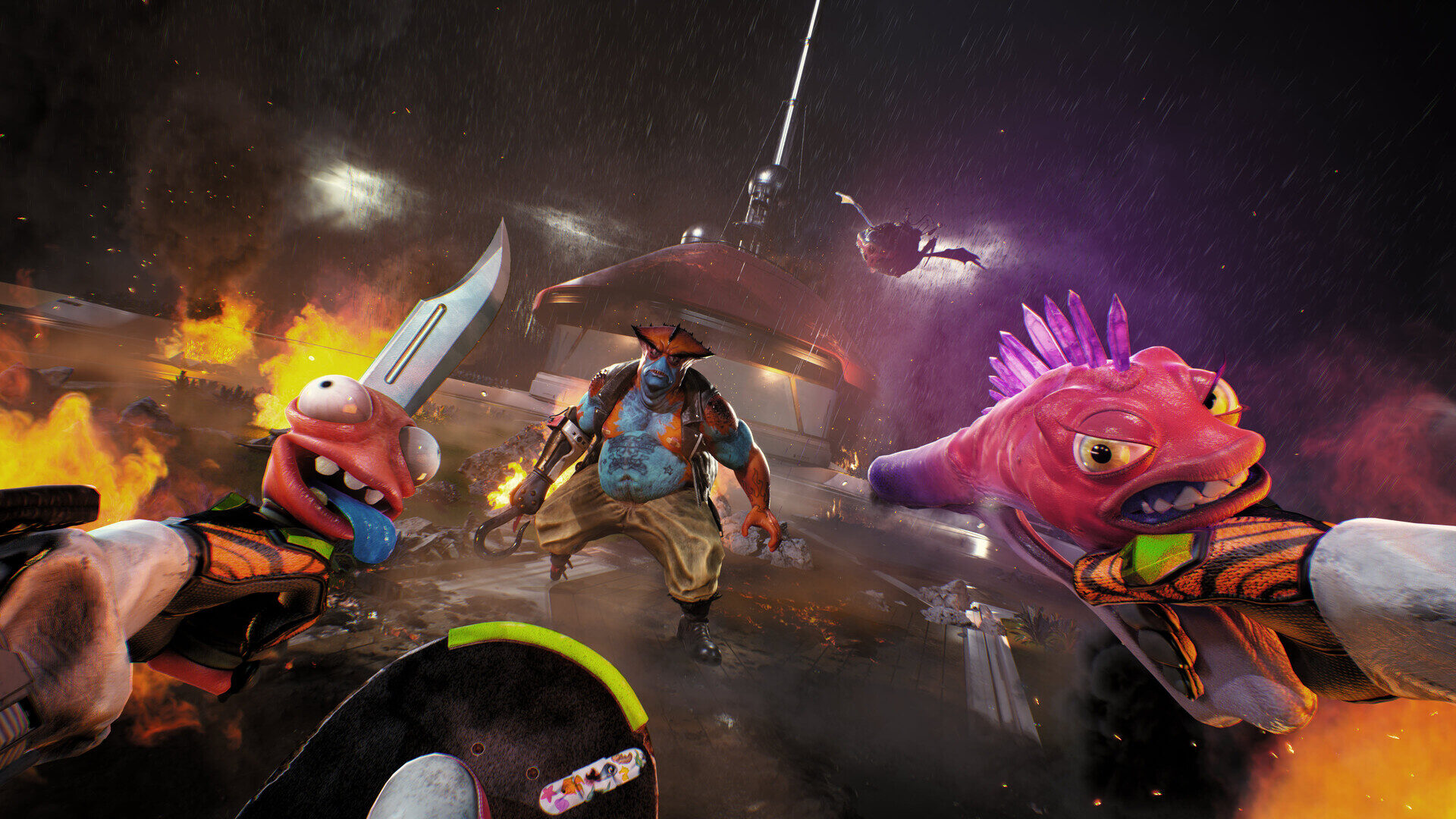
So the Gatlians look just like guns, and they perform like an SMG, a shotgun and an assault rifle. If this were a real sci-fi story, they probably wouldn’t do that. They’d be shooting like plasma balls and weird electricity or whatever, like they wouldn’t mimic earth-bound guns. But we need to root it in a common experience. So when you pick it up, it feels like a cool shooter at the same time that you’re experiencing all this weird and wacky stuff.
Does the team feel any pressure to not be as funny, but funnier than that first game?
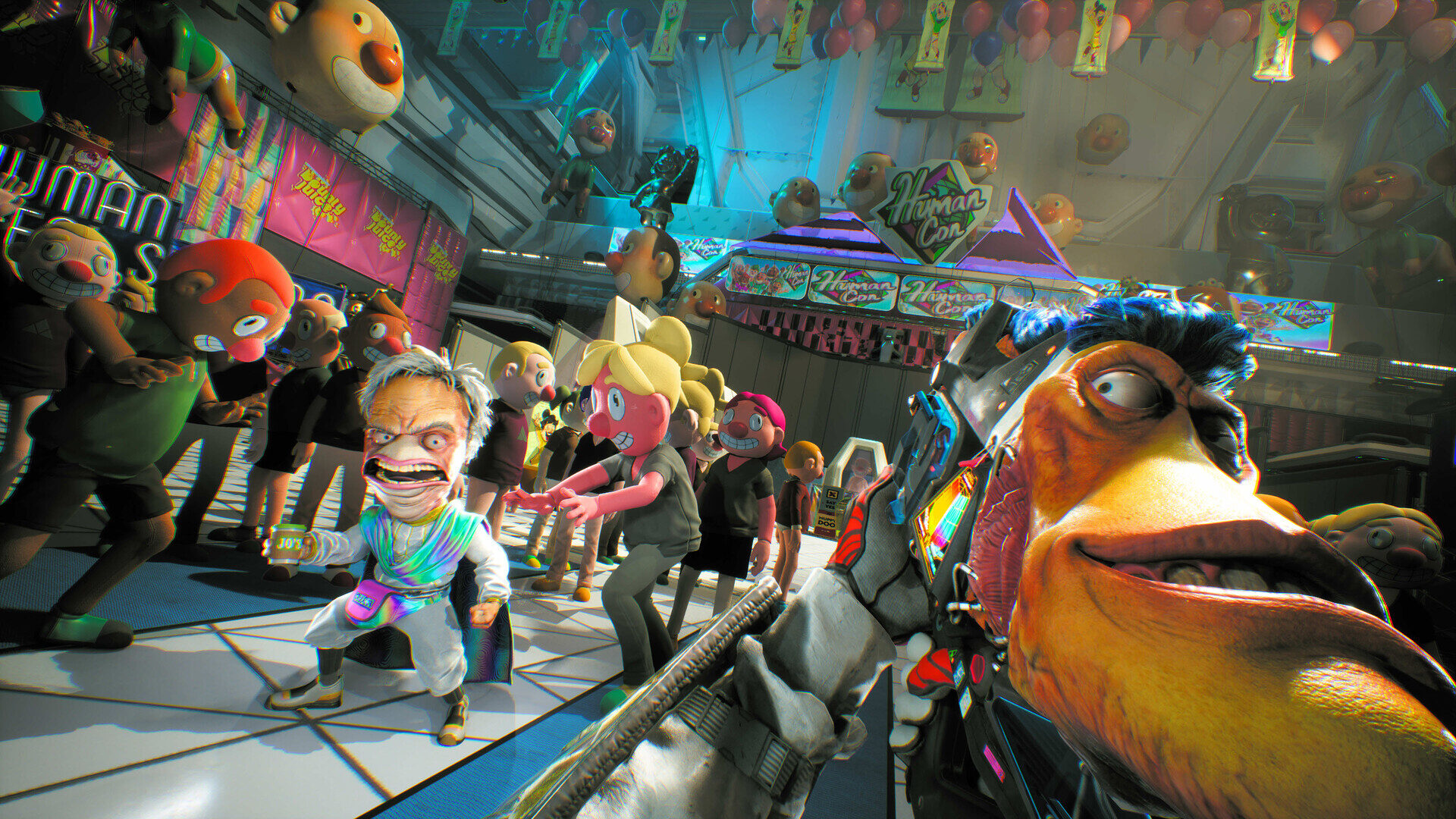
Michael Fridley: Yeah, I think we always want to one-up ourselves. Like, the big driver for us internally is every Friday we have a show and tell. We’ve been doing it for the whole time I’ve been here. And we just show off what we think is funny or cool, or like, you know, maybe it’s a new shader that makes the water look really cool or whatever. But most of the time, it’s just things we find funny.
So if you come to a show and tell and it falls flat, you kind of have to look at it again. But like, if you kill it, like I feel like we always talked about it when we were trying to design the first playable for the first game, we just want to make a game that we want to play. And that really is what drives most of our decisions about whether it’s comedy or game mechanics or anything like that. If we don’t think it’s funny, it’s probably not going to make it into [High on Life 2].
It becomes a competition internally to make each other laugh and to one-up the next thing. Like, we had one of our senior designers just go off and make a whole Super Nintendo game that is like a mini game based on one character in the game. And it just goes completely psychedelic. And she just sprung it on during a show and tell. She’d been working on it for like the last two years in her spare time. It was just like, “hey, this is a thing I thought was funny.” And we were like, holy shit, this is amazing. Like, we have to put it in the game.
Are the guns and NPCs in High on Life 2 written for specific actors? Or when you find an actor, does that shape the writing of the character?
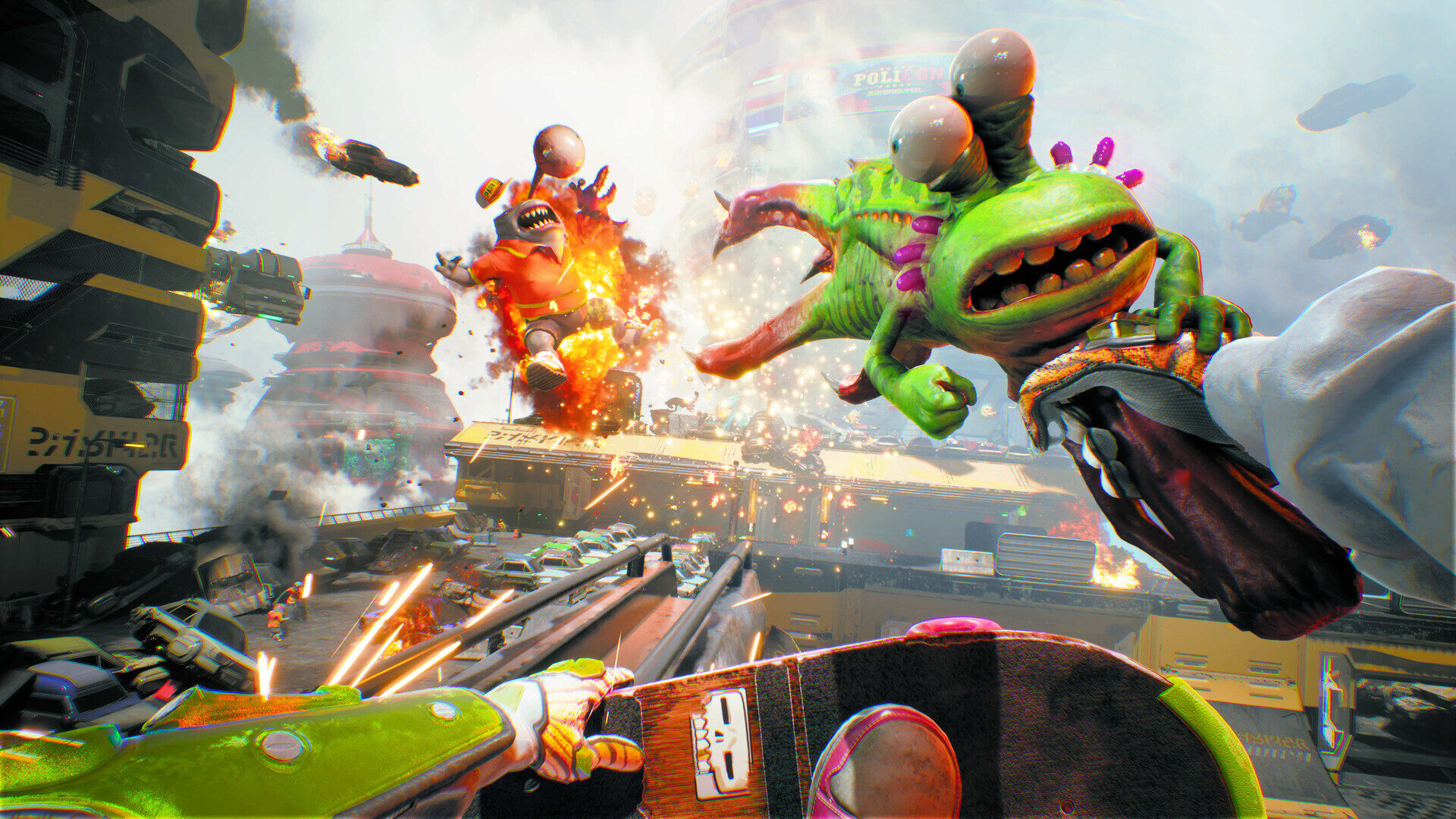
Michael Fridley: Yeah. I mean, shockingly, and I continue to be shocked by it, so I don’t expect people to believe this. But every character that we wrote, we wrote it with an actor in mind, and we got that actor. And we’re like a stupid little indie studio. Like, I know that we had some cachet behind us from the first game, but the idea that we’re like, “oh, this would be funny if we got J.B. Smoove to voice this.”
And we start writing it like J.B. Smoove’s going to voice it. And we’re all big Curb Your Enthusiasm fans. And, you can just hear J.B. talking before we even cast him. And it became the big joke, every call I got on with anybody that had to do with voice acting, they were certain we’re going to get J.B. Smoove. And I’m like, “dude, we’re not going to get J.B. Smoove. This is ridiculous.”
This is the height of Curb. It was their final season. He was doing a ton of shit. We put it in front of his agents, and he looked at it. He was in. And the same thing with Tim Robinson. Like, Tim Robinson has five million things he’s doing right now. Just shooting around Chair Company, getting his voice on the game was an insane logistical nightmare. But they all love doing it because it’s funny.
And, we had the DLC, we had Gabriela Sidibe in mind when we were talking about the boss. Gabriela is an Oscar nominee. So when we’re writing it, we’re all hearing it in Ralph Ennis voice. Thinking well, there’s no way Ralph Ennis is going to be in a stupid video game. He’s not going to voice like a gun and try to be funny; he’s never tried to be funny.
You start writing it like that, in his voice. And then if you can’t cast him, you have to try to cast somebody that sounds like him because we’ve written so much of this stuff to be like this dark, brooding, you know, the straight man for some of the Gatlians’ jokes. Like, there’s just certain stuff that you have to have that like gravitas around your stuff to book a Ralph Ennis type. And so far, we’ve been lucky and got really good performances, too.
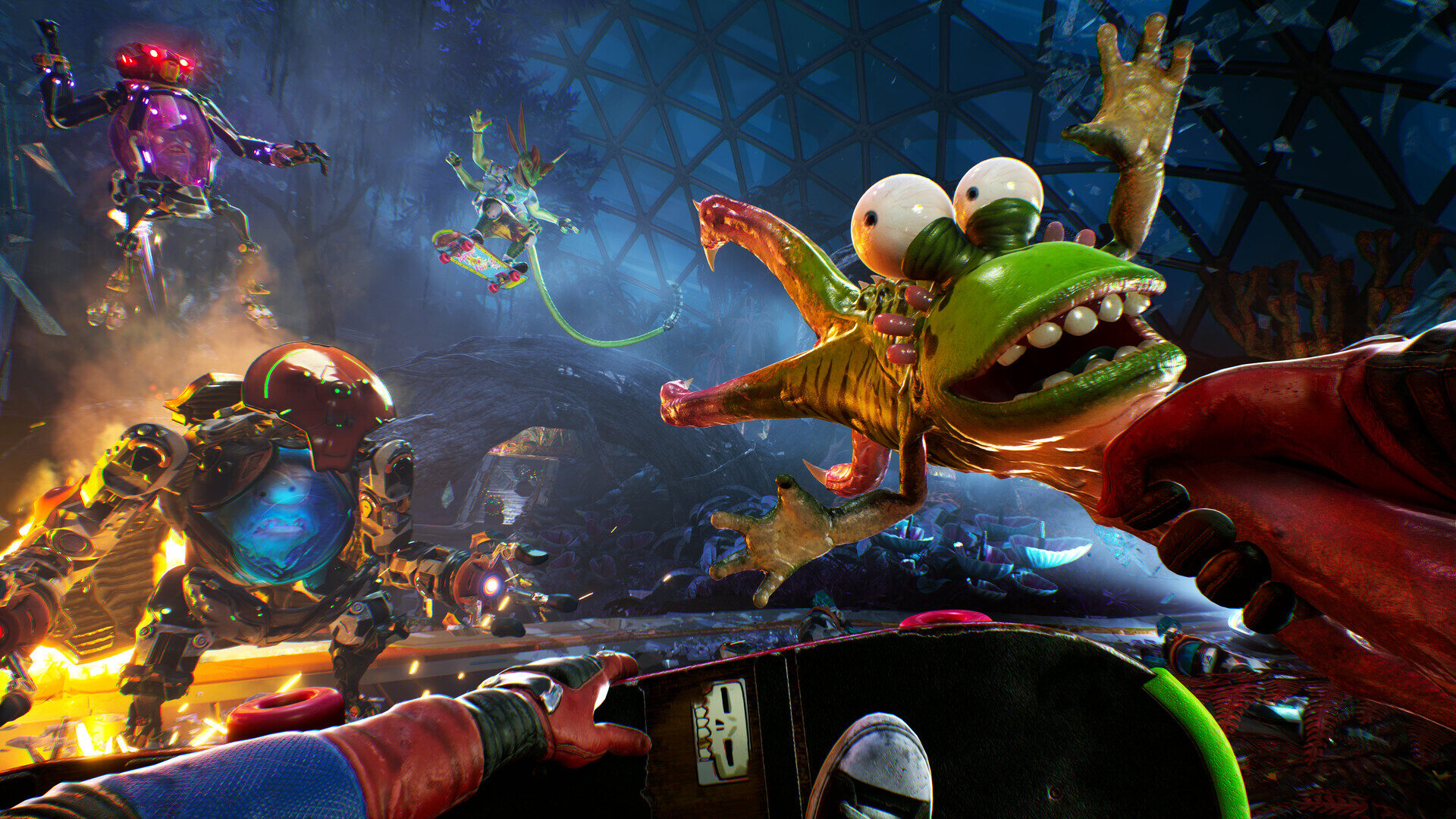
Like Tammy and the T-Rex, are there full-length movies and other surprises like that waiting in store for players again?
Michael Fridley: Yeah, so we try to one-up ourselves, and we put movies in again. But we also put in several playable games inside our game. So there’s an arcade with stand-up arcade games, and we have emulated several games that we licensed. My favourite among them is Bible Adventures. So that’s the big one that comes to mind right away.
How did the discoverability from being on Game Pass help and change the franchise?
Michael Fridley: I think our original expectations were fairly middling for the game when it came out. We knew we were going to have some cachet because of Rick and Morty‘s popularity. And we knew that it was going to be a good game. And that it would, but we thought it would be more like a cult classic, that it would have a long tail but not a very big up front one.
What Would You Say to People Who Bounced Off the First Game?
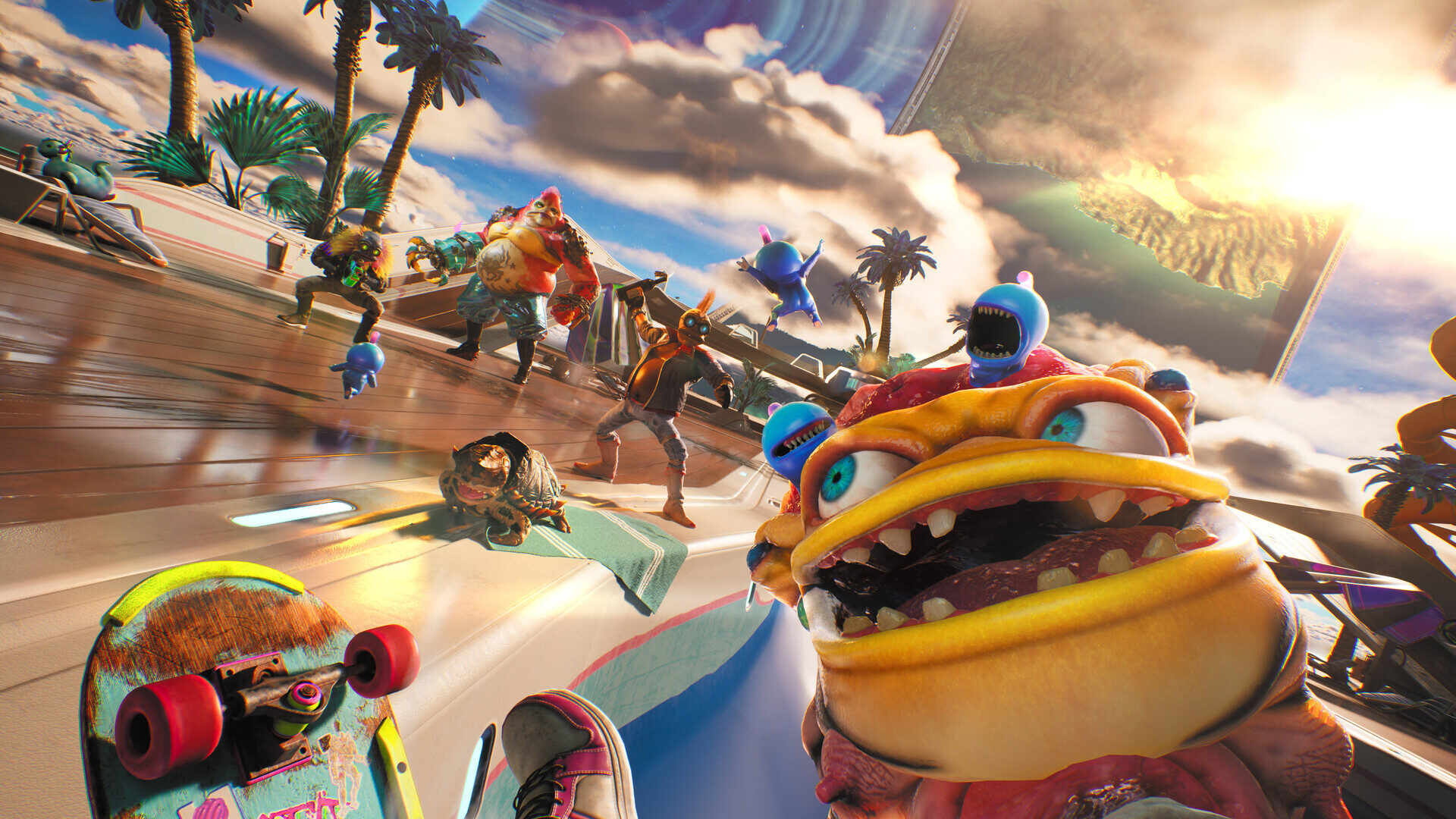
It depends on what you didn’t like about High on Life. If you didn’t like the Gatlians and the comedy and the over-the-top stuff, you’re probably not gonna like High on Life 2 either. I’m the worst salesman for it. Like, you’re not gonna like it because it’s just that plus. It’s like High on Life plus. So we didn’t change the formula. Uh, we changed engines. Like, if you hated Unreal Engine 4 for some reason, maybe you come back. If you didn’t like the first one, you’re probably not gonna like this one.
And the mechanics are great. The systems we developed for kind of a bullet-hell shooter, our boss battles, they’re next level. We’ve jumped, I think, considerably there. So if you’re looking for just good, solid mechanics behind a shooter, it’s a great game. But likely what turned you off was the comedy. So that didn’t change. You could turn down the chatter, I guess.
I have nothing for you. If you don’t like High on Life, I don’t know. I don’t want to tell you, like, you’re just an asshole. Like, you just don’t, you don’t deserve happiness in your life. I think you probably have led a very, very depressing life for the majority of your life. You just don’t know how to have fun, you know? So for those types of people, I don’t really know what to tell you.