
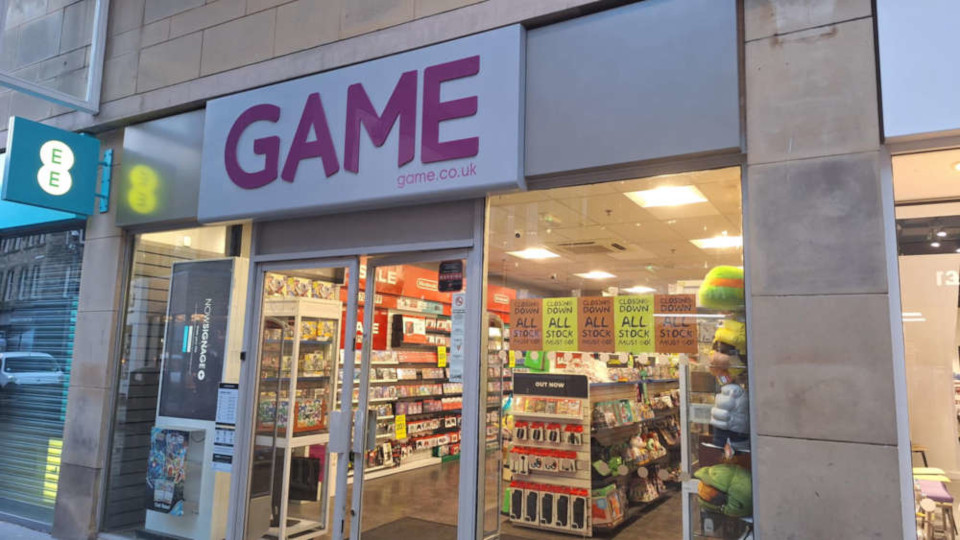

On the 29th of January, 2026, administrators were once again appointed to take control of video game retailer GAME’s finances. The result? The final three GAME stores were handed closure notices, and with that, British video game retail, to all intents and purposes, came to an end.
One of the last stores to be closed is in Lancaster. I have no idea how a little northern town – okay, it’s a city, but only in a tenuous, cathedral-waggling contest – managed to sustain a GAME store longer than London, Manchester, or Liverpool, but there it is. I guess the rent was cheap.

This former Gamestation site – Game bought the rival brand from Blockbuster in 2007 – has a particular place in my heart, because I and a number of my friends once worked there. Watching the sad decline of video game retail happen in real time, to a place where you knew the convoluted route to the bins, and had probably wasted too much time shrink-wrapping old consoles, felt like the kind of loss that generally comes with age. Places change. Shops, pubs and restaurants come and go, but you’re going to carry on calling them by their old name for the rest of your life, because there’s a point in time where they’re frozen for you.
For me, that’s the mid-noughties era of Gamestation. I arrived during a time of excitement, joy, community and camaraderie. PS2, Xbox and Gamecube games adorned the shelves, Burnout 3 competitions were battled out at the weekends, and management didn’t seem to mind if the store became a staff clubhouse after hours. I remember closing the store, dragging out a bunch of screens, and hooking up a batch of Xbox’s to play Halo via LAN – Steve remembers this more clearly as times where Ade would repeatedly run him over in a Warthog, despite being on the same team. Another time, it was Wario Ware Inc., mashing away haplessly at the buttons while the rest of the team cheered and jeered in equal measure. It was magical, both in terms of friendships and geekdom, and for someone who loved video games and tech, it was a level of immersion in the hobby that I don’t think many people get to experience.

Gaming still felt new, and it still wasn’t entirely mainstream. I’m not convinced parents really know all that much more about modern games than they did in the early 2000s, but there was still the sense that games were primarily for kids. I remember the increasing look of horror on one mum’s face as we gave her an in-depth explanation of GTA’s gameplay, and all the while, Little Jimmy looked more and more sheepish. She turned to him with bulging eyes, spat out the words, “You are not having that!”, before pulling him out of the shop after her. I still think of her every time my own children hit the parental request button.
This was a job that was legitimately a hazard to my bank balance, though. Gamestation took in pre-owned games – I think when Game culled that side of their business in 2024, the business then had no real long-term future – and through each month, every member of staff would start to accumulate a pile. These piles would be full of the esoteric, rare sorts of games that fetch a tidy sum on eBay now, and when payday rolled around, you could kiss goodbye to a massive chunk of your salary as you took them home to adorn your shelves. We did it every month.
My favourite memory was the day that someone brought in a boxed edition of Steel Battalion. For those that don’t know, this original Xbox game came in a munitions-like box, and inside it was a recreation of an actual mech’s control panel. It was massive – I remember it taking up a huge chunk of the back shelving – and it was something that I’d only seen in the pages of Edge and Gamesmaster magazine. Even with staff discount, I couldn’t afford it, and I remember the Mexican standoff between team members as each pictured their bank accounts, weighed up their rent for the month, and wondered if their significant other would ever let them back in the house if they bought it.

Though the stores are now no more, GAME as a high street retailer does, ostensibly, still exist, though it’s been reduced to moribund kiosks at the back of Sports Direct stores, where I fully expect them to fade into nothingness within a couple of years. British video game retail now rests almost entirely in the hands of CEX – Lancaster has one of these too – and it feels like their pre-owned, wondrous car boot sale of ageing games, brand new phones and mystery audio tech is a worthy place for British video game retail to hang its last independent hat.
Like CEX’s stock, the death of retail isn’t new. Video games in particular have been moving away from physical games for years. Xbox Series S and the digital PS5 don’t even have disc drives, PC games are basically entirely digital, and competitive digital sales and services like Game Pass and PlayStation Plus mean that gamers don’t even need to step out of the house to get a new game.
The death of physical sales, though, isn’t the biggest loss with GAME. It’s the loss of community, the loss of friendships, the loss of random face-to-face interactions with the world’s biggest Zelda fan in a midnight launch queue. The fact that they were local, when gaming has become so much of an online entity, made it feel as though you weren’t the only geek in your hometown, and whether it was the breathless excitement of a new console launch, or writing your name in marker next to the fastest Burnout 3 time on a whiteboard, these are things that can’t be recreated online, or by an Amazon driver dropping a box at your house. I know that everything changes, but for me, and for so many others, this is truly the end of an era.