
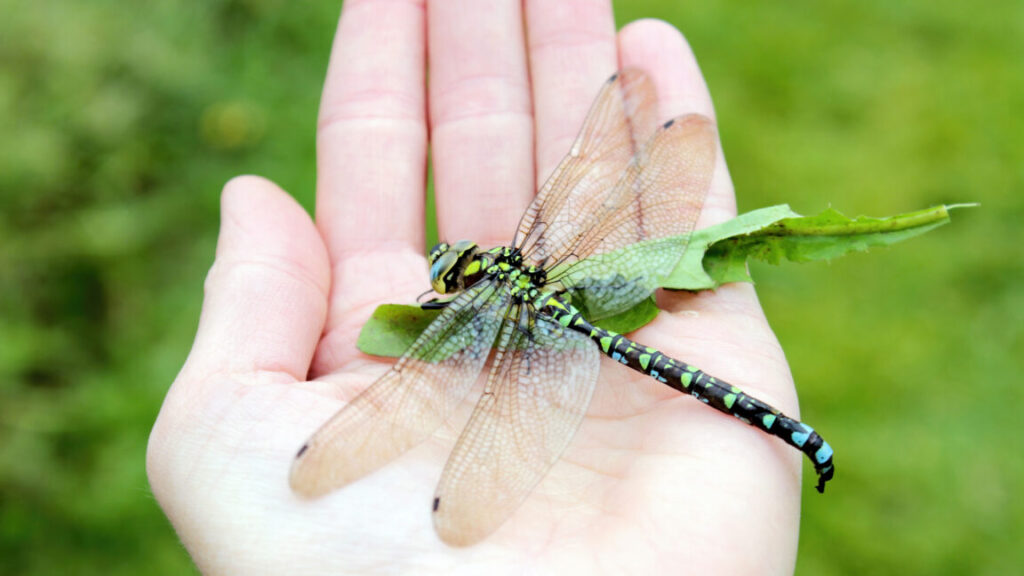

Three-hundred million years ago, the skies of the late Palaeozoic era were buzzing with giant insects. Meganeuropsis permiana, a predatory insect resembling a modern-day dragonfly, had a wingspan of over 70 centimeters and weighed 100 grams. Biologists looked at these ancient behemoths and asked why bugs aren’t this big anymore. Thirty years ago, they came up with an answer known as the “oxygen constrain hypothesis.”
For decades, we thought that any dragonflies the size of hawks needed highly oxygenated air to survive because insect breathing systems are less efficient than those of mammals, birds, or reptiles. As atmospheric oxygen levels dropped, there wasn’t enough to support giant bugs anymore. “It’s a simple, elegant explanation,” said Edward Snelling, a professor of veterinary science at the University of Pretoria. “But it’s wrong.”
Insect breathing
Unlike mammals, insects don’t have a centralized pair of lungs and a closed circulatory system that delivers oxygen-rich blood to their tissues. “They breathe through internalized tubing called the tracheal system,” Snelling explained.