
The Musou games and their ‘1v1000’ gameplay style are practically a foundational piece for video game civilisation at this point. Ever since the original Dynasty Warriors game appeared on the PlayStation, they’ve pushed the technical boundaries of each platform, filling your screens with Yellow Turban Warriors, four-digit kill counts, and screen-filling carnage at every turn. Now it’s the turn of the Nintendo Switch 2, though Dynasty Warriors: Origins is not the first Musou game to arrive on this generation of handheld.
Koei Tecmo and Omega Force have worked alongside Nintendo for a considerable length of time, with their collaboration on the Legend of Zelda spin-off Hyrule Warriors ensuring that this is a team that are thoroughly versed in Nintendo’s hardware. Most recently, that’s seen Hyrule Warriors: Age of Imprisonment arrive on Switch 2, and it’s clear that many of the lessons learned from that release have been carried over to this port of Dynasty Warriors Origins.
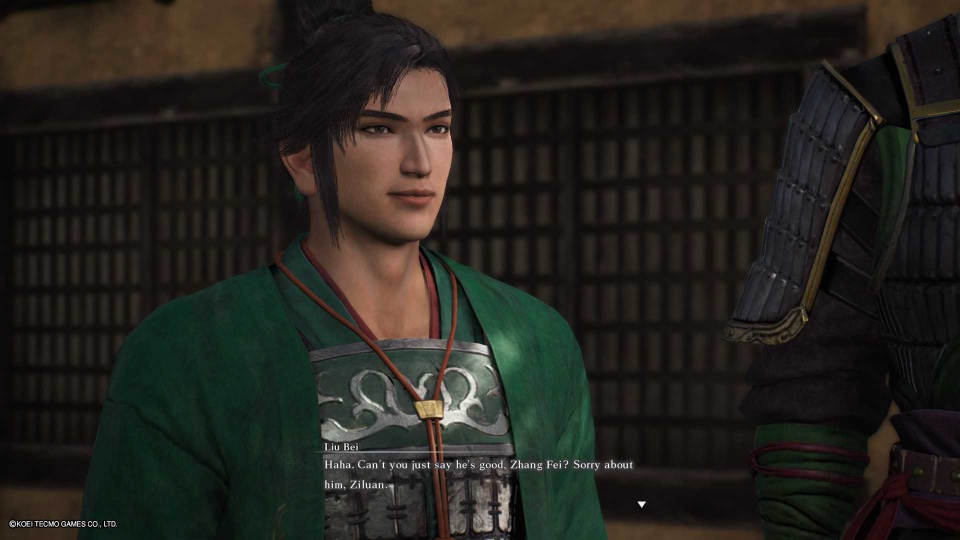
Dynasty Warriors: Origins immediately impresses with the quality of its cutscenes. Fully voiced in either Japanese or English, these look excellent, whether CG or in-engine, and they run at a consistent frame rate as well, which you can’t always guarantee on Nintendo’s less powerful hardware. The in-engine versions give you a good look at the character models, and they’re surprisingly close to those you’ll see on PS5 and Series X, albeit with a hint more anti-aliasing shimmer around character’s hair. They set the tone for an experience that feels very close to the one available across other platforms.

Omega Force look to have made smart decisions with the transition to Switch 2, rather than just a wholesale downgrade which seems to be the current approach for a number of companies. That, in and of itself, makes this one of the most consistent and impressive Switch 2 ports we’ve seen so far.
There’s two key graphical settings here, and it’s nice to see Koei Tecmo letting Switch 2 players make some decisions about the game’s visual setup. In this case, that means opting for either a locked 30fps or letting Origins run with an unlocked, variable frame rate, and it’s an intriguing choice.
There is certainly some extra fluidity when playing with a variable frame rate, and that wiggle room means that, at times, Dynasty Warriors: Origins can feel more reactive. However, that also means that the frame rate can alter depending on the situation, and with more warriors on screen, there’s definitely increased stress and strain on the engine. The frame rate doesn’t drop to a point where it feels like stuttering, but if you’re aware of it, you’ll probably want to opt for the locked 30fps, as it’s simply more consistent.
Interestingly, the place where it feels like the most graphical concessions have been made is in the open world. This top-down overworld has definitely lost some detail, and you can make the frame rate occasionally drop when you’re running around and spinning the camera about. Still, as a slower, non-action section of the game, it doesn’t detract from the experience at all. This is all true whether in docked or handheld mode, but, unusually, the handheld mode actually feels more detailed, particularly in cutscenes and the open world. There’s none of the obvious resolution downgrading that I’m used to seeing, and it makes Origins an excellent experience when you’re out and about.


Dynasty Warriors: Origins served as a reset for the series, and it managed to update and revise the classic Musou experience for the modern day, tightening up the combat and beefing up the storytelling while layering RPG-like progression across the top of it. All of that feels just as good here in the Switch 2 release.
The question mark that lingers over Dynasty Warriors: Origins is the addition of a fictional central character, complete with amnesia, a mystical quest, and a newfound supernatural element. For a series that remains grounded in history – albeit a hyper-stylised, caricature of this period of Chinese history – it was an interesting pivot, but one that fits with the shift in tone towards an action-RPG. If anything, I found it gave me more agency and more permanence than previous Dynasty Warriors games, giving me a place within the narrative and setting that matched my own, external viewpoint.
Alongside the more in-depth combat and RPG-like progression, Dynasty Warriors: Origins stand out feature is its audio. The quality of both the English and the Japanese dub is good, but it’s the orchestral soundtrack with its louder, more bombastic moments during battles that really help to set the tone for a journey that feels as grand and epic as you could hope for.