
Dragon Quest is a series that has been going on for decades. The high-fantasy JRPG franchise has inspired millions and is one of the solid backbones of inspiration for developers who have created RPG titles for generations.
Among its most devoted fans, Dragon Quest VII is arguably one of the series’ best entries, and Square Enix has brought this classic to the present with Dragon Quest VII Reimagined. This remake not only retains the magic, but also respects the original art direction provided by Akira Toriyama (Dragon Ball) and the simplistic gameplay, while adding quality-of-life features to make the game more palatable for today’s players.
This remake is one of those projects that isn’t meant to reinvent the classic. As the title suggests, it’s literally a reimagining. This isn’t a radical shift compared to what Square Enix did with Final Fantasy VII Remake, as this feels more like an attempt to preserve the original JRPG blueprint.
A Kid’s Thirst for Adventure…
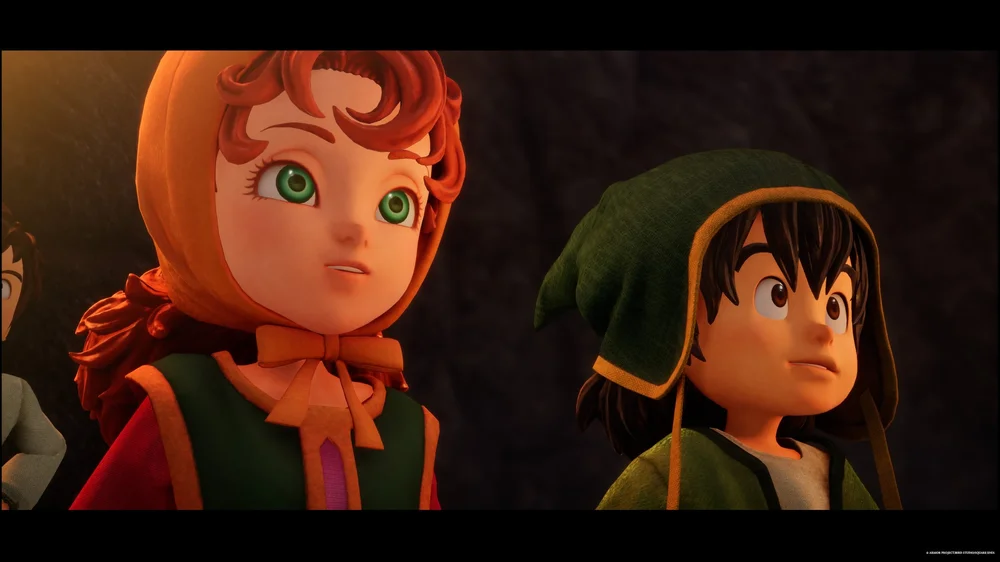
You play as a silent protagonist, a fisherman’s boy just itching for a quest. Your friends, Kiefer and Maribel, stumble across a secret that allows them to teleport to the past on a lost island. Their efforts to resolve the island’s issues result in that area being restored in their present time. Thus begins a journey to restore the lost islands, rebuilding the world one landmass at a time.
Each island you visit feels like an episode of an anime series, a collection of isolated stories with their own sets of characters and conclusions. You’ll find a town with its citizens turned into stone, an island on the brink of a volcanic eruption that could destroy everything around it, and a town whose citizens randomly turn into farm animals at certain times. It can be hit or miss for players, as some stories caught my attention more than others. For example, I felt compelled to find out why folks in a town were randomly turning into animals, while in another story, I wasn’t all that interested in the town’s ritual of tossing hats as tribute to “calm” a volcano sitting dangerously close to their main town.
While time-traveling is never a concept I get too excited about due to its complexity, I do see the enjoyment in the aftermath of each island when I get to visit it in the present after it’s been restored. It’s a rewarding journey, as the game starts with one landmass, and your progression slowly opens up the game’s overall world map.
…And Every Adventurer Needs A Crew
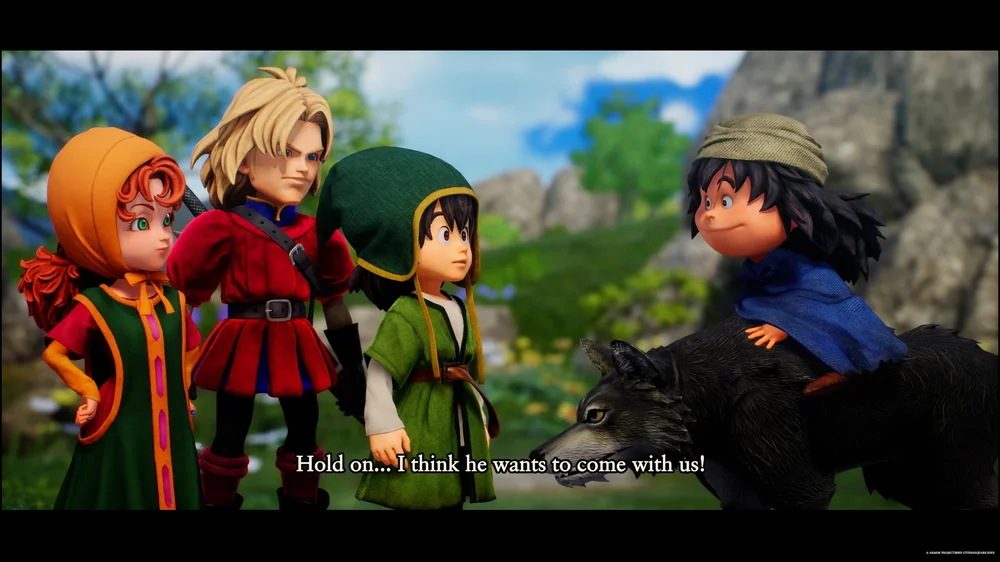
Thankfully, your party is a fun bunch of characters that does the heavy lifting in terms of personality. With the main character limited to nodding either up or sideways, Maribel’s loud and bossy nature and Kiefer’s heroic antics stand out and clash well. You then mix in the wolf boy Ruff, the legendary hero Sir Mervin, and the dancer Aishe, and you have an unusual group of characters that grows on you as you start to enjoy their interactions.
Some might find Maribel’s personality annoying (I did), but she gradually shows a more caring side when it matters. She doesn’t express it openly, but her bossy nature starts to come across as concern in its own way.
I enjoyed the cast enough that I wished they interacted more, as some stories have most of the characters becoming part of the background. At times, the island stories take center stage, and you simply come in as the solution to the problem, nothing more.
But Square Enix’s efforts in injecting some likable traits into these characters pays off in the end, as the overall story follows a typical JRPG narrative, with these kids (minus Sir Mervin) working together to save the world. The funny thing is that I see almost all the JRPG tropes here, but I don’t find that an issue considering that this series is where those tropes started, and they always pull it off well.
Solid turn-based combat without any bells or whistles
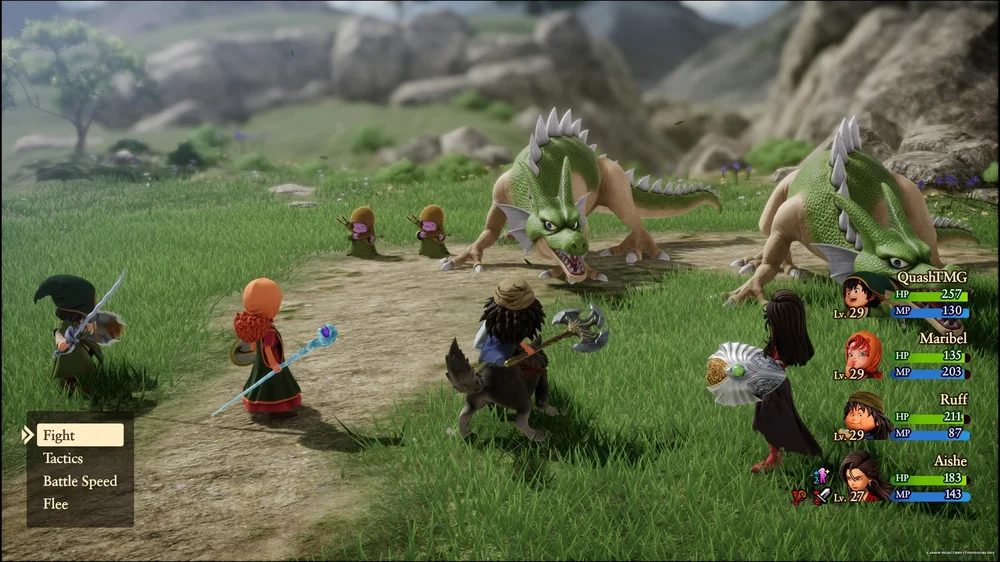
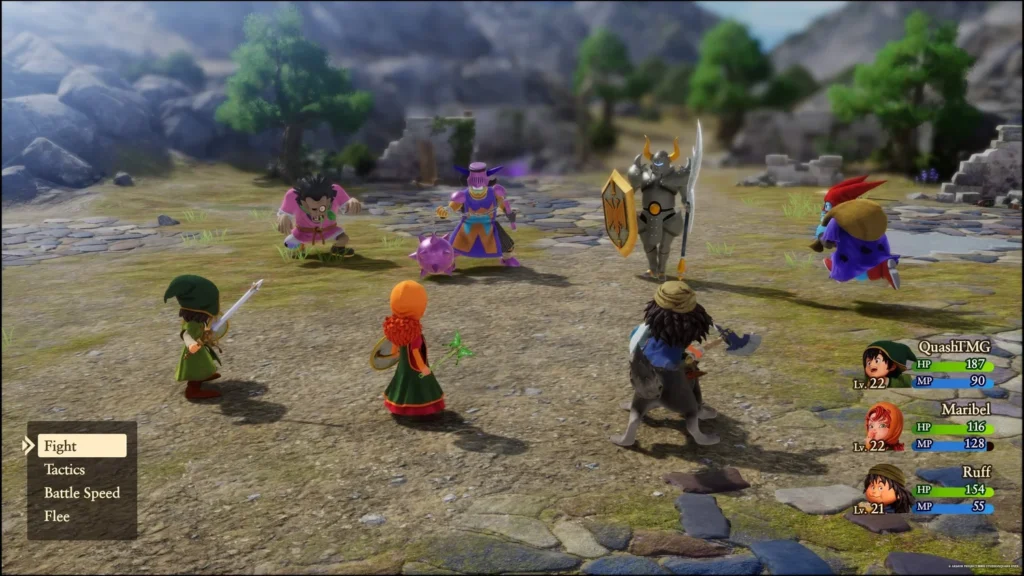
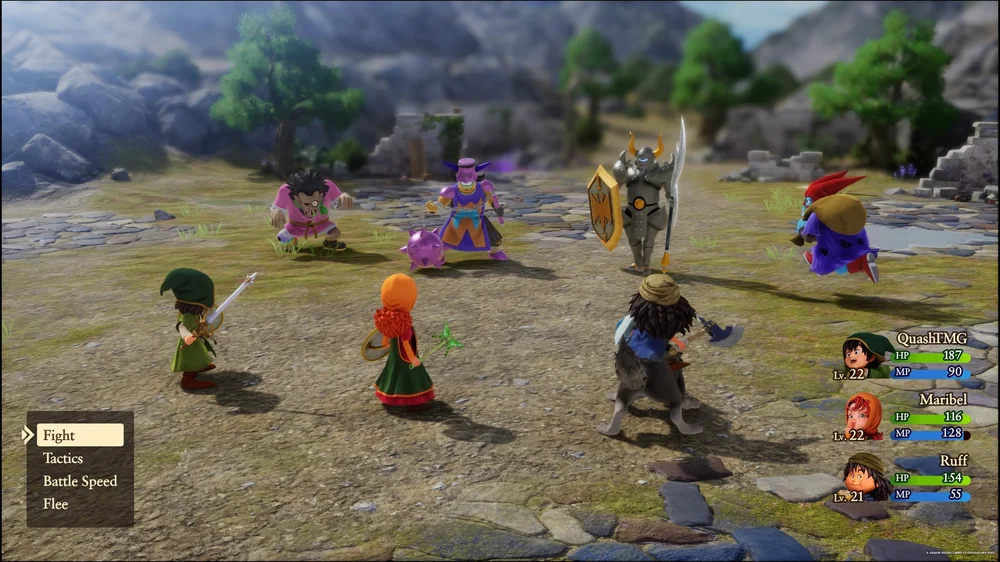
When it comes to Dragon Quest VII Reimagined, it’s back to basics – a turn-based combat system where players and enemies go at it one at a time. There are no gimmicks here, as each character has a set of skills and abilities based on their chosen vocation, you can have a maximum of four characters in a party, and each one has this game’s version of a FFVII Limit Break that’s meant to be a character’s trump card to turn the tide.
Thankfully, this is where the remake shines, as the game’s combat is no longer done in a first-person perspective where you don’t see your party’s actions. It’s now a JRPG where you can see each character performing their actions, getting hit, and using their signature skills. I was never a fan of that perspective, as it’s one of the reasons why I avoided Dragon Quest’s earlier games, so it’s a welcome change.
The game’s vocation system provides the only real sense of complexity, as each character can take on a specific class. This version of the game introduces the ability to later equip two at the same time, giving each character more abilities and interesting combinations, allowing them to specialize in specific roles within the group.
This overhauled system adds more depth and encourages experimentation. For example, I could make the main character focus on physical damage with healing properties, build Maribel into a magic user, or have Aishe deal damage based on her Charm stat while providing both negative and positive buffs during combat.
Equipment is also simple, as each character can equip a weapon, two armor pieces, and two accessories. I did come across interesting item combinations, such as making someone a pure powerhouse at the cost of no longer having MP, or ensuring that critical hits occur more often during attacks.
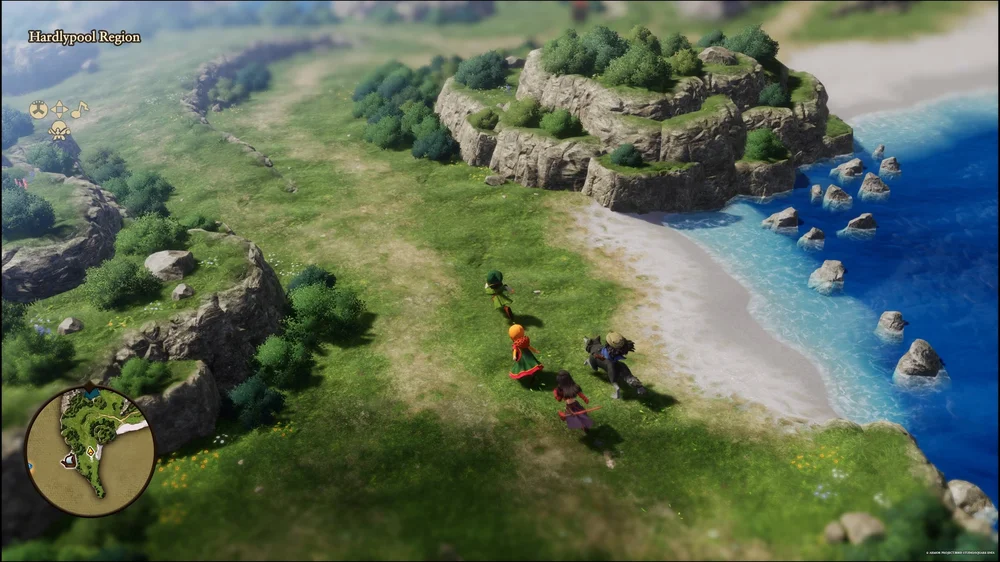
What I like about this system is that anyone can pick it up the moment they start playing. The character designs and score are charming and approachable, to the point that my wife started enjoying watching me play and eventually felt eager to try combat herself. She hardly plays JRPGs, but began handling combat for me when she had free time, and she was clearly having a good time.
That interaction gave me an appreciation for this remake’s existence, as newcomers regardless of age can jump in and enjoy the game at their own pace. Nothing about it is intimidating or confusing. It’s straightforward. What you see is what you get, and the changes made don’t betray the game’s original vision. If anything, they make it easier to take in. For example, I don’t think I could play the game at normal speed anymore after experiencing it at double animation speed during combat.
Even going through each dungeon is simplistic in design. There are no elaborate mazes or puzzles that would rival something like the Water Temple from The Legend of Zelda: Ocarina of Time. Dungeons are quick and easy, and enemies are visible, so you can choose when to engage.
The combat can be challenging, but not to the point that it makes me sweat, especially during boss fights. This is probably my fault, as I tend to over-level when playing RPGs. I naturally make sure I’m a few levels higher before moving on and that I’ve explored every nook and cranny with every chest opened. I went overboard to the point where one of the final boss’s phases ended so quickly that I never saw what it could do, as it never even got a turn.
Simple but effective presentation
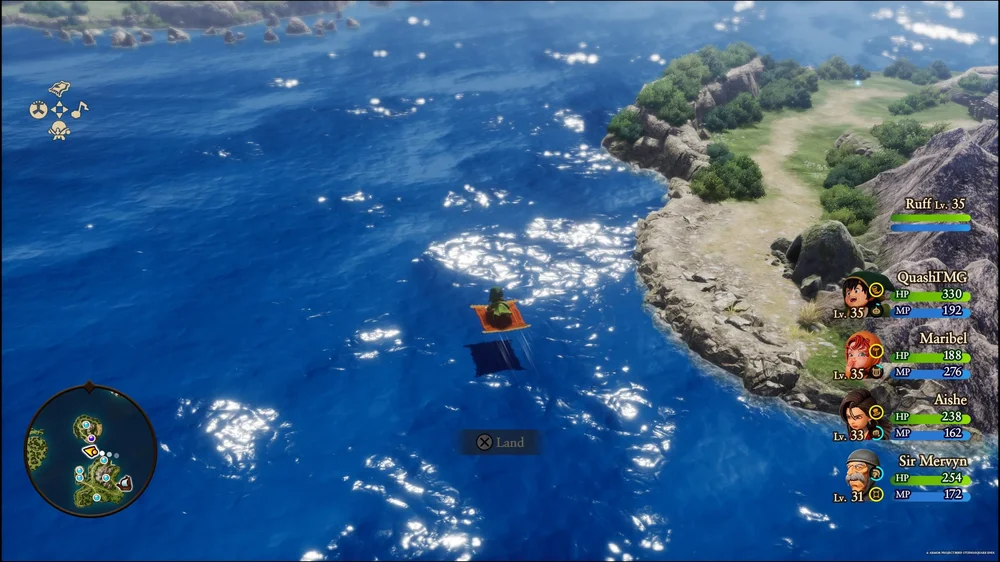
Dragon Quest VII Reimagined’s overall presentation is charming and inviting. Akira Toriyama’s art direction is well-represented with the game’s new 3D approach, featuring doll-like character models. Enemies look fantastic in their anime-inspired designs, and it feels like the developers took the time and effort to respect the nuances inherent in the original art style.
The world looks gorgeous, as each location has been carefully recreated in this new 3D approach. While the game’s writing can feel outdated, the voice acting added to this version does an excellent job of bringing the material to life. Some performances feel campy, but that’s part of the charm, as Dragon Quest is one of those classic JRPG series that thrives on that tone.
This version of the game also retains the original musical score, a style that feels like a staple for the series, but one that never quite clicked for me, even after spending over 50 hours playing. I never felt much from the music. No strong sense of excitement, sorrow, or joy. It all felt one-note compared to other JRPG classics which feature soundtracks that elevate their encounters. The normal combat music is a great example, as it’s the one you hear most of the time. It’s fitting, but unremarkable.
A Lovingly-Rendered Reimagining of a Timeless Classic
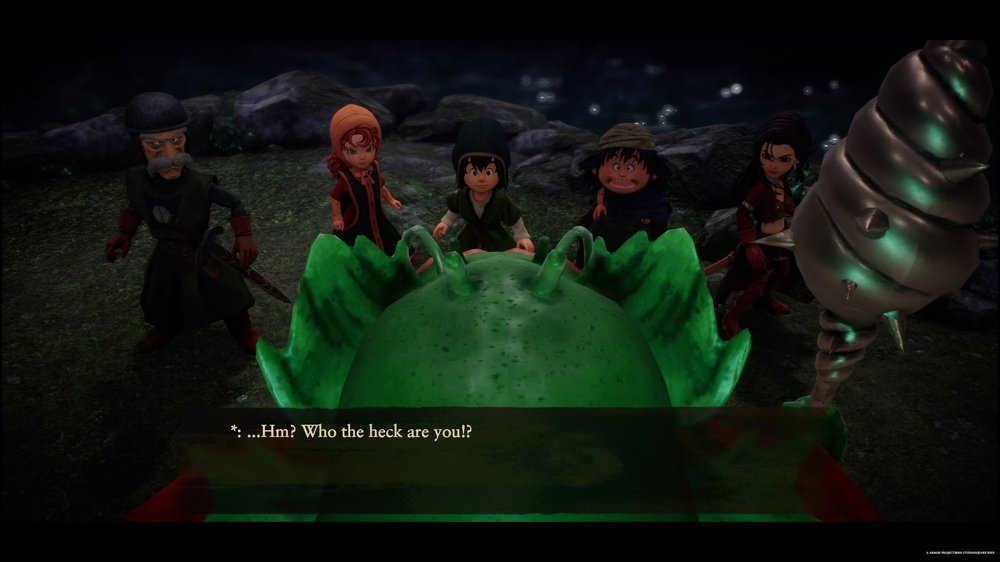
I took my time with Dragon Quest VII Reimagined, as it’s an experience that isn’t meant to be rushed. It’s a slow burn but it slowly clicked that sooner or later I started looking forward to picking up where I left off. I treated it as a way to wind down after a long day, spending a couple of hours unlocking a new island, almost like settling in to watch an episode or two of a favorite show. It’s satisfying to see the world map slowly fill with new islands and to watch the bigger picture unfold, especially with an unusual cast of characters led by a silent 16-year-old who ends up being the world’s only hope.
To some, Dragon Quest VII’s simplicity might be a turn-off, but I do appreciate games like this that bring classic titles into modern times. This is the kind of game that could serve as a kid’s entry point into the JRPG genre.
Sometimes, simple is good, and sometimes it’s all you need to inspire players to explore similar experiences. We live in a world that demands instant gratification, and we’ve become a society where patience for learning something new can be paper-thin, depending on our tolerance. This remake can easily be a launch point for a new generation, given time to grow on them.
Fans of the series will love what has been done here, as this is yet another example of how remakes can succeed without relying on over-the-top visual flair. It’s a perfect game for anyone looking to experience a classic that shaped the RPGs of today. This reimagining does a good job of showing why this title is so beloved by fans, and if you let it, you might come away as a new fan. Not just of Dragon Quest, but of JRPGs as a whole.
Verdict: 4.5 / 5 (Great)
PROS
-
Faithfully preserves the original story, art style, and charm of Dragon Quest VII
-
Equipping two Vocations at once gives more depth and options in combat
-
Quality-of-life features like increased battle speeds, auto battle, and better quest markers for progression
CONS
-
Music and soundtrack didn’t personally resonate
-
Some island stories can feel hit-or-miss
What I’ve Played
-
Finished the game after over 60 hours
-
Unlocked all major islands
-
Over level 55 with all characters
About the Author – Carlos Hernandez
Carlos Hernandez is the founder and Editor-in-Chief of Too Much Gaming, where he writes about video games, reviews, and industry news. A lifelong gamer, he would do anything to experience Final Fantasy Tactics for the first time again and has a love/hate relationship with games that require hunting for new gear to improve your character.