

Saber Interactive is no stranger to designing games that revolve around operating heavy machinery. Along with the simulationist off-roading approach the studio has taken with previous games like SnowRunner, we saw its focus on larger vehicles with last year’s RoadCraft.
However, while that game offered a variety of different vehicle types to use, from trucks to cars, and bulldozers, Docked is a new single-player experience built around port-specific heavy machinery, with an eight-vehicle roster that’s crane-centric. While this might sound like a bad thing for players who appreciate gameplay variety, I found it to be a great way for the developers to focus on adding depth to a few core mechanics.
“Throughout the game, you’re tasked with taking on jobs to move cargo around, and using the profits to make improvements to Port Wake.”
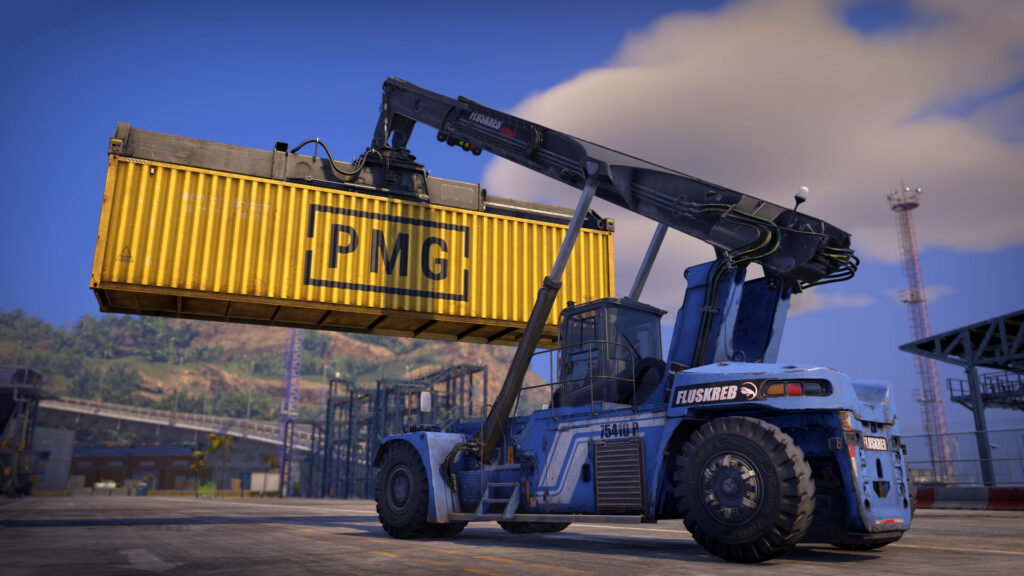
Before we get too deep in the weeds about gameplay, let’s back up a bit to discuss the central premise of Docked. You play as a longshoreman’s son returning to Port Wake to help save (and grow) your father’s dock after a devastating hurricane. However, since you haven’t really done much work around the port in recent times, you’ll need to get hands-on with a fleet of port vehicles, including – STS Crane, the Reach Stacker, the Straddle Carrier, the Terminal Tractor, the Hopper, the RMG (Rail-Mounted Gantry) Crane, the RTG (Rubber-Tired Gantry) Crane, and the MHC (Mobile Harbor Crane). Unfortunately, your tutoring couldn’t have come at a worse (or better, depending on your perspective) time, since a hurricane has recently hit Port Wake, resulting in several shipments getting destroyed, and the port itself becoming a complete mess.
Throughout the game, you’re tasked with taking on jobs to move cargo around, and using the profits to make improvements to Port Wake. These improvements can range from upgrading your existing facilities, building new ones, or buying brand new vehicles to ensure that the jobs get done. Since wear and tear is a constant factor, and repairs can come with strict deadlines, you’ll sign contracts and build logistical chains to keep cargo moving and the port profitable. It is also worth noting that you will have to hit certain Milestones in order to get your hands on any of the improvements you can make. For example, you’ll need to hit Milestone 5 to upgrade your main office.
Docked is at its best when it’s letting you focus on the port’s machinery—especially the cranes—within Port Wake. The game goes into quite a bit of detail when it comes to depicting these massive machines, and the jobs you take on will also define exactly which kind of crane you’re expected to use. Unloading containers from a cargo ship means that you’ll be using the STS (Ship-to-Shore) crane. Once the shipping container has been placed on a truck’s flatbed, you’ll have to use the Terminal Tractor to hook into it and drag it along to the designated drop point. Setting up cargo to be stored for later use, on the other hand, can be done by a Reach Stacker working alongside a Straddle Carrier.
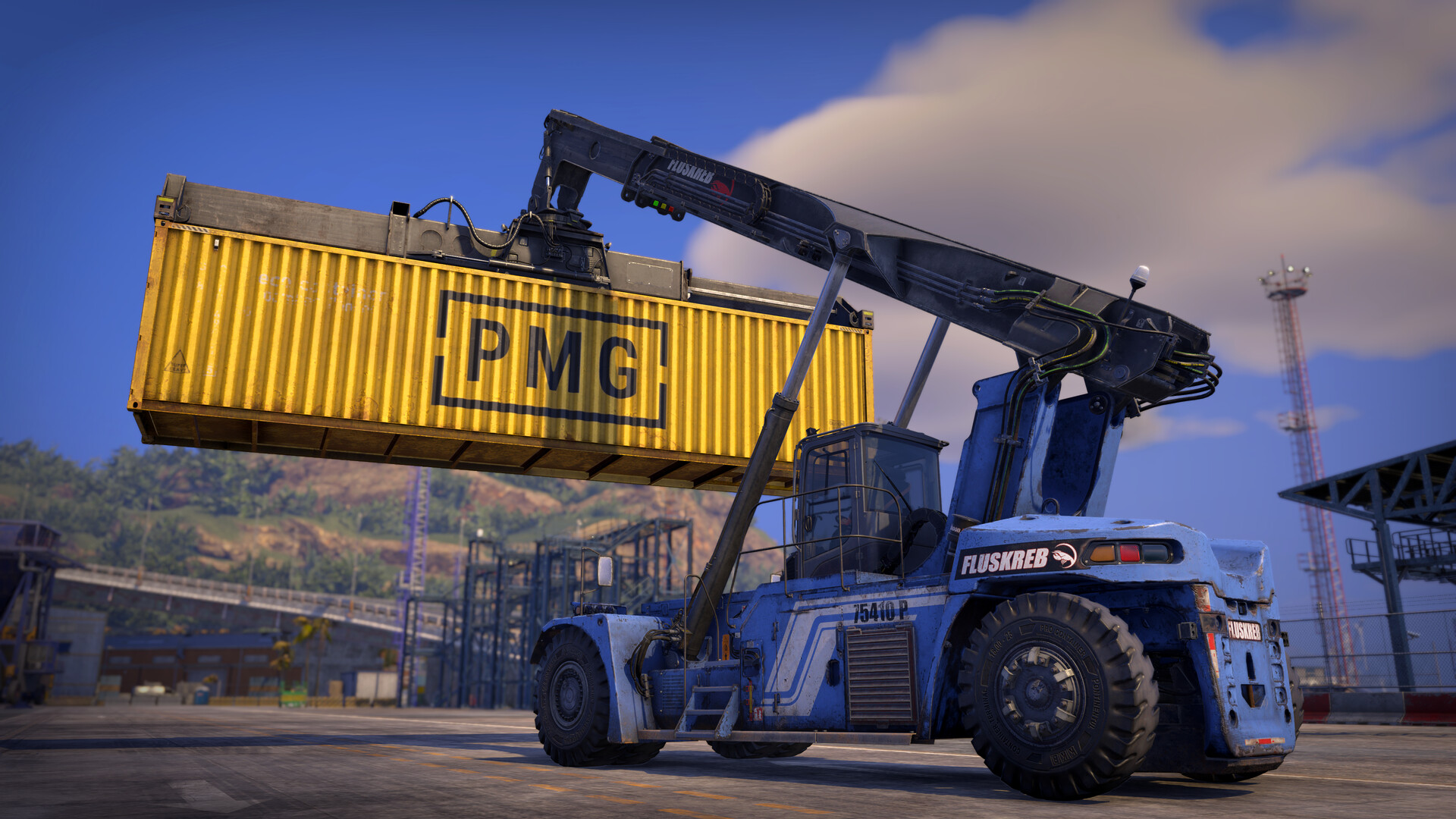
“Docked is at its best when it’s letting you focus on the port’s machinery—especially the cranes—within Port Wake.”
Crane controls are quite in-depth in Docked. Despite the large number of controls you have at your disposal, however, it never really feels overwhelming. A simple press of a button shows you just about every action that’s possible with your machine of choice, and the game makes clever use of modifier keys like L1 and R1, along with different axes on the analog sticks to cram even more granular controls in. This is important since Docked does an impressive job of emulating the alignment necessary for a crane to actually hook into a container and lift it up.
Since much of the game revolves around a singular concept, there is a feeling of mastery offered by Docked. As you’ll be using the same few machines quite often on a variety of jobs, or even previously-completed ones to grind out money and resources, you will find yourself getting better and faster at tasks that used to take you several minutes just to grasp. Further rewarding this is the fact that Docked offers two distinct difficulty modes: Normal and Hard. The former is largely low-stakes, and doesn’t really punish you for any mistakes. The latter, on the other hand, uses more realistic mechanics for hooking into and picking up cargo, and also gives you a major lose condition in the form of deadlines for your Milestones. In my experience, missing these deadlines triggers a failure state, pushing you back to reattempt recent jobs.
When you’re not driving around in small cranes or operating large ones, you will be engaging with some light management mechanics. The main goal is to ensure that Port Wake starts turning a profit and eventually thrives, after all. This means that you will be going through different menus to manage your buildings, vehicles, available Jobs, and Milestones that represent the main, long-term goals. These systems all tie in with each other quite well. You can’t just upgrade a shipping lane just because you have the materials and money, for example; you’ll also need to make sure that you have the vehicles to support it. If you are, in fact, running short on money or materials, plenty of jobs will be available offering them as rewards.
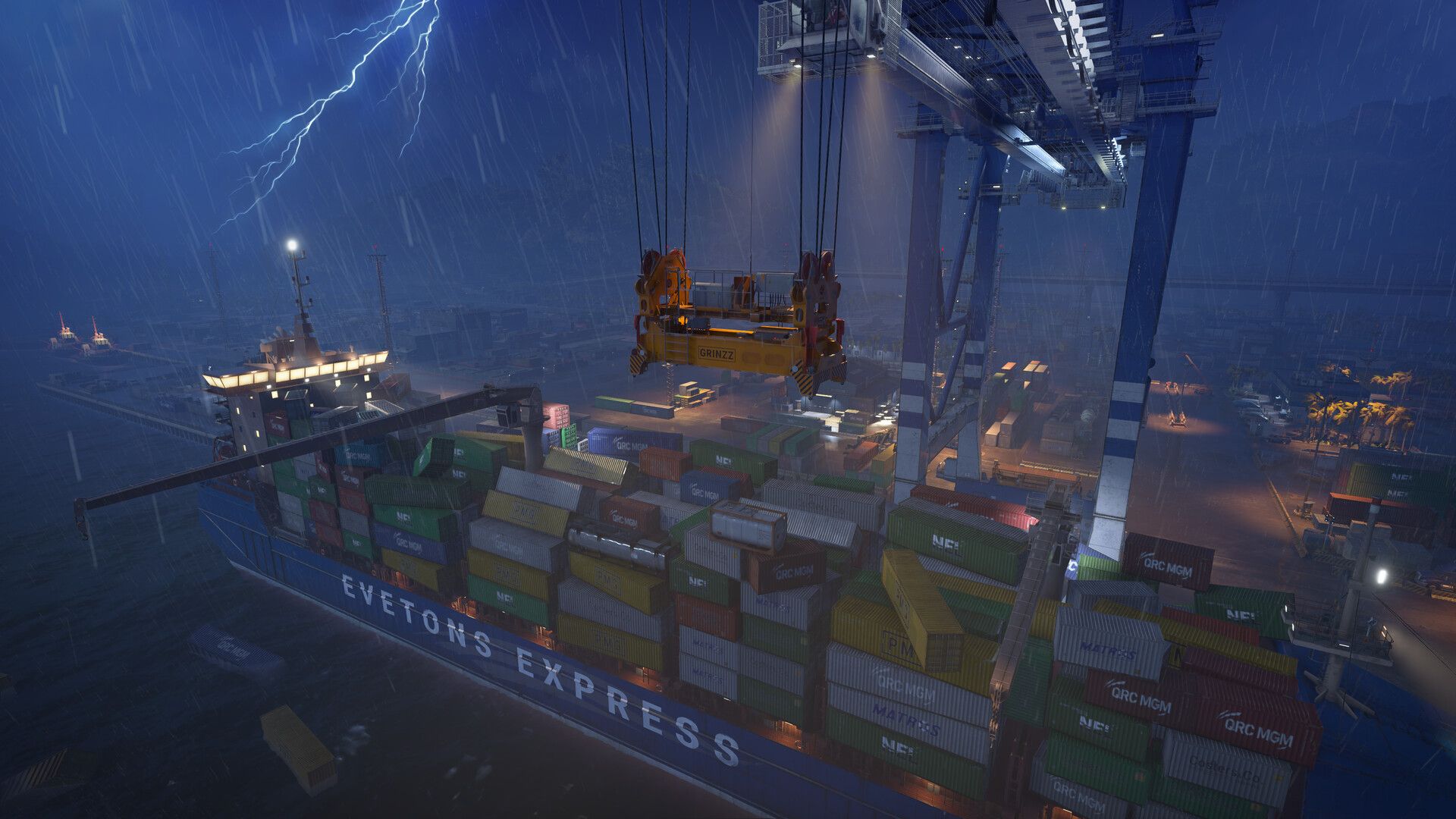
“Since much of the game revolves around a singular concept, there is a feeling of mastery offered by Docked.”
Signing shipping deals is where all of these mechanics come together once more. Each deal you sign has a goal described by the number of containers that need to be moved. Each container brings in revenue, while each one missed incurs a penalty. To make sure that your port is up to the task, you have to apply your fleet of vehicles to specific tasks, from unloading a ship to transporting it around. Each vehicle also has its own capacity for container movement, presenting a simple-yet-engaging math puzzle that makes you think about how you want to distribute your workforce. If you’re not actually interested in engaging with this mechanic, however, Docked also offers an “AI Help” button that, at the cost of some money, will set up the entire system for you.
Generally speaking, Docked is quite good at putting you into a state where you become ultra-focused on completing tasks that, at the outset, might feel repetitive, but end up being quite rewarding thanks to the mastery of crane controls that the game demands. However, I would also note that its narrower scope than similar games like RoadCraft also feels like a missed opportunity. You’re never going to leave Port Wake, so say goodbye to any environmental variety you might have wanted. Docked is strictly single-player, so anyone hoping for co-op teamwork (or co-op chaos) won’t find it here.
Visually, Docked is alright. While far from the prettiest game of its kind out there, the graphics get the job done by making sure that just about everything you need to know about your job is appropriately visible. However, Port Wake as a whole is a relatively dull place. You don’t really get any other characters moving around like you would see in a real-world port, which in turn contributes to a general feeling of melancholy. Audio also adds to the same feeling when it comes to the general silence. However, the machines sound fantastic, and as loud as you might expect. My favourite sounds largely came from successfully hooking into a shipping container while using an STS crane.
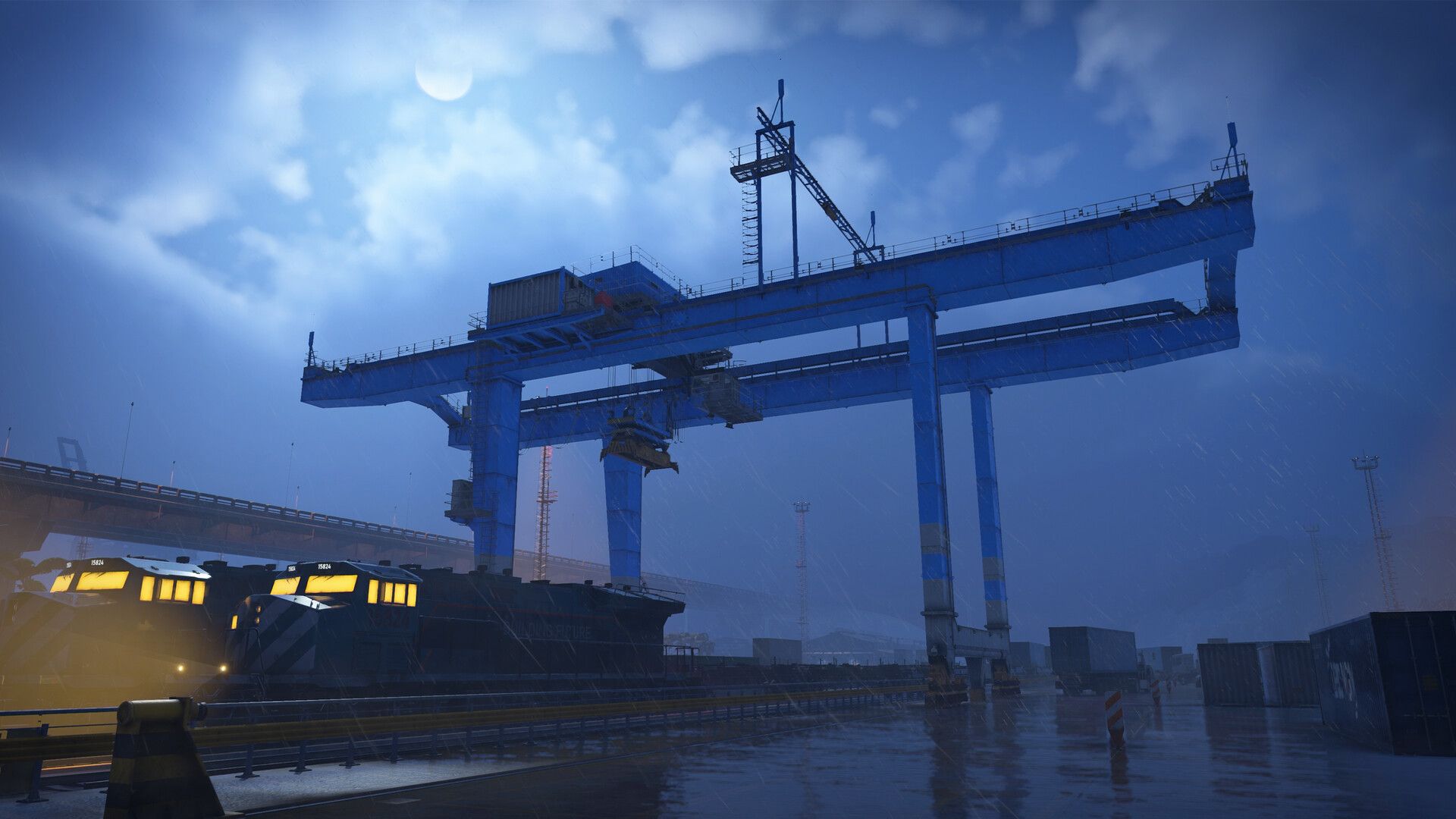
“While far from the prettiest game of its kind out there, the graphics get the job done by making sure that just about everything you need to know about your job is appropriately visible.”
It is also worth noting that the PS5 version of Docked has some minor performance issues. While I didn’t face anything too egregious, the load times were surprisingly long, and I often found myself double-checking whether I accidentally installed a wrong build of the game.
Generally speaking, Docked feels like a bit of a mixed bag. While its smaller scope and focus on single-player certainly resulted in some compelling crane-controlling gameplay, the fact that most of what you do is operate port machinery, moving containers, routing cargo, and keeping equipment running—means that there really isn’t much else to do.
This also ends up making the gameplay feel fairly repetitive. Throw on top the fact that the story is essentially just an excuse to get you to use cranes, and the management aspects can largely be automated without much input for you, and you get a game that, while fun for a few hours, doesn’t really have the bones to entertain in the long term. However, it is also worth noting that Saber Interactive has a solid post-launch roadmap in place, which promises new machinery, more milestones and jobs to take on, and ways to upgrade your infrastructure. If done well, this could go a long way in fixing the repetitive nature of Docked.
This game was reviewed on PlayStation 5.