
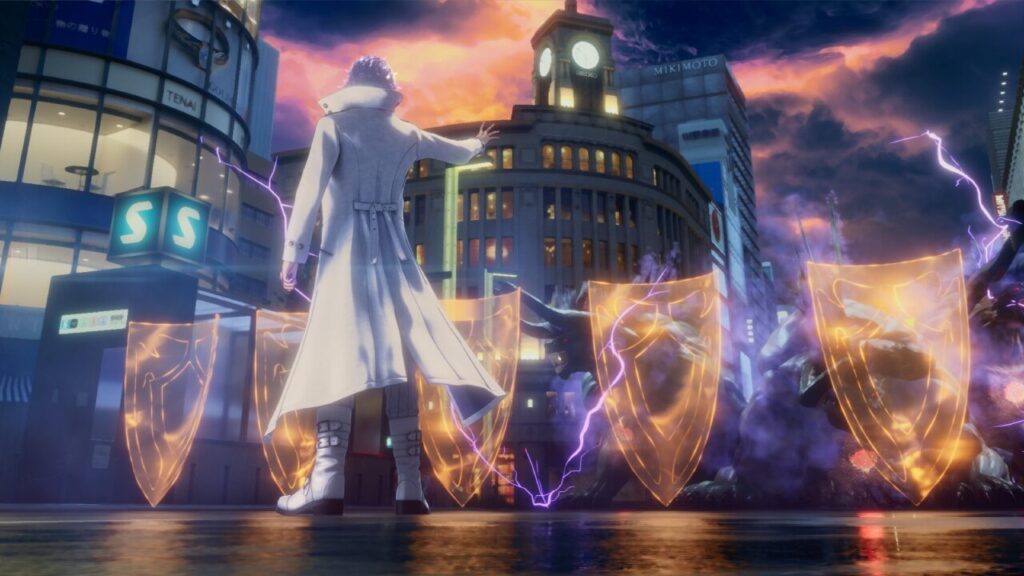

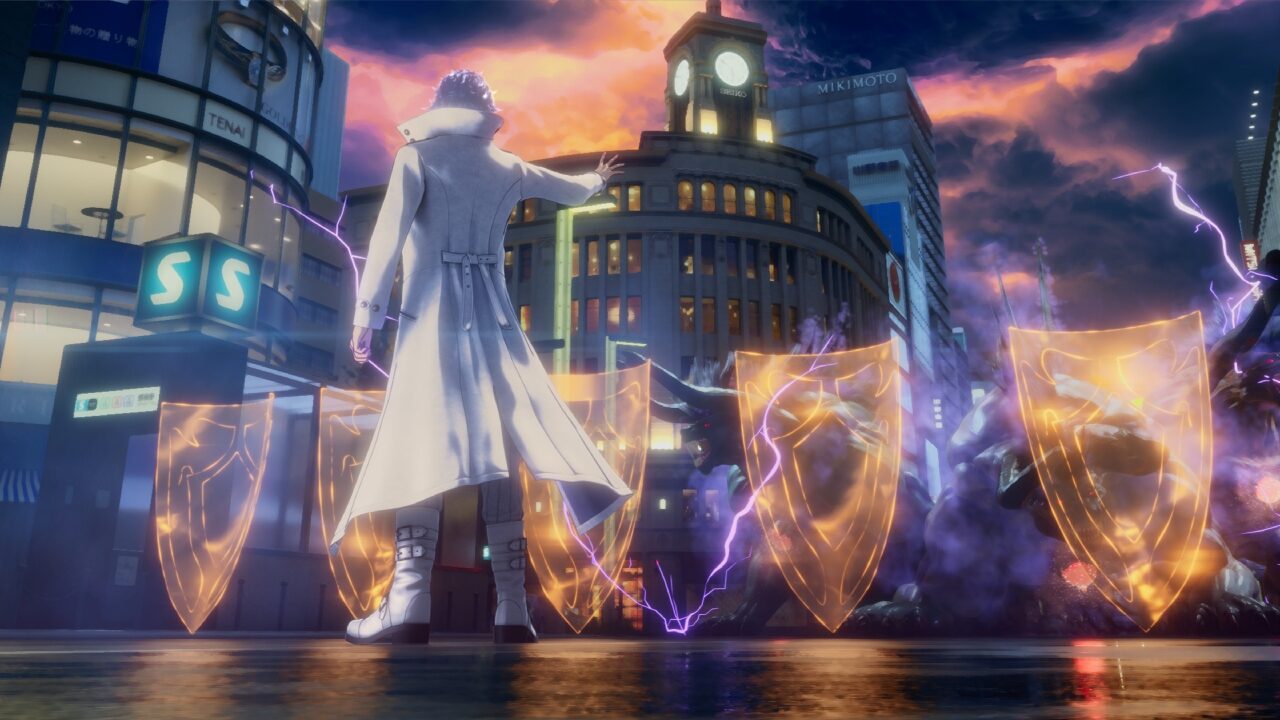
Dissidia Duellum Final Fantasy has now launched worldwide, the latest mobile game in Square Enix’s flagship franchise. Despite being part of the Dissidia series, which mashes together characters from various games, this 3v3 boss battle arena game is unlike any other Final Fantasy to date. We got to take another spin with the game before its official release, and with more time, I’m seeing its vision a little more clearly.
Playing in the beta last fall really helped me get a feel for the unique concept of Dissidia Duellum: players form teams of three and compete to capture points on the map, and defeat massive bosses. The whole thing takes place in a version of real-world Tokyo, not a generic world like previous Dissidia games, and thus the characters have both their generic looks and more covert Earth-like outfits. It was a strange concept for Final Fantasy on paper, yet it clicked more readily in execution.
The team at Square Enix (spearheaded by producer Naoya Matsumoto, who appeared in some update videos last week) has since had time to incorporate feedback from the beta. Though we don’t yet have concrete info on what they incorporated, the new build I took for a spin pre-launch feels a little more balanced overall—not that it felt “unbalanced” or skewed in any particular direction back in November, per se, but there were some noticeable improvements.
First and foremost, thank Bahamut, Dissidia Duellum Final Fantasy now has controller support. There are three different control schemes for touch controls, and even options for tweaking the UI, but all still felt a little clunky for navigation. This time around, I played on an iPad instead of an Android phone and found a decent approach to simultaneously moving and rotating the camera, and activating the touch-and-flick-up abilities.
“Dissidia Duellum focuses most of its effort into online, ‘player vs player vs event’ matches…”
With a proper joypad, however, the game’s potential elevates considerably. Proper camera manipulation and mapping abilities to the face buttons make a world of difference, and I was no longer struggling to keep my objectives in sight. Menus remain smoother with touch controls; I oscillated between both modes, picking up the controller when a match started, and it flowed seamlessly.
(That being said, after a little more practice, I feel I’ve found a good flow for playing with touch controls as well, enough that I may tap into a few rounds while away from home, where it’s not convenient to lug around a controller or phone grip.)
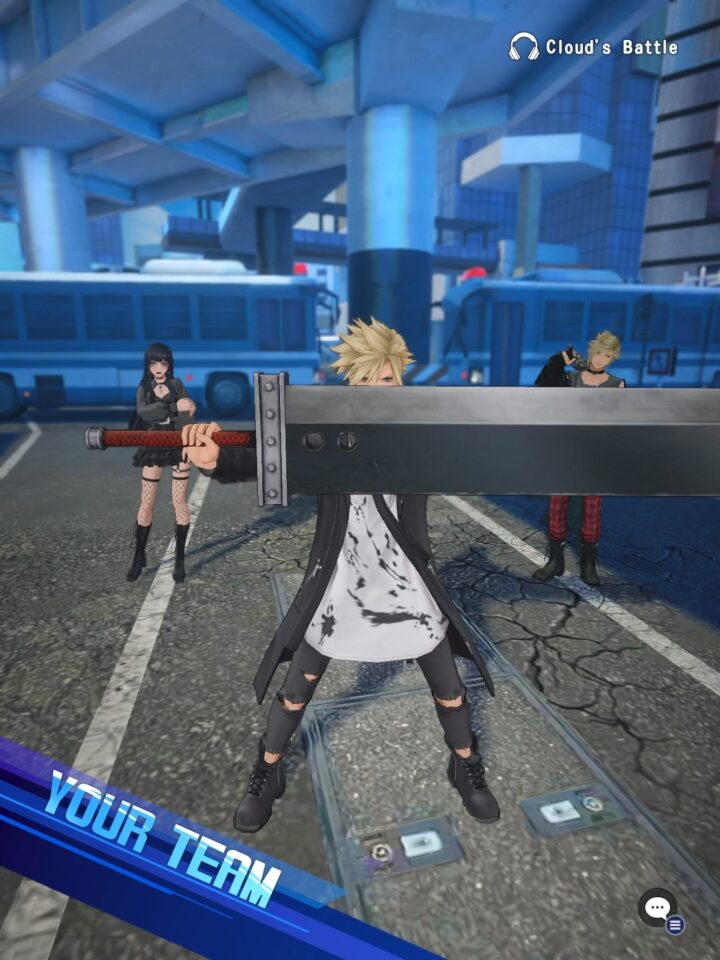
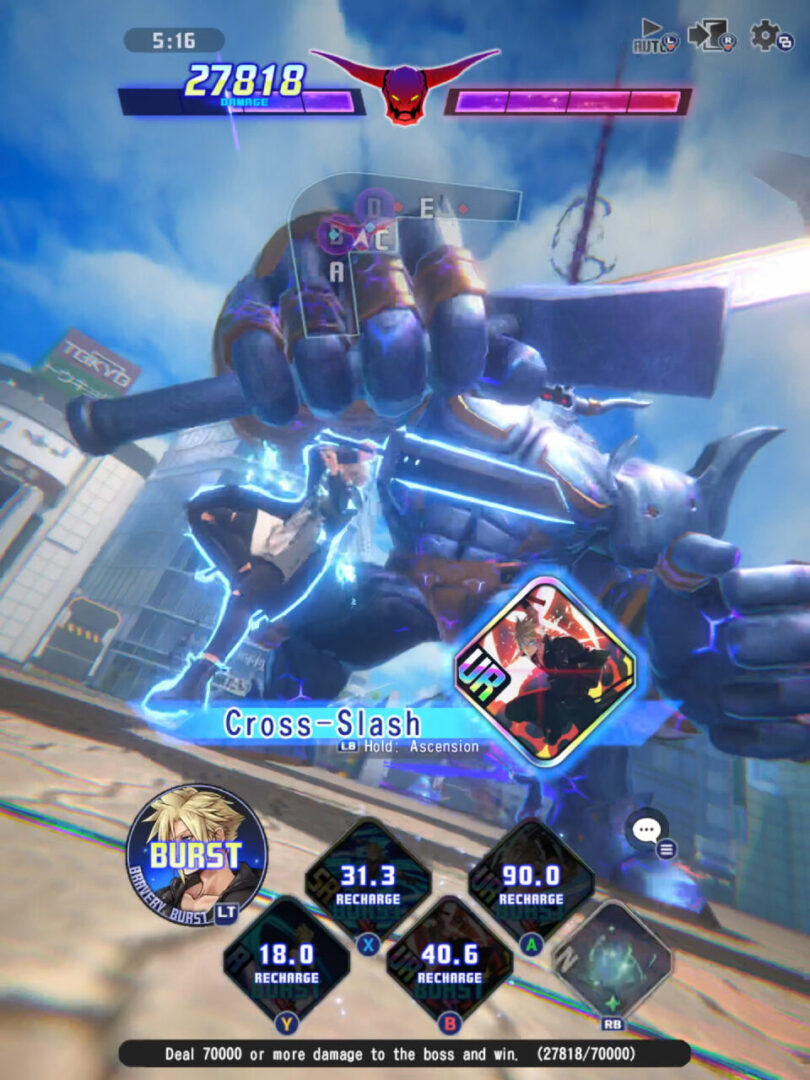
As for the gameplay itself, Dissidia Duellum focuses most of its effort into online, “player vs player vs event” matches, where teams of 3 compete to slay the boss; it wants you to default to Ranked Matches, but there are a few other offerings beyond the competitive. You can also partake in Casual Battles, which won’t affect your rank whether you win or lose, or set up your own Custom Matches where you choose the stage and enemies, and set other parameters.
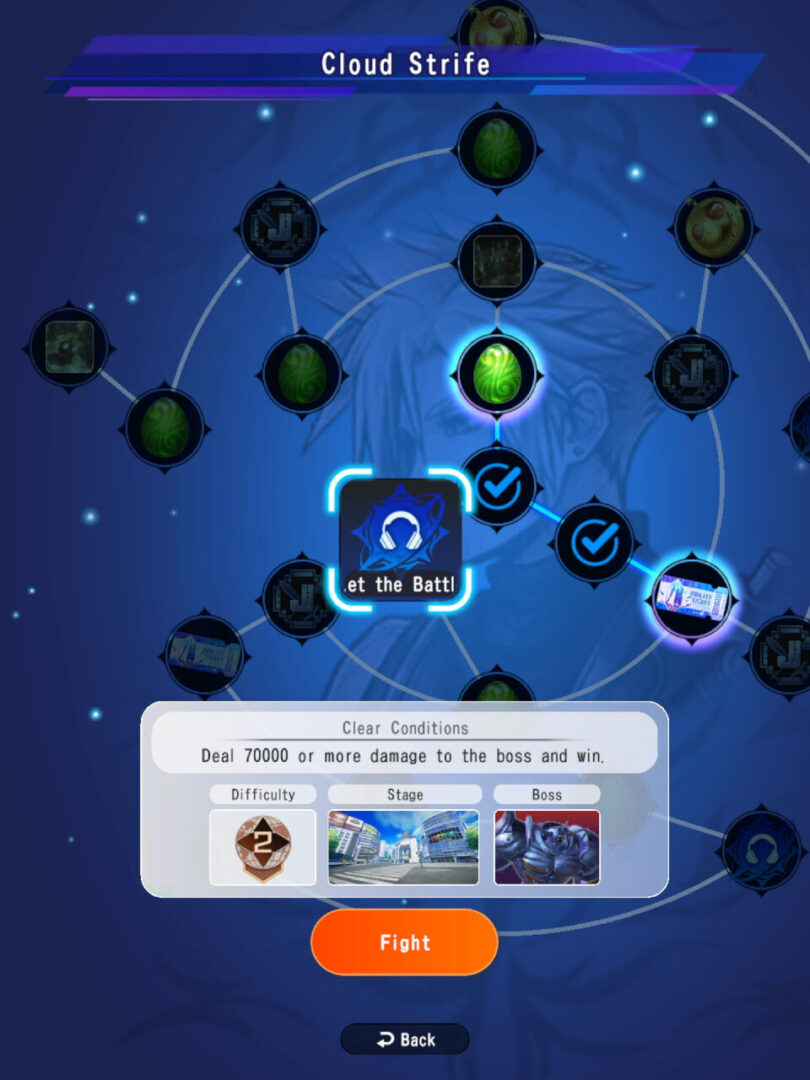
Furthermore, each character has a host of solo challenges, where you fight against and alongside CPU combatants to achieve certain goals, like dealing a certain amount of damage to the boss or purifying a certain number of crystals before winning. These stages really incentivize you to play away from the main online mode, as you can earn valuable rewards, such as remixed tracks from that character’s original game, or Job Medals (more on those in a moment).
Now, this still requires you to partake in the core gameplay conceit of Dissidia Duellum, even if you aren’t in ranked PvPvE matches. No matter the mode, the loop is the same:
- Clear a control point of enemies to purify the crystal/claim the point, and earn Brave Points for your team
- Repeat until your Brave Points are full, while engaging with/avoiding the enemy team
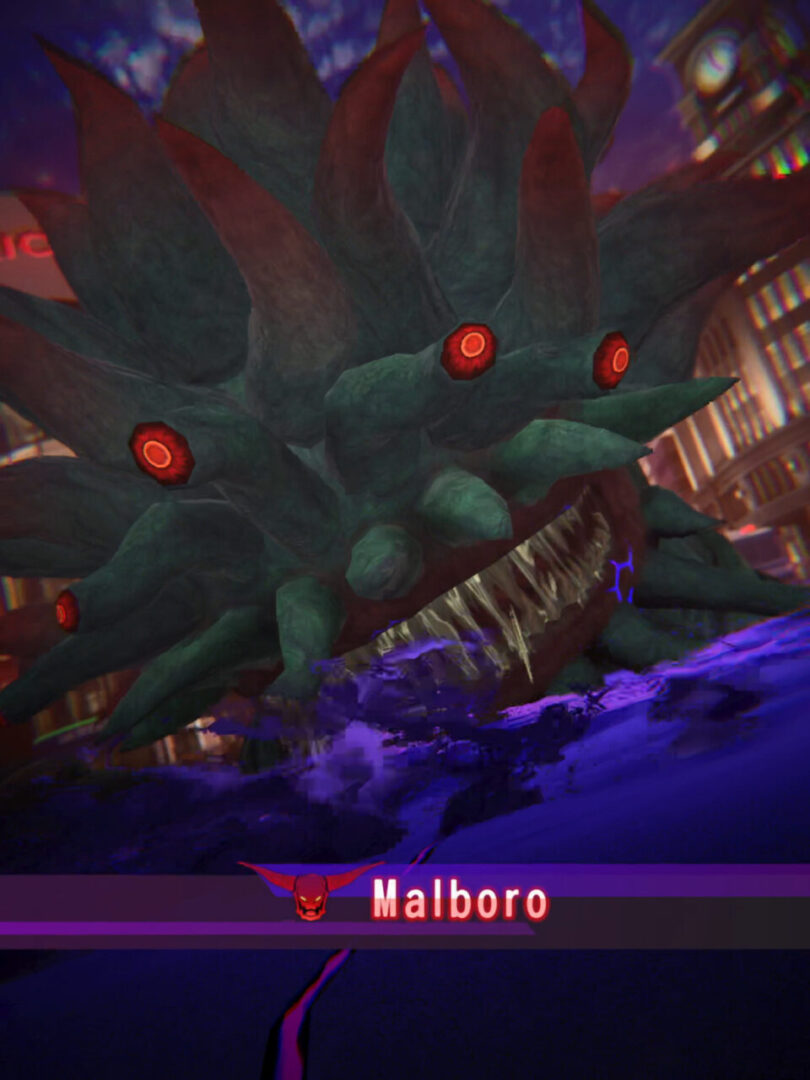
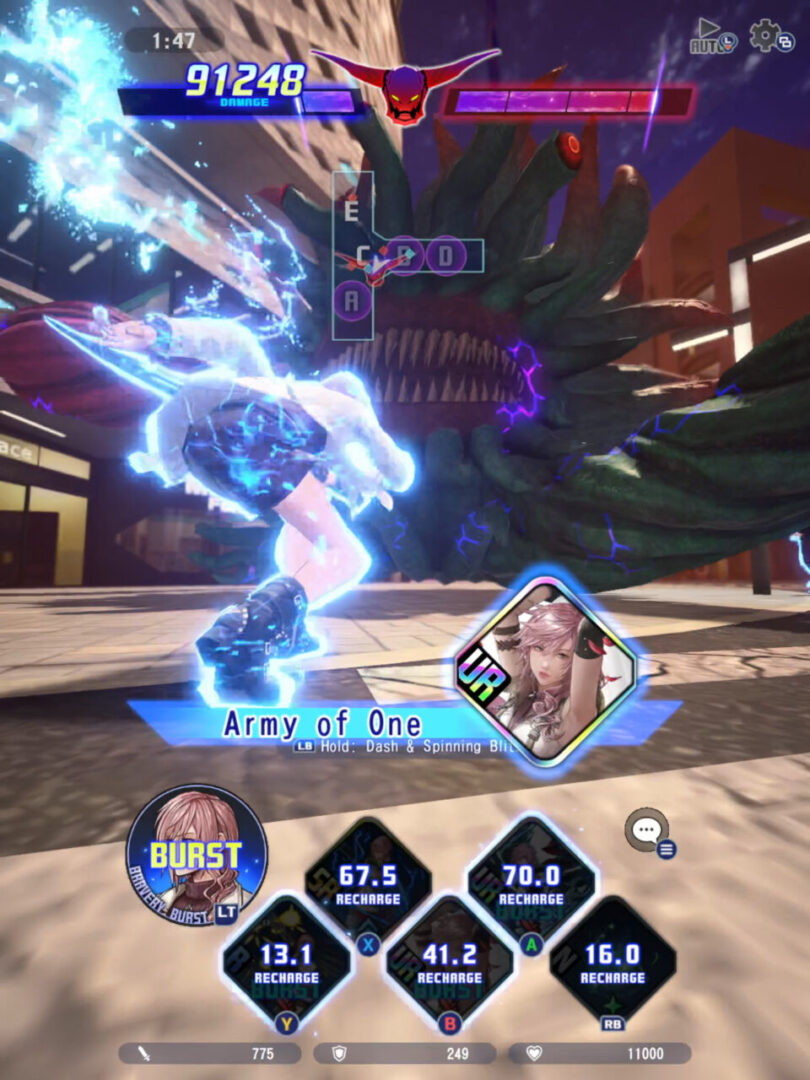
- Activate your Brave Burst, enabling you to harm the boss, and unleash hell on them
- Repeat until the match ends
Dissidia Duellum‘s gameplay flow and maps enable a similar sort of strategy to other MOBA titles like League of Legends or Pokémon Unite, but scaled to smartphones and plastered in Final Fantasy wallpaper. That association may not inspire confidence for some people, and as I lamented after the beta (and will continue to lament until we get at least a port or remaster of Dissidia Duodecim), the majority of fans would be happier with a more traditional fighting game Dissidia instead. As I thought of Pokémon Unite at its launch, I’m not entirely sure the devs made the wisest pick for their demographic by chasing more recent trends.
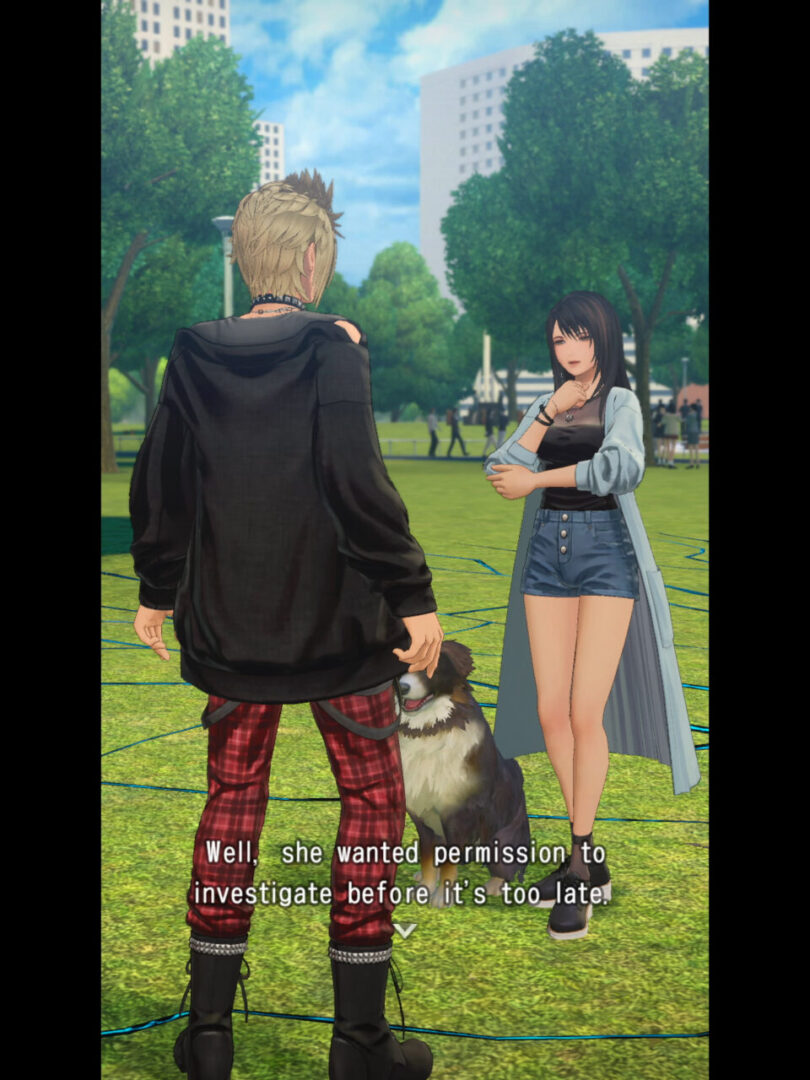
Similarly, I’m not sure it was the wisest option to hide Dissidia Duellum‘s story content behind participation in the other modes. Earning enough points on the Season Pass unlocks morsels of the story, wherein our heroes interact with one another and our strange real world. Luckily, these are perks of the Season Pass’ free track, not the paid option, which would’ve effectively paywalled the plot.

But… none of these points mean Final Fantasy fans should totally overlook Dissidia Duellum either. The core conceit and the execution here are already more compelling than Dissidia NT, and the matches flow fast enough that I can see this becoming a decent distraction on lunch breaks or public transit… or even a five-minute diversion on the couch. Conversely, I can also see the potential for organized esports play; while NT was made to chase this market and ultimately shot itself in the foot, I think this one might support a decent scene if it can accrue enough fans to make it happen.
The launch roster of Dissidia Duellum offers a pretty diverse cross-section of gateway characters, which could draw in old Final Fantasy veterans and complete newcomers, just as the PSP games once did. Ten heroes will be available at launch, and we now know they’ll be followed by six more through April and May—Onion Knight, Iroha, Firion, Balthier, Rikku, and Clive—until there’s one representative from each of the 16 mainline Final Fantasies. Each has one of four classes that dictate their playstyle: Melee, Agile, Support, or Ranged.
“The launch roster of Dissidia Duellum offers a pretty diverse cross-section of gateway characters, which could draw in old Final Fantasy veterans and complete newcomers…”
While I particularly clicked with Rinoa (Ranged) in the beta, I spent more time with Lightning (Agile), Warrior of Light (Support), and Cloud (Melee) in the second preview. Each feels quite distinct from the others, and faithful to their original appearances… provided you draw their full suite of four unique abilities.
The gacha is going to be another pain point for the game, an area where Dissidia Duellum may put a stick in its own spokes. The unique skills are drawn at random, meaning you may draw Prompto’s skills while chasing Kain’s, and if you don’t have Prompto… well, there’s not much you can do with those things until you unlock him too. The preview build allowed nigh-unlimited resources for draws, and I’m not looking forward to chasing all the components to rebuild my favourite characters. (Be sure to utilize the free rerolls you get in the tutorial to stack the deck for your chosen main!)
That being said, you don’t need those character-restricted abilities to enjoy the game, contrary to what the voices of FOMO will try to tell us otherwise. There’s a host of other generic abilities based on the series’ magic, which offer a robust array of alternate builds. I actually felt a little bad for loading my characters with their signature skills instead of investigating those tools.
There are also some skills for characters who aren’t yet in Dissidia Duellum. Ramza from Final Fantasy Tactics has a particularly intriguing ability, harkening to his reputation in Final Fantasy Record Keeper, which I was keen to use with Warrior of Light to truly enhance his Support role. It won’t be the end of the world if you can’t kit your characters entirely in their bespoke skills.
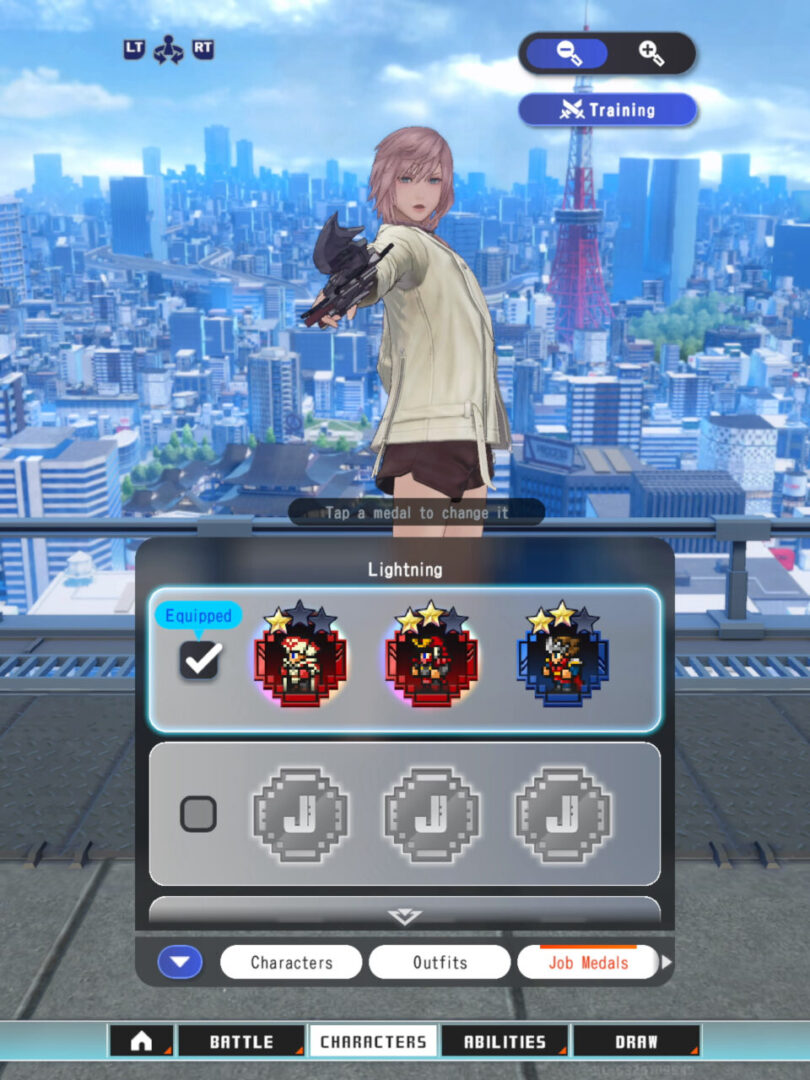
The characters’ Challenges can help fill this gap as well, with the use of the aforementioned Job Medals. These are spent to unlock randomized medals with various benefits; one might boost the amount of bravery your team gets from purifying a crystal, while others boost basic stats like ATK and DEF. If you can match medals with the same colour, their effects get a cumulative boost. Couple these wisely with levelled abilities, and you’ll notice a bigger impact on the battlefield.
If there’s one area where Dissidia Duellum has not dropped the ball, it’s the audio. Final Fantasy’s mobile games continue to feature some stellar rearrangements of beloved themes, and the streak continues here. The new score is full of upbeat remixes that fit the modern setting, from Terra’s classic theme to the new spin on the Shadowbringers theme for Gaia. I’ll be beelining to unlock more tracks from the Challenge boards ASAP in the full version (and luckily the game’s soundtrack is due to go on sale this week for enjoyment beyond the app).
After an extended second look at Dissidia Duellum, and as the game’s servers go online this evening, I’m even more cautiously optimistic, and hope others will give this game a chance to make them feel the same. It might be best enjoyed with a team of friends, or at least some mutual followers in-game (which should be easy to find with its efficient community features), where you can party up and coordinate to take on higher-ranked content.
This is certainly not the Dissidia fans would have asked for, and certainly it would have a better chance on consoles and/or PC, but it has a novel potential in its own right. In 2009, I wouldn’t have thought a Final Fantasy 1v1 fighting game would have been up my alley, yet the original Dissidia scratched an itch I didn’t know I had. Maybe Dissidia Duellum will do the same for a new cohort of people now, opening the door to this sprawling franchise for them in the process.