
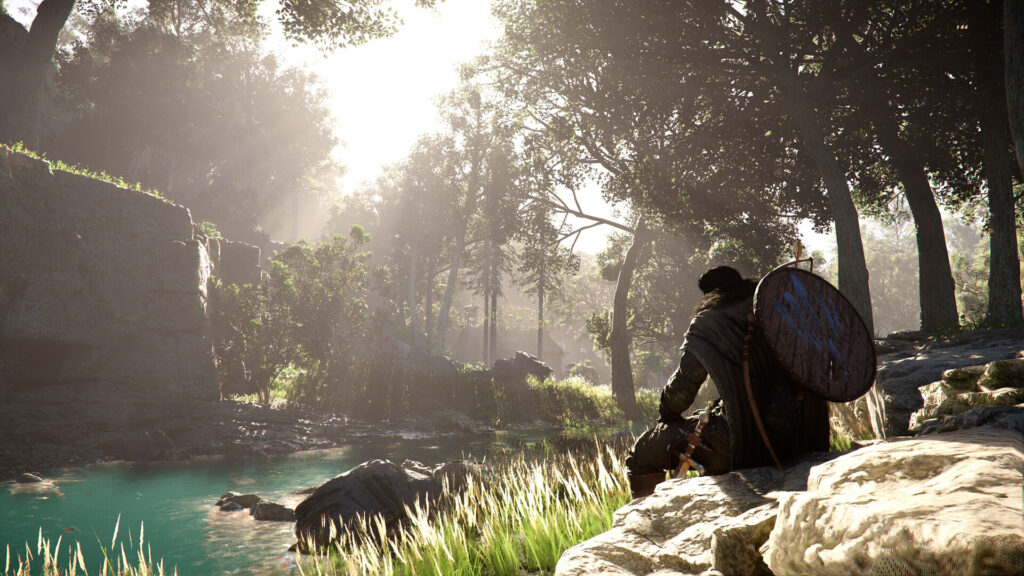

Crimson Desert may have sold many copies since its recent release, but a new report has indicated that its development may have been a troubled one. Anonymous claims made by people claiming to be former Pearl Abyss employees working on the project have indicated that the open-world action adventure game may have suffered from a culture based on developers getting excessive influence, and leaders who “don’t acknowledge anyone who doesn’t share their exact mindset.”
The posts are noted as being posted in the Game Industry Lounge on anonymous community Blind, which is only accessible to industry professionals that have been thoroughly verified through the use of a corporate email address. One developer wrote that “Crimson Desert originally wasn’t like this.” A curious side-effect of this was the fact that there is no mention of the eponymous Crimson Desert in the game itself, since the story wasn’t finalized “until right before release”.
Office politics also seemed to have gotten in the way, with a director’s role being usurped by another employee with an art background getting promoted to the role of general manager. This employee would then start changing decisions that had been made by the director.
“In the middle of it, a director was pushed out in a power struggle and resigned, and once someone from an art background became the General Manager, they started overturning everything,” they wrote. “This person who became general manager is a general manager in name only; they are just a compliant subordinate. And every person in the team who holds a rank is just a compliant subordinate. Individual will? Personal opinion? They do not exist. That is why they can hold a rank.”
Leadership also doesn’t seem to be Pearl Abyss’s strong suit, as noted by another poster, who referred to the studio’s hierarchy as being “structured like an inverted pyramid,” where there are more “leaders” than there are “rank-and-file employees”. They also noted that, while many developers working on the game were “aware that Crimson Desert was going off the rails,” they weren’t in a position to do much about it.
“As I mentioned, [management] don’t acknowledge anyone who doesn’t share their exact mindset,” they wrote. “They just praise their own work as ‘amazing’, and whenever they see a reference from here or there that looks good, they just shove it in.”
“Because it became such a hodgepodge of features crammed together, the control layout must have been a mess, too. I believe it was an inevitable conclusion that Crimson Desert would become a disaster. I don’t think a proper direction can ever emerge from a company that suppresses people for calling out what is wrong.”
They also went on to talk about how seeing Crimson Desert being played feels “bittersweet”. They also expect that Pearl Abyss will “try to shift the blame-digging through the development history of individuals to find someone to pin the responsibility on for why it turned out this way.”
Crimson Desert is available on PC, PS5 and Xbox Series X/S. Take a look at our review for more details.


It’s interesting to see how leadership dynamics can impact a game’s development, even after a successful launch. The gaming industry is always full of surprises, and it’s essential to consider all factors that contribute to a game’s journey. Thanks for sharing this insight!
Absolutely, it’s fascinating how the internal structure can influence not just the development process but also the overall quality of the game. Even with strong sales, issues like an inverted hierarchy can lead to long-term challenges for the studio’s future projects. It really highlights the importance of good leadership in creative industries.
You’re right; the internal structure really does play a crucial role in a game’s success. A strong leadership approach can foster creativity and collaboration, which might have made a significant difference in Crimson Desert’s development process. It’s interesting to think about how different management styles can impact not just the final product, but also team morale.