


When I first dived into Crimson Desert, Pywel was a place that had a lot to do and discover within its boundaries. I’m not going to dwell too long on all its flaws, but the one complaint that continued to come up in discourse about the game was that Pywel felt empty as you neared the endgame, with no one to use any new Abyss Gears on once you exerted your control over regions occupied by hostile factions.
What I am going to dwell on is how complaints, both minor and major, have now been made redundant thanks to a rapid cycle of patches and updates. The issue of Pywel feeling empty once you have liberated all occupied areas and beaten all bosses? That one just got addressed last week, with boss rematches and the reoccupation of liberated areas now a part of Pywel’s charm. It made me wonder about how what was supposed to be a single-player experience that got quieter the more you completed it has become a sort of hybrid live-service title without the trappings of microtransactions, season passes, and the like.
It’s almost as if the developer is trying to make the world feel incomplete again, and in a good way. It’s treating Pywel like a world that continues to react to you long after you’ve rolled the credits on the main story, and perhaps even cleared out most of its map. Why do I feel that way? That’s what we’re here to discuss. Let’s roll!
A World That Pushes Back
Let’s get the obvious stuff out of the way. Yes, there have been a ton of patches rolled out in what I’d say is a record time in comparison to other studios. Yes, they’ve addressed several quality-of-life issues that were major complaints, such as clunky controls, a lack of balance between Kliff, Damiane, and Oongka, performance problems, and inventory management issues that adversely affected the experience. Those are all gone now, and I’m going to leave them in the past where they belong.
But what interests me is the way Crimson Desert looks like it’s building a future for Pywel that I wouldn’t have even considered if not for the evidence in front of me. The latest patch makes me wonder if the developer is borrowing the philosophy of a live-service model and applying it to a single-player title. It’s bringing a sort of responsiveness to Pywel that’s very welcome for Greymanes who continue to frequent it and will probably continue to do so until it has no secrets left to unearth.
The Rematch system is the first stop on this particular train of thought. The boss designs in Crimson Desert are absolutely brilliant for the most part, a sentiment echoed in almost all critical analyses of the game across the board. I’ve previously said that their unique gear should not be discoverable in the open world, but the fact that you can now battle them as Damiane and Oongka in places where only Kliff takes them on is a very welcome addition, and there are a couple of reasons as to why I think so.
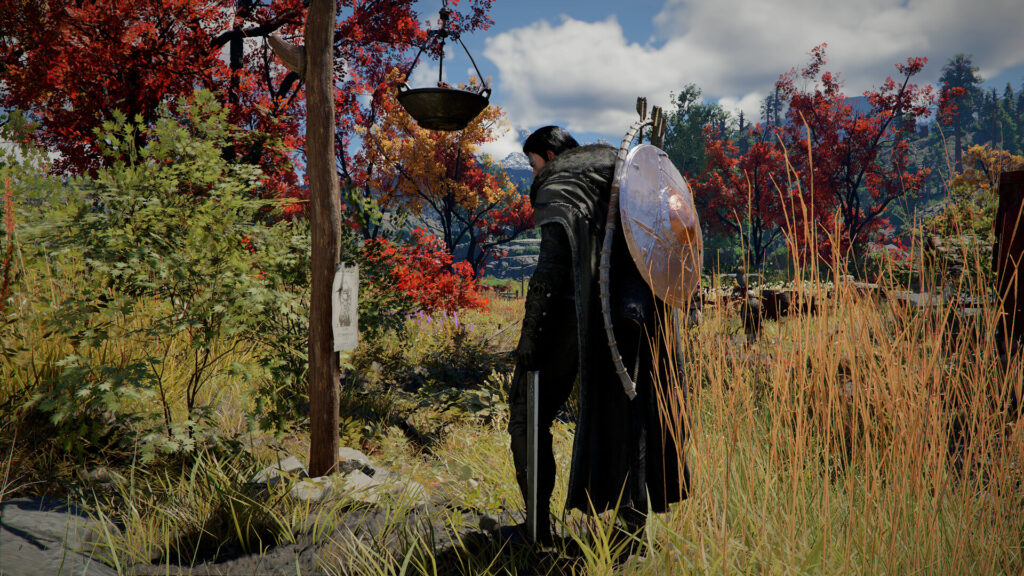
For starters, it encourages you to keep switching between the three playable characters, making them viable options when you want to take on an enemy that might have previously deterred you from doing so because your take on Damiane or Oongka wasn’t powerful enough to do so at the time. Well, you can now go back and play each fight over and over till your heart’s content.
Second, it encourages you to take advantage of the fact that you could switch your loadout with a single visit to the nearest Witch, letting you completely change how any of your characters feel when conflict occurs. You could, in theory, test out multiple builds on a boss you’re comfortable with, allowing you to see your ideas in action before you choose to commit to a particular loadout. The fact that you now get to extract resources spent on upgrading gear coming in the latest update is a fine addition to the entire Rematch system.
Of course, all of these points I’m making apply to the Re-Blockade system too. But the added advantage there is that you can now farm Abyss Artifacts with abandon if you so choose, especially since there are ways to control how the system works that I’m getting to shortly. You now get to look and feel like your best every time you unsheathe your weapon to take on anybody foolish enough to challenge a Greymane.
Aside from the gameplay, I think that the Re-Blockade feature makes Pywel feel more alive in terms of how the narrative has framed things. It was hard to believe that so many factions just meekly walked away from their strongholds with their tails tucked between their legs after a sound beating. Granted, the thought of a single individual taking down literal armies might give me pause if I were considering fighting the said individual again, but the fact that enemies now don’t take their losses quietly makes Pywel a very interesting place to be.
What’s very interesting about these two systems is that they have made Pywel a place where conflict now feels like a permanent part of its landscape. That, in turn, makes your duty as a Greymane all the more relevant from both narrative and gameplay standpoints. But nothing about all of this could be classified as weird or strange, right?
Hold that thought.
Player Controlled Chaos
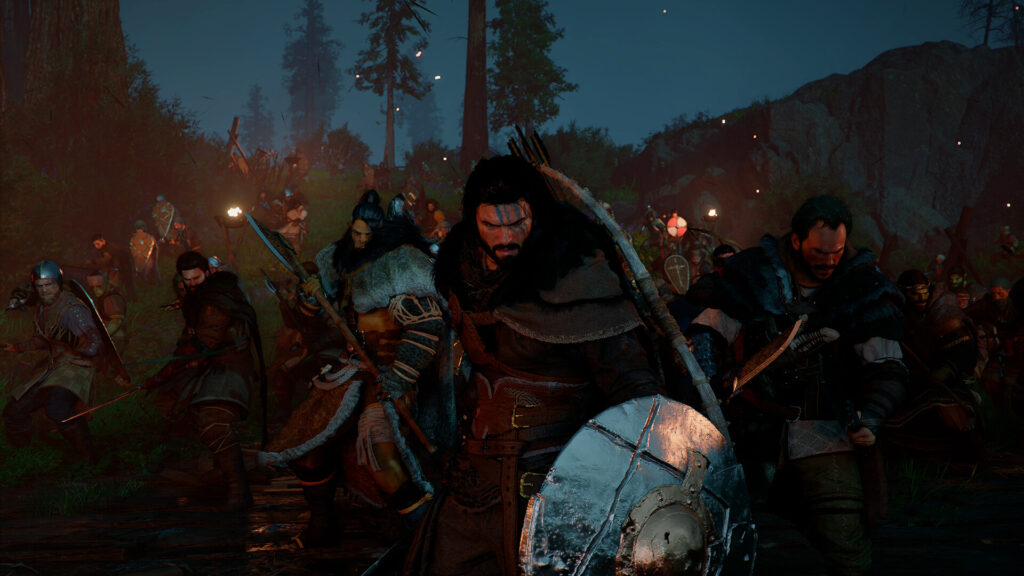
While it’s good that the developer is making Pywel become a world that consistently pushes back against your actions, it’s equally important that none of the new changes are forced onto its players. Bosses don’t spawn back in places where you fought them unless you actually trigger the fight. And some helpful settings allow you to control the frequency with which enemy factions try to regain the ground they lost to you.
It’s an important factor, as it allows the game to be dynamic without sacrificing player agency in the process, which is a major part of Crimson Desert’s draw in the first place. It’s a clever way of avoiding forcing players into an endless grind while giving them full control over how alive they would like Pywel to feel as they make their way across it.
At this point, it’s a good idea to bring in a recent interview that the studio’s Head of Marketing, Will Powers, had with The Washington Post. He asserted that the studio is foregoing a roadmap in order to retain the agility it needs to respond to player complaints with both speed and efficiency, with the team’s experience enabling it to churn out patches without requiring crunch hours.
The developer is no longer treating it as a one-and-done release, but as a long-term platform it wants to keep expanding. After a strong commercial start, including major revenue and over five million copies sold, the developer is now looking beyond regular patches toward bigger growth opportunities, with DLC specifically mentioned as one possible route. The interesting part is that nothing is confirmed yet, but the wording suggests the developer sees room to build on Pywel through new content, platform expansion, continued updates, and maybe even story material that addresses the base game’s weaker narrative side.
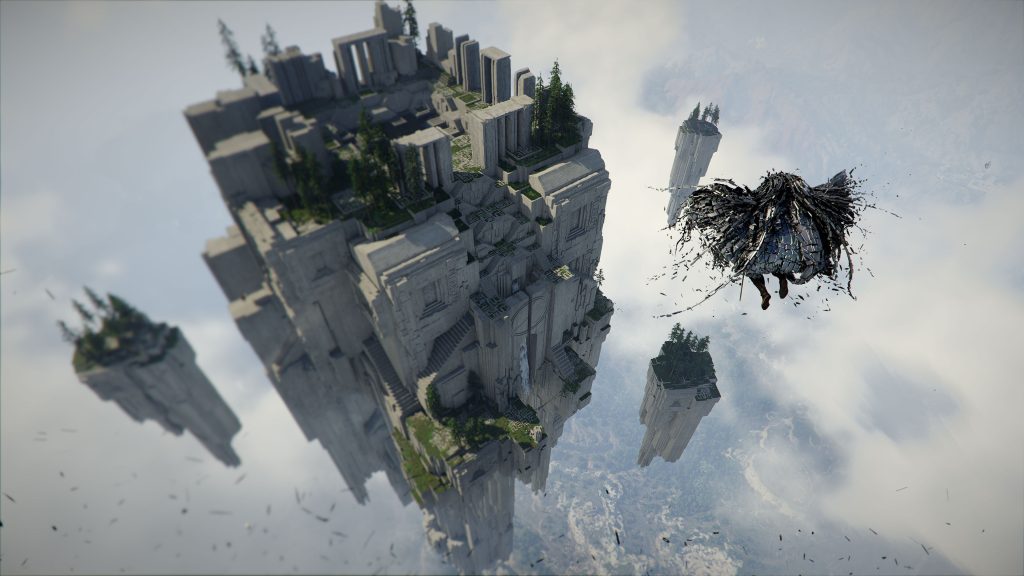
Anyways, Crimson Desert’s post-launch support is sufficient evidence of that sentiment in my book. It isn’t just about new stuff being added to the game, but in how that stuff directly addresses structural issues that affected the gameplay. The patch notes state that the Rematch and Re-Blockade features were added to let Pywel keep the sense of challenge it offers to its players alive long after they beat the game and track down all of the mighty foes that the protagonists must bring down.
It’s a great way of solving a late-game design problem, to be sure, and it sets Crimson Desert apart from a lot of great titles out there. Why do I think so? Well, most titles roll out a release build, add in a few patches and fixes, and then remain largely static for a while before they get new content via DLC. But in Pywel’s case, the base game is being actively reworked on to make it continue to be appealing even before players have had a chance to experience it in its entirety.
Crimson Desert isn’t just expanding outward, but is also growing through introspective change that’s fuelled by a community that’s as passionate about it as its develoeprs seem to be. But that comes with risks. There’s always the chance that the studio could make the game feel unfocused or bloated if it adds in too much new content haphazardly. As a former people pleaser myself, I can tell you that trying to make everybody happy is a sure-fire way to make yourself miserable. A player-first approach is definitely welcome, but it needs to be tempered with common sense and the guts to take stands whenever they’re necessary.
But looking at how things have progressed in the last few weeks since the game’s release, I’m pretty sure that those risks have already been given due consideration. It isn’t looking like chaos piled onto an already chaotic world that has so much that it’s honestly hard to keep track of it all. But Crimson Desert’s story post-launch is a fascinating one, where it has not begun to behave like a live-service title.
The developer isn’t just fixing the game. Instead, it’s making it more reactive and quite harder to put down, thanks to insightful responses to the game’s flaws. Crimson Desert’s Pywel feels more alive than ever, and the future is looking quite bright indeed.
Note: The views expressed in this article are those of the author and do not necessarily represent the views of, and should not be attributed to, GamingBolt as an organization.