
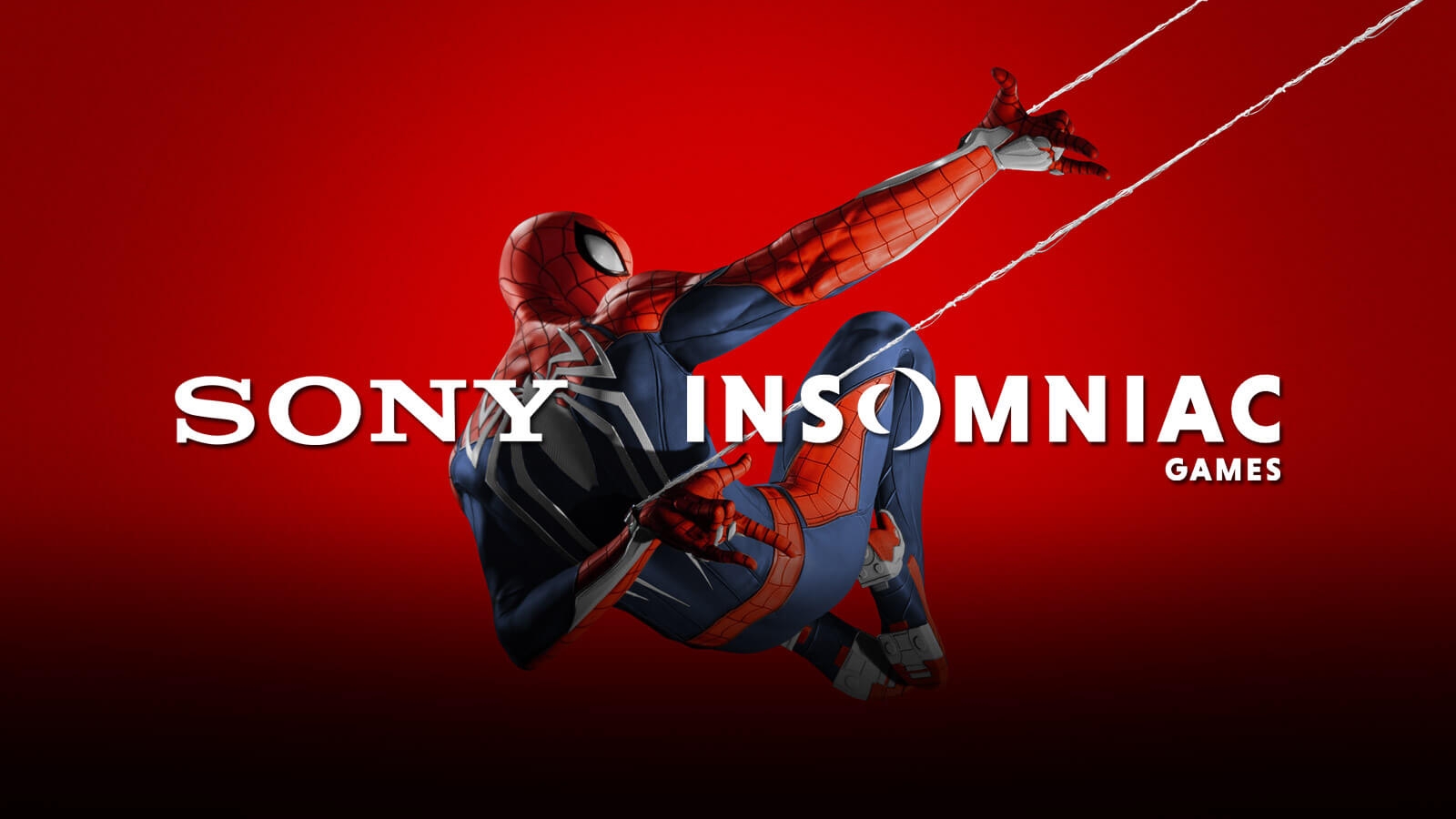
In the world of video games, few studios have followed a path as unique as that of Insomniac Games. Indeed, the California-based studio has weathered nearly every major shift in the industry: the golden age of 3D platformers, the rise of PlayStation blockbusters, cross-platform experimentation, the challenges of independence, and finally its transformation into a first-party powerhouse at Sony.
Its journey has not been linear, and it is these different phases of its story that we will explore in this brand-new series. Between innovations, risk-taking, and sometimes severe setbacks, there will be no shortage of twists and turns. Today, the studio is often regarded as one of the most effective and admired in the industry. Now is the time to dive into the past and dissect how Insomniac Games managed to climb to the top of the skyscrapers alongside Peter Parker, now striving for excellence in every production.
► The beginnings: a studio that nearly disappeared
The studio was founded in 1994 in California by Ted Price, along with Brian and Alex Hastings, and Marcus Smith. Originally named Xtreme Software, it was eventually renamed Insomniac Games the following year. Like many small studios of the 1990s, its early days were precarious. The team wanted to ride the wave of the FPS craze of the time and drew inspiration from Doom. Called Disruptor, the project was developed for the Panasonic 3DO console. Technically ambitious and praised for its ideas, the game was unfortunately a commercial failure, and the studio nearly didn’t survive—but all was not lost.
During development, a demo was presented to various publishers, all of whom were hesitant about the project—except Mark Cerny, executive producer at Universal Interactive Studios, who wanted to believe in it. This meeting would ultimately change everything. They suggested that the team switch to Sony’s PlayStation to boost sales, and that’s how Disruptor was adapted and released on the PS1 in 1996. It received positive critical acclaim and praise from several trade publications, despite sales remaining fairly low. Universal continued its collaboration with Insomniac Games, and they decided to embark on a new project rather than a sequel.
At the time, the family gaming market was dominated by Nintendo, with titles like Super Mario 64. There was an opportunity to create a family-friendly game for the PlayStation that would appeal to players of all ages, as the console didn’t really have any such titles at the time.
Publisher Universal encouraged the studio to develop a game featuring a mascot with the potential for widespread popularity. It was called Spyro the Dragon and was released in 1998. Critically acclaimed, it was an instant hit. Encouraged to build on this momentum, the California-based studio launched into Spyro 2: Ripto’s Rage! (or Spyro 2: Gateway to Glimmer depending on the region) in 1999 and even continued with Spyro: Year of the Dragon in 2000, becoming one of the major faces of the first PlayStation. The hallmarks of success were there: very fluid gameplay, expressive animations, omnipresent humor, and colorful art direction. It’s all there, and this mix would become their signature for many years to come.
But one detail slipped in unnoticed: Mark Cerny left Universal, and as the contract for the Spyro trilogy came to an end, the collaboration with Insomniac Games naturally came to a close. Faced with the franchise’s success on its console, Sony wasted no time in making an offer to the studio, which they eagerly accepted. Once again, this detail was about to change everything.
► The Golden Age on PlayStation 2 and PlayStation 3
In 2000, Sony launched the PlayStation 2. The studio was working on two projects aimed at competing with adventure games like Tomb Raider or The Legend of Zelda, titled Monster Knight and Girl with a Stick, but both were canceled due to a lack of internal enthusiasm. It was a wake-up call and an important lesson for Insomniac: they needed to return to a genre they mastered: platformers.
Proposed by one of the studio’s founders, they set out on a new science-fiction project initially featuring an armed reptilian alien traveling from planet to planet. And that’s how we discovered Ratchet & Clank on the PS2 in 2002, backed by Sony and assisted by Naughty Dog, which was a major critical success. The challenge was met: they achieved what few studios manage to do—create a second major franchise following an initial blockbuster hit. Why stop while they’re ahead?
Unsurprisingly, the wheels were then set in motion for the sequel—or rather, sequels. Thus, we welcomed Ratchet & Clank 2 in 2003, once again acclaimed by critics, followed by Ratchet & Clank 3 in 2004, which introduced a multiplayer mode and expanded upon the arenas of its predecessor. Sales of this latest installment ultimately far exceeded those of its predecessors, and it is even the highest-rated game in the entire franchise.
After three games in three years, Insomniac wanted to reorient the franchise with a darker new installment, focusing the plot on Ratchet, which was released in 2005 under the name Ratchet: Gladiator.
It is now 2006, and the PlayStation 3 is about to make its debut. After several installments in the Ratchet & Clank franchise, the team wanted to explore new horizons and avoid specializing in a single genre, so they developed an FPS called Resistance: Fall of Man, intended to be a launch title for this new Sony console. Against all odds, it was a commercial and critical success, quickly leading to a sequel in 2008, Resistance 2 as well as Resistance 3 in 2011, which ultimately proved to be a commercial failure.
During those years, the Ratchet & Clank franchise didn’t stop either, as a new series of games was launched. Called “Future,” it includes the three titles Ratchet & Clank Future: Tools of Destruction (2007), Quest for Booty (2008), and A Crack in Time (2009), while also establishing a second studio of about 25 people, still based in the United States. This studio continued to work on the franchise, developing Ratchet & Clank: All 4 One (2011) and Ratchet & Clank: Full Frontal Assault (2012), leading up to the final installment, Ratchet & Clank: Nexus (2013). This period presents Insomniac Games as virtually indestructible, comparable to a “more productive Naughty Dog”, but it is precisely at the peak that a desire for independence arises.
► The Dark Period: Independence, Fuse, Xbox, and an Identity Crisis (2011–2017)
Since all good things must come to an end, this marked the beginning of what is known as the studio’s dark period. After years of working almost exclusively with Sony, Insomniac wanted to avoid being confined to the role of a “PlayStation mascot studio.” The founder pushed for a different vision: remaining independent, owning more intellectual property, diversifying partners, and moving away from the console-exclusive model.
That’s when Overstrike appeared, unveiled in 2011 in partnership with Electronic Arts. It immediately sparked interest and targeted the Xbox 360 in addition to the PS3. With stylized art direction, humor reminiscent of Ratchet, co-op gameplay, and absurd gadgets… but the project changed. The publisher pushed for a more “marketable,” generic, and darker direction. Overstrike then became Fuse, and many felt the game lost what made it unique. Upon its release in 2013, it suffered from several issues: a diluted visual identity, fierce competition in the co-op shooter genre, a confusing marketing campaign, solid but impersonal gameplay… It was a major failure.
For many, this was Insomniac’s first major setback. Above all, it brutally called into question the idea that the studio could easily thrive outside its PlayStation ecosystem.
Still with diversity in mind, Insomniac Games then created a new subsidiary, Insomniac Click, specializing in casual mobile games and Facebook games. What a shift! A total of four games were developed between 2012 and 2015: Outernauts (Pokémon-like), Fruit Fusion (puzzle game), Digit and Dash (platform runner), and Bad Dinos (tower defense strategy). Unfortunately, none of them made a splash, and the Click division was eventually merged into Insomniac Studios.
Historically associated with PlayStation, the studio would eventually develop an exclusive title for Microsoft and its Xbox console. At the time, the decision came as a surprise and was seen as a seismic shift; yet, creatively, Sunset Overdrive is perhaps the most “Insomniac” game ever made: extreme mobility, absurd weapons, constant verticality, chaotic humor… it has it all. In hindsight, the game almost seems like the spiritual prototype of Marvel’s Spider-Man. However, the Xbox One was going through a rough patch, with a smaller installed base than the PS4, and Microsoft’s marketing struggled to position the game. Released in 2014 and despite very good reviews, Sunset Overdrive didn’t become the phenomenon they’d hoped for, even though they really needed it to.
That same year, they announced another aquatic video game called Song of the Deep, published by GameStop. The studios kept trying, even signing three VR exclusives with Oculus VR (Meta), as the medium was booming at the time. All these years marked the end of Insomniac’s dark period, during which, between 2011 and 2017, the studio seemed to be searching for its identity. Between Sony exclusives, the partnership with EA, the Xbox exclusive, indie and mobile games, and even low-profile VR projects… it looked less like a strategy and more like a scattergun approach. The studio ventured down many different paths—certainly too many at once—and none of them fully opened up for them.
Unfortunately, none of the games from this entire period achieved success. Except for one. The remake of the first Ratchet & Clank, released in 2016 on the PlayStation 4—which had launched in the meantime—sold several million copies. Hope is back, and a major project is announced: Marvel’s Spider-Man, in collaboration with Marvel Entertainment. It’s time to shift into high gear.
► Acquisition by Sony and Marvel’s rebirth
Marvel’s Spider-Man was released on September 7, 2018, and sold over 3 million copies in just three days.
The success is colossal and likely represents one of the greatest comebacks in modern video game history. Insomniac Games then reunites with old friends: prestige, financial security, stability, massive global visibility, but above all… Sony, which hadn’t missed a beat, returned to the forefront by officially acquiring the studio in 2019 for $229 million.
By 2020, over 20 million copies had been sold. It must be acknowledged that this is an impressive result for a game available exclusively on PlayStation 4. It was then remastered for the PlayStation 5 in 2020 and later ported to PC. That same year, the studio announced two new games. The first, Marvel’s Spider-Man: Miles Morales, is a standalone title that continues and builds upon the story of the first game. The second, Ratchet & Clank: Rift Apart, proudly continues the franchise that made a strong comeback with its latest installment in 2016. Both of these new titles were a huge success, and a major new announcement was made: Marvel’s Spider-Man 2. Needless to say, this latest title was also critically acclaimed.
In December 2023, ** Insomniac Games** fell victim to a major ransomware attack carried out by the Rhysida group, which stole massive amounts of internal data and demanded a ransom of approximately $2 million, which the studio refused to pay. As a result, over 1.6 TB of data was leaked online—more than a million files—including highly sensitive information. In the wake of these leaks, some users failed to grasp the nature of the (highly) anticipated game releases, which at times led to exaggerated reactions as well as a potential drop in investor and market confidence.
Among the leaked files is the game schedule extending through 2030, which included unannounced titles. Marvel’s Venom, originally slated for 2025, has yet to be released or mentioned by the studio. Another multiplayer title, Spider-Man: The Great Web, was also leaked but will ultimately be canceled. Otherwise, the files list Marvel’s Spider-Man 3 for 2028, a new Ratchet & Clank game for 2029, and even Marvel’s X-Men for 2030. This information should still be taken with a grain of salt and is likely no longer current.
Finally, it was in 2025 that things took a new turn. The departure of the studio’s founder, Ted Price, marked the end of an era. He, who had survived Disruptor, built Spyro, weathered the multiplatform crisis, and steered the Marvel comeback… left the scene.
But the studio moves forward; the central project is now Marvel’s Wolverine, and it is crucial. It must prove that Insomniac Games can do more than just Spider-Man in the Marvel universe. Everything points to a darker approach: increased violence, a more mature tone, a potentially less open-ended structure, and a more aggressive narrative focus. If the gamble pays off, Wolverine could become the studio’s second major Marvel franchise. Is it a good thing for Insomniac Games to specialize so heavily in Marvel productions? Can we hope for an expansion into new creative franchises in the future, or, on the contrary, a massive and prolonged confinement within this superhero universe?