


The GBA remake of the very first Pokémon game is available again on Switch 1 and 2, but after more than 20 years is it still worth your time and money?
It’s certainly proving to be a memorable 30th anniversary for Pokémon this year. The recent reveal of Pokémon Winds and Waves has gone down well but the real surprise has been how good Pokémon Pokopia is. From a spin-off nobody was particularly looking forward to, to the highest rated Pokémon game on Metacritic, it’s proven there’s still plenty of life left in the old franchise.
How Winds and Waves will turn out is impossible to say at the moment, especially as it’s not out until next year, but for now we have this, a re-release of the 2004 Game Boy Advance remakes of the very first games from 1996.
It always seems a bit odd calling a 2D game a remaster, but this is definitely more of a straight port. Under normal circumstances you’d expect it to just be added to Nintendo Switch Online for free but this has to be bought separately, because a) Nintendo likes money and b) they want to integrate it with Pokémon Home, so that you can transfer pokémon to other games – so they don’t want you using rewind options or quick saves.
Like all mainline Pokémon games, there were multiple versions of the original Gen I game, with the initial two being essentially the same game but with a handful of different pokémon in each, to encourage trading, and a few other, more minor details. In Japan the first two were called Red and Green but by the time they got released in the West they’d become Red and Blue. In this instance we’ve reviewed FireRed, although back in the day we owned Blue.
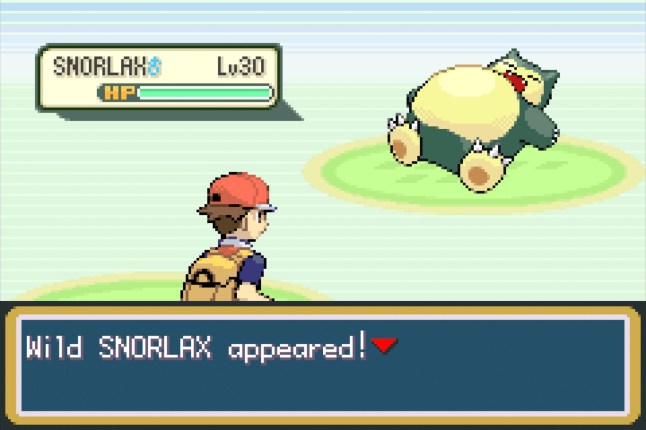
The Game Boy Advance was significantly more powerful than the original Game Boy, which apart from anything else could only display games in black and white, so while the graphics here are still 2D they look closer to a SNES game than a NES title. There’s still very little in the way of animation, for anything, but the bright colours and bold designs are very charming.
Expert, exclusive gaming analysis
Sign up to the GameCentral newsletter for a unique take on the week in gaming, alongside the latest reviews and more. Delivered to your inbox every Saturday morning.
The early games had almost no plot but that only added to the sense of discovery and experimentation. FireRed didn’t change anything fundamental about the original game but it did add a number of quality of life features, including a contextual help system, that you can activate at any time, and a little reminder of the last four things you did when you last saved the game – which is still something many modern games don’t do.
FireRed also introduced a new endgame area called Sevii Islands, which features a number of additional pokémon from subsequent games, that didn’t exist when the original games were made. This edition of the game also allows you to visit Birth Island and Navel Rock, where several legendary pokémon can be found, which previously were only available via limited time events.
In the original, getting that far also unlocked the ability to trade with Ruby and Sapphire, whose game engine was used to make FireRed. Indeed, for a while after, it became a tradition for older titles to be remade using the graphics of the most recent game, with HeartGold and SoulSilver arriving after 2006’s Diamond and Pearl.
With the easier access to previously locked content, this is technically the definitive edition of the games. But while the lack of any new features is not a surprise – and for an anniversary reissue the price is not as extortionate as you might expect – the absence of any online features is a shame, especially as Nintendo does sometimes add them to retro titles. And doubly so given Pokémon Home compatibility is not available at launch, with no exact date for when it might appear.
Despite these quibbles, it has been fascinating to go back to a time when Pokémon was past its honeymoon period and just starting to mature as a franchise, with FireRed smoothing out several bugs and balancing issues from the original. However, there’s still no split between physical and special moves, and no mega evolutions, alpha pokémon, or any of the other gimmicks and complications of the modern games.

Instead of picking up a new stat-altering item every five minutes, or catching fully evolved pokémon out in the field, FireRed forces you to level grind and think carefully about every move you learn, especially as you still have to find room for HM abilities that allow you to interact with the game world, like cut and fly.
There’s a lot to be said for going back to the simplicity of the earlier titles, not least because you don’t have to have a photographic memory to recall all the pokémon. There’s only 151 here, during the main game, and that feels like plenty.
But while it is fun to visit the past we wouldn’t want to stay there. The older games were more perfectly formed than the messy, glitchy modern ones but that’s in large part because their simplicity allowed them to be. More recent entries have lacked innovation but even by Ruby and Sapphire the series had settled into a very predictable formula.
Whatever Winds and Waves becomes, it needs to combine the discovery and sense of wonder of the originals with a similar sense of unpredictability and mechanical complexity. At the same time, it needs to be accessible to all players, new and old, while adding its own new ideas – not just riffs on what already exists.
There’s a lot to learn from FireRed and LeafGreen but Pokémon, like all long-running franchises, can’t afford to overdose on nostalgia. It’s useful to look back at how things worked in the past but we’re much more interested to see what will happen in the future.
Pokémon FireRed and LeafGreen Switch review summary
In Short: A welcome reminder of the origins of Pokémon and while the game’s age is obvious in more than just its graphics the unbounded sense of exploration and experimentation remains as compelling as always.
Pros: Classic gameplay, unencumbered by modern gimmicks. The 2D graphics still look great and there’s tons of content – including elements that most wouldn’t have seen in the original releases.
Cons: No new features and no online functionality of any kind, including Pokémon Home at launch.
Score: 8/10
Formats: Nintendo Switch
Price: £16.99
Publisher: The Pokémon Company
Developer: Game Freak
Release Date: 27th February 2026
Age Rating: 3

Email gamecentral@metro.co.uk, leave a comment below, follow us on Twitter.
To submit Inbox letters and Reader’s Features more easily, without the need to send an email, just use our Submit Stuff page here.
For more stories like this, check our Gaming page.