
Of all the games on the Nintendo Switch 2’s release calendar, I’ve been most curious and skeptical of Pokémon Pokopia, an unexpected mashup of two big franchises in Nintendo’s roster, planned and co-developed by The Pokémon Company, Game Freak, and Koei Tecmo Games. I can’t say I ever imagined the prospects of melding Pokémon with Animal Crossing, but after a hands-on preview, I’m eager to help rebuild Poké-society from the ground up.
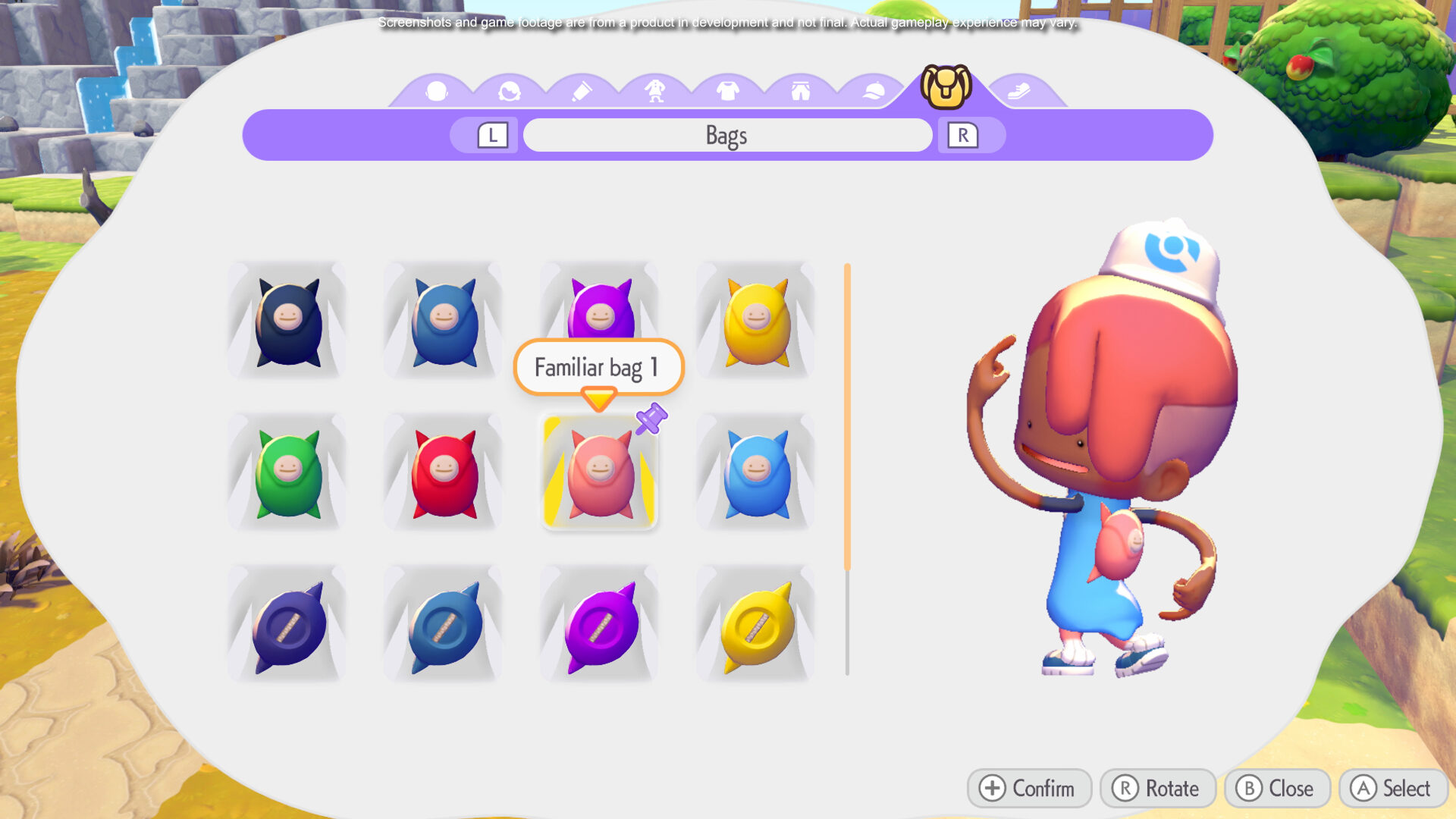
Pokémon Pokopia‘s playable hero is neither an aspiring Pokémon trainer nor a cartoon-faced villager seeking a new home amongst critters, but rather a humble Ditto. This particular take on the Pokémon mythos is surprisingly post-human—something happened to essentially drive away all humans and Pokémon. The Ditto can mimic human forms and takes on the appearance of their former trainer, thereby giving you the chance to customize your in-game avatar.
This, in itself, is a daring new concept by Pokémon‘s standards. The series has been branching out more in recent years, sending players into an isekai vision of ancient Pokémon history in Pokémon Legends: Arceus or rattling the sacred position of its new professors in Pokémon Scarlet & Violet, but “postapocalyptic” was not a setting I would’ve bet money on a year ago.
Before the preview, however, I’d been somewhat unconvinced of the player’s aesthetics as a human-morphing Ditto. Luckily, once I could customize its appearance, the avatar started to grow on me quickly. The options presented off the bat were not incredibly in-depth, yet sufficient to make my character my own without agonizing in the menus for too long.
“Even in a short hands-on session, Pokémon Pokopia‘s gameplay loop was immediately infectious.”
Once our plucky Ditto has awoken and remade themselves in the image of their supposedly former trainer (and let’s not dwell on the infinite sadness of that scenario for too long), Pokémon Pokopia introduces us to the “professor.” This Tangrowth is our guide to the new sandbox that awaits us, much like Tom Nook without the cycles of lax-yet-crippling debt. A few tutorials later, we’ve met other Pokémon and learned our first move, Water Gun, and the fun can really begin.
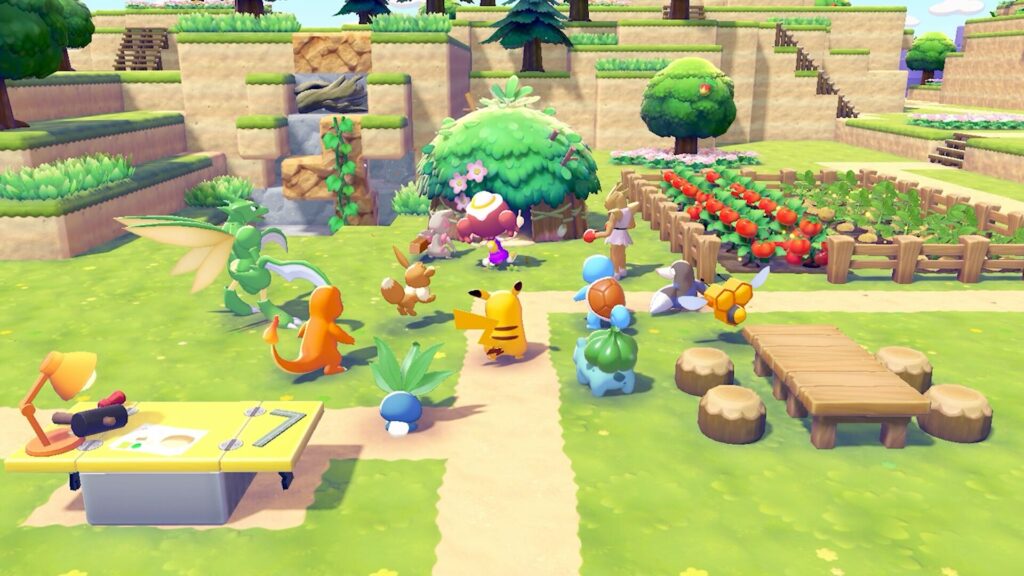
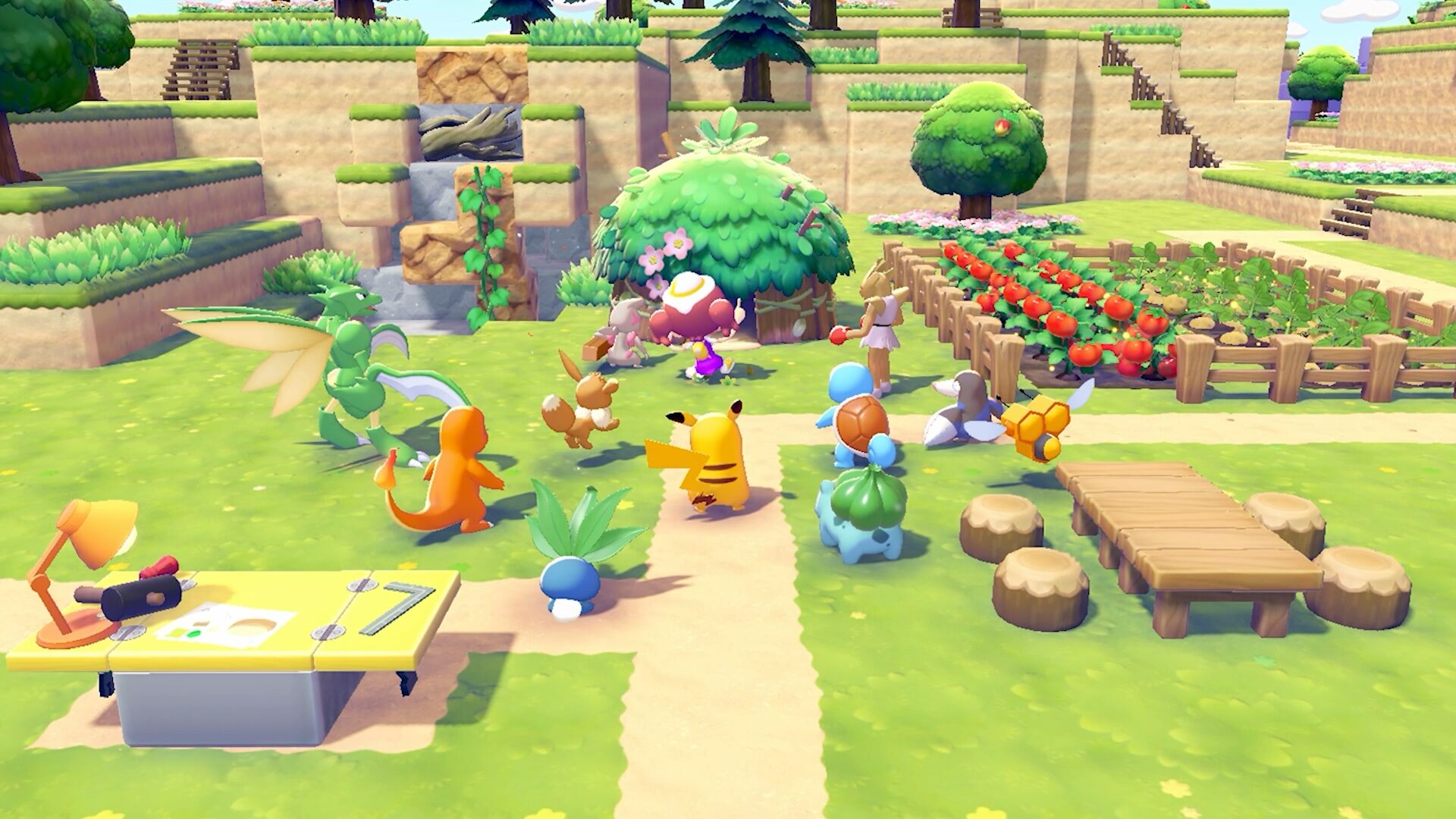
The hook of Pokémon Pokopia revolves around mimicking different Pokémon’s moves to enrich and revitalize the environment, creating biomes or habitats to entice new Pokémon. These new neighbours will have requests for improving their homes, and some may teach you a new move once you’ve earned their trust. In turn, each Pokémon move has a different purpose for manipulating the environment—Water Gun makes dried-out ground viable again, while Vine Whip makes new bushes grow.
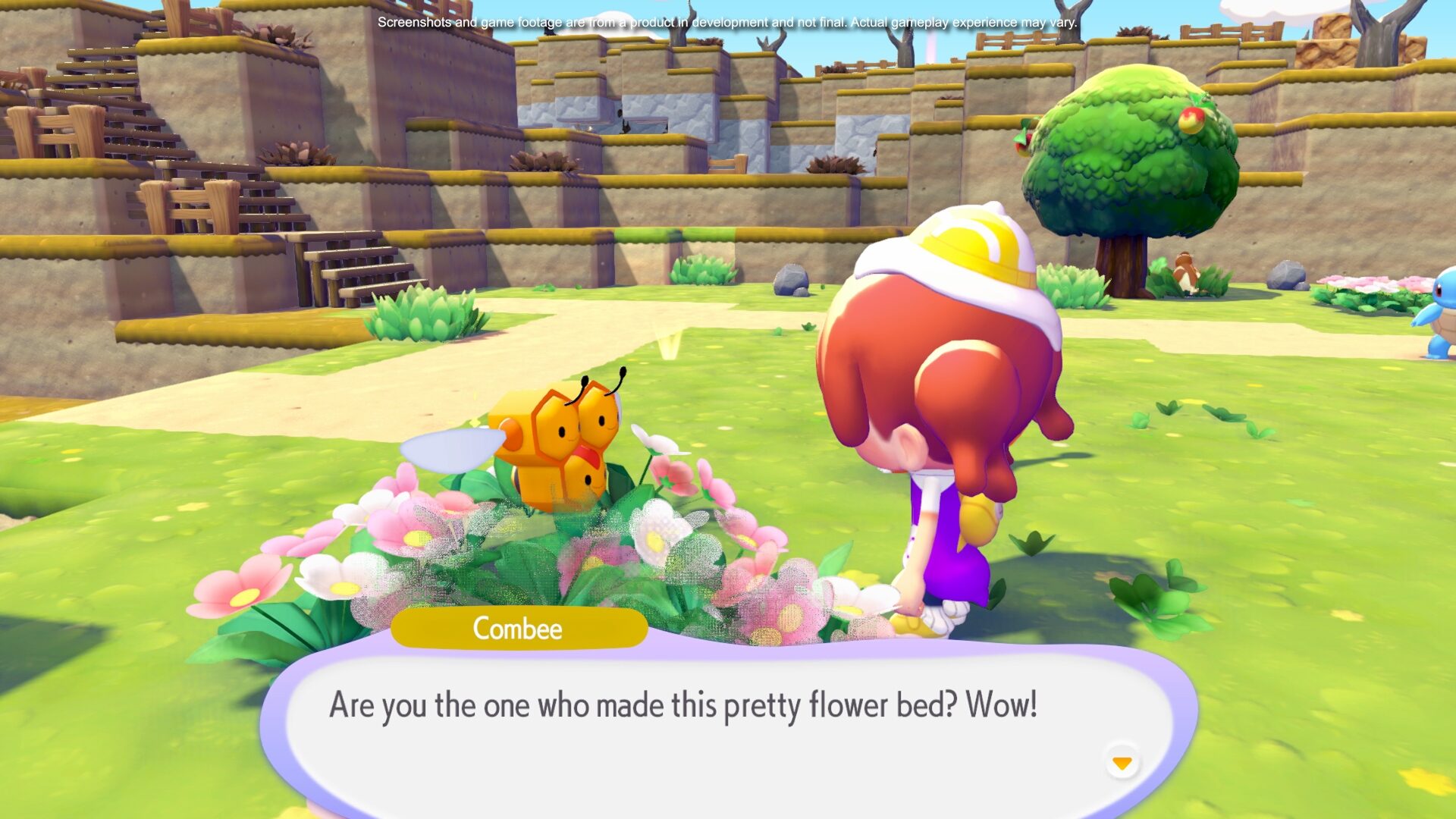
Even in a short hands-on session, Pokémon Pokopia‘s gameplay loop was immediately infectious. Experimenting with biome creation (with some guidance from a dedicated in-game “biome-dex”) felt intuitive and rewarding; by making tall grass sprout in the right location, I created a new kind of habitat, which was soon inhabited by a new Pokémon with new needs and gifts to earn.
Soon, the Animal Crossing element kicked in, once I unlocked the crafting table and started to venture a little further from my initial base of operations. Ruined buildings awaited on the other side of a few obstacles, ready to be turned into some specialized biomes with a couple of crafted or scavenged additions. Most promising of all was the Pokémon Center’s dilapidated exterior, which would require a little more effort to fix up. The combined feeling of a large sandbox worth of discoveries and the ability to shape it to my liking immediately hit the highest highs Tom Nook’s micromanagement simulator can offer.
“Being able to divvy up tasks and coordinate to fulfill a shared vision should make Pokémon Pokopia a strong contender for multiplayer experience of the year.”
Pokémon Pokopia really seems to have nailed the key elements of both Animal Crossing and the core Pokémon franchise and, by combining them, may have created something that surpasses both. It was liberating to be freed from Animal Crossing‘s locked perspective and shape the world from all sides, while the prospect of completing a vast Pokédex feels like turning on an unlimited neighbours hack for New Horizons.
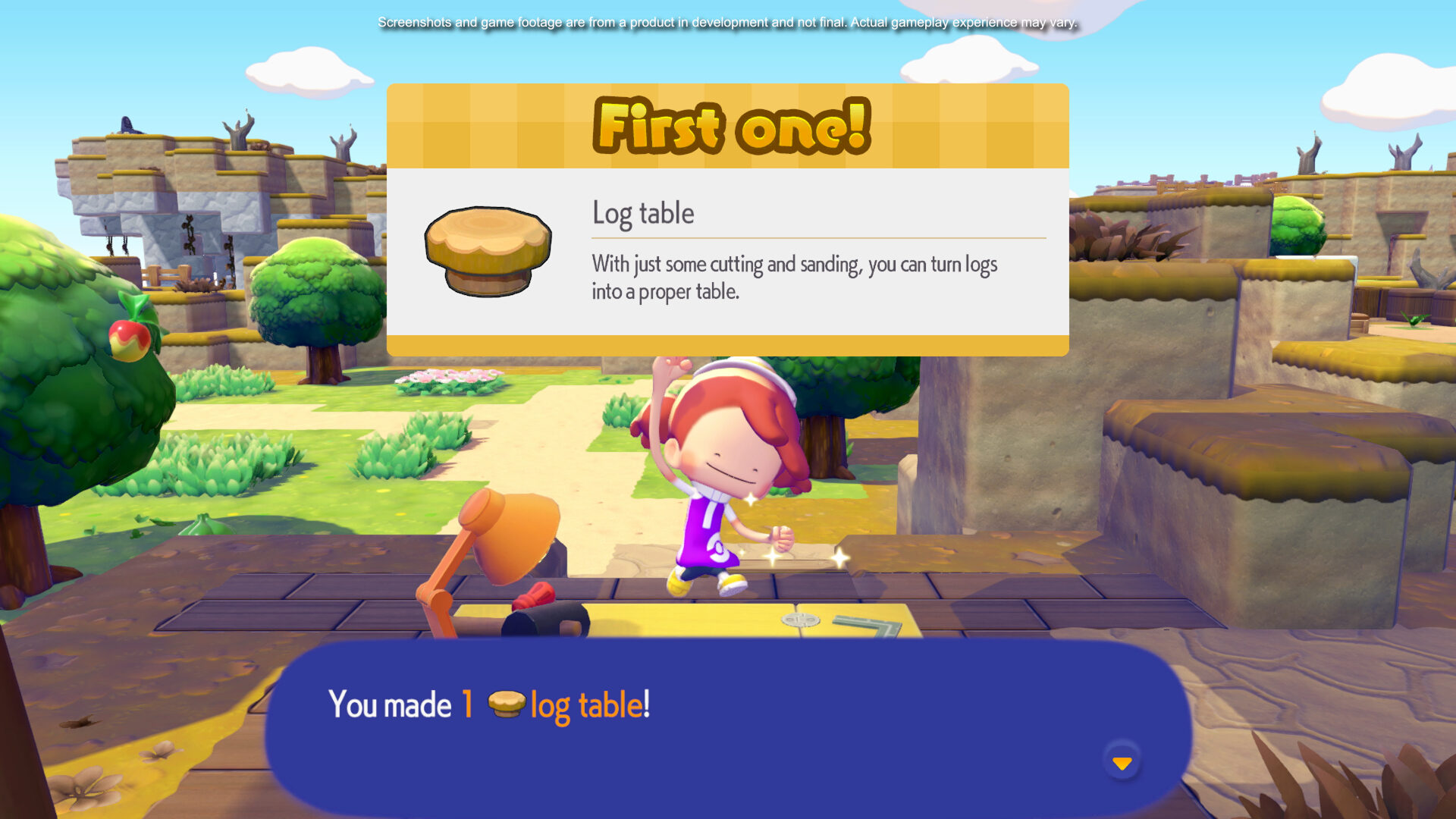
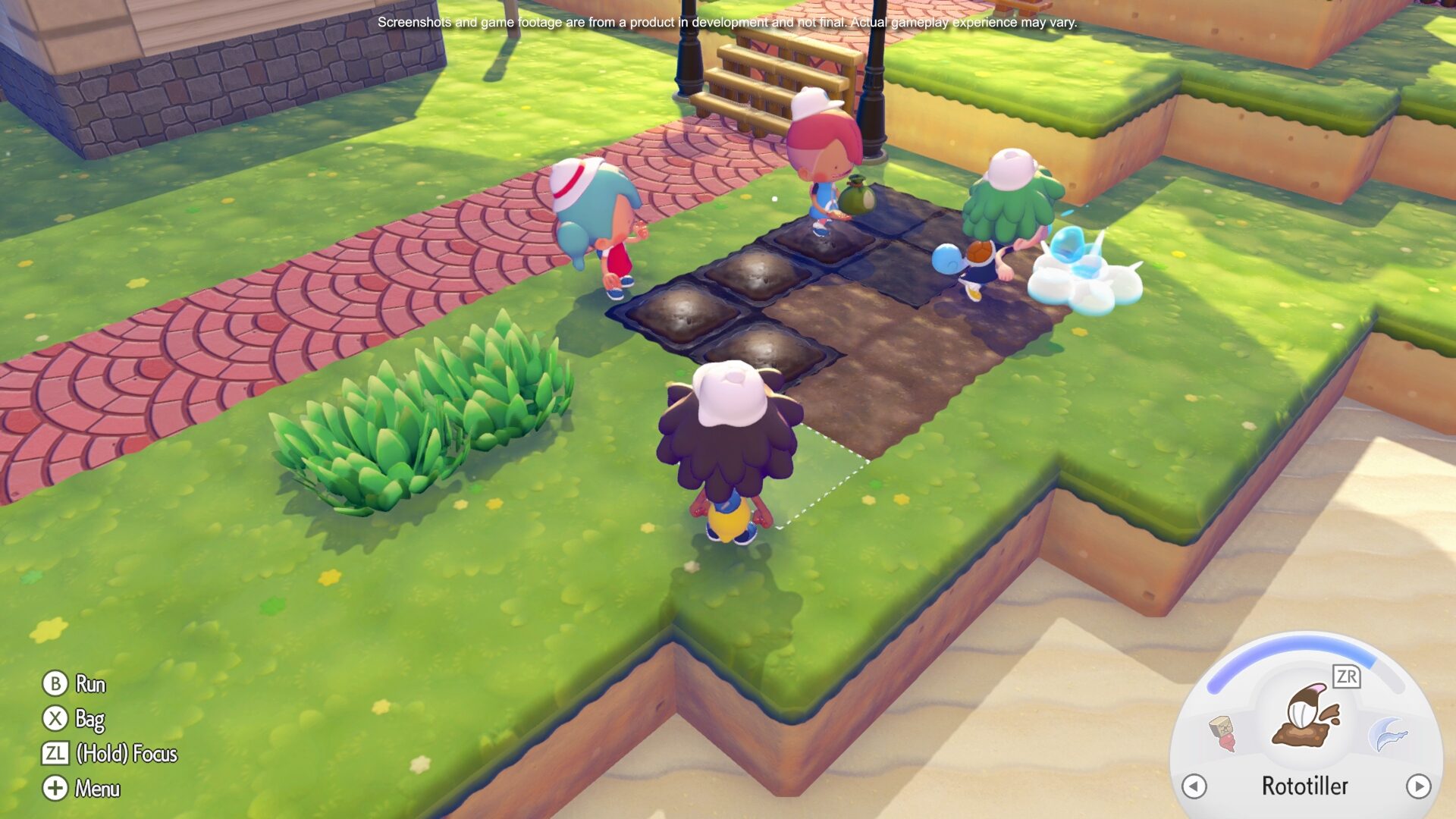
That being said, this meeting of the worlds may have inherited some of the flaws and foibles of both inspirations as well. Terraforming the environment is a multi-stage process with moves that have a somewhat small cursor—Water Gun, for instance, covers an X-shaped zone, five squares at a time—and it remains to be seen how tedious this might feel at scale, by the time you cover the entire area. In the short span of time I had, the spirit of discovery prevailed, but once the rapid-fire pace of breakthroughs cools, I’m hoping Pokémon Pokopia doesn’t grow stale too fast.
Multiplayer should do a lot to keep players coming back. Later in the session, I was able to hop into the cooperative multiplayer mode, where players work together to shape the island. The same design principles apply, but having partners to shoulder chores and share discoveries added an entirely new dimension. Up to 4 players will be accommodated through either local play or Nintendo Switch Online, and even Nintendo Switch players can get in on the fun if a Nintendo Switch 2-player hosts through GameShare.
Being able to divvy up tasks and coordinate to fulfill a shared vision (or conversely, going off in different directions and surprising your friends with bizarre creations) should make Pokémon Pokopia a strong contender for multiplayer experience of the year. With a grand sandbox to play in and so much to pursue, Animal Crossing: New Horizons‘ new “creative” mode, added last month, may already pale by comparison. I’m excited to see what interesting Ditto societies I can cook up with friends and family.
The map used was wider and incorporated some moves I hadn’t earned in the previous segment, like the ability to morph into a Lapras and cross bodies of water. Upon crossing one such lake, I found a more developed area pre-inhabited by Pokémon with more robust requests. I not only happened upon some “Eeveelutions” this way, but I got a sense of the advanced “cozy game” elements that await further in, customizing habitats with ever more complex criteria. I get the sense this may be an entirely new dimension for a subset of players, bringing everything they’ve learned from the genre’s other darlings.
Speaking of Pokémon variety, I was pleasantly surprised by the diversity of Pokémon species I encountered in a short period of time. While there’s always a bit of bias toward the Kanto Pokédex in spin-off titles like this, the cross-section of creatures I saw in Pokémon Pokopia was pleasantly spread around the generations. From the cross-section seen, the standard “must-have” inclusions were represented alongside a healthy sampling of creatures from the other generations.
I’d set out with the personal mission of encountering Riolu and Eevee within the time allotted, and only succeeded in finding the latter, but there were several other Pokémon I was pleasantly surprised to find along the way. Fortunately, we don’t have much longer to find out how many of the series’ unfathomably large roster are waiting on us to rebuild society, as Pokémon Pokopia is now only three weeks away. (My fingers will be crossed for Litten the whole time.)
For now, Pokémon Pokopia seems to be doing a lot of things I’d like to see Animal Crossing work into its next game. The engine feels pretty smooth and intuitive so far, more seamless than the typical Villager experience, and even after falling back into New Horizons with the Nintendo Switch 2 update, I appreciated how much faster Pokémon Pokopia felt by comparison.
By the time my hands-on session came to an end, any specter of hesitation I had about Pokémon Pokopia‘s concept had completely evaporated. The series’ 30th anniversary have barely even begun yet, and the crown jewel of the entire celebration may already be upon us.
(Pokémon Pokopia launches on Nintendo Switch 2 on March 5, 2026.)