
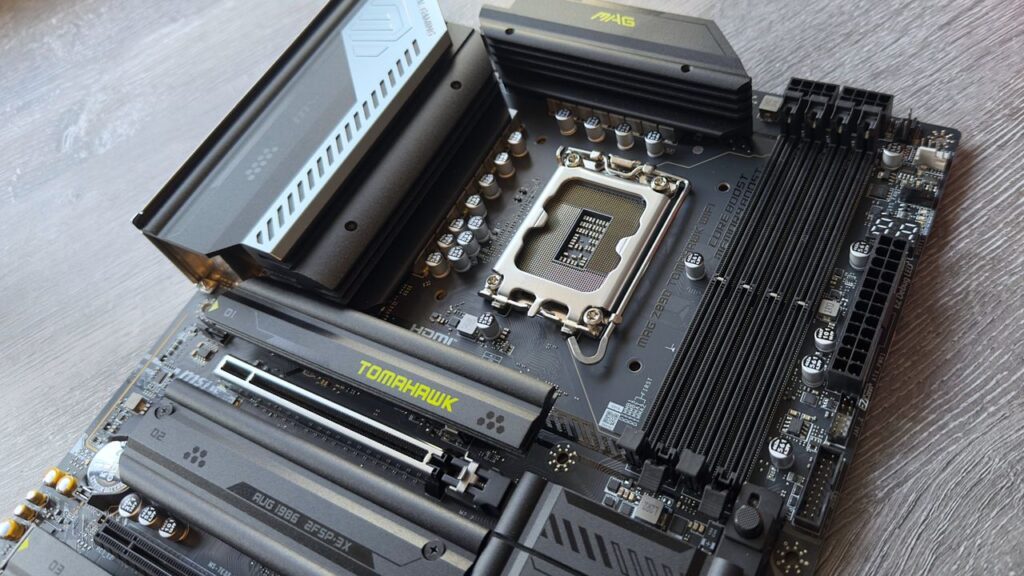

With Intel’s Nova Lake desktop CPUs expected to land later this year, we have finally got our first major leak of the motherboard chipsets to support them. The big takeaway is that they aren’t all that different from the previous generation, but there now appear to be three of interest for prospective gamers.
Leaker Jaykihn took to X to post a chart with the specs of the Intel 900-series chipset, and if true, it suggests Intel has changed its naming nomenclature going forward. At the bottom end, we have the B960 and Z970, both of which offer 14 PCIe 4.0 lanes total.
Most of the specs of these two boards are similar, with two DMI Gen5 lanes to connect to the processor, one Thunderbolt 4 port, and an identical number of USB ports. The difference between the two is support for CPU overclocking—the Z970 supports it, the B960 does not, and neither support BCLK tweaking.
The B860, the current-gen Intel 800-series chipset, also has up to 14 PCIe 4.0 lanes, with the same number of SATA 3.0 and USB 2.0 ports. Notably, Nova Lake reportedly uses an LGA-1954 socket, which would make it not compatible with previous Intel motherboard chipsets.
The H chipset seems to be missing from the 900-series table, suggesting that Intel has cut its lowest-end chipset entirely. The H810 offered a lot fewer lanes than anything listed in the 900-series here, so perhaps it’s gone entirely, and good riddance. Jaykihm even suggests there are “No H-series board at all” in a follow-up post. However, the H810 did launch later than high-end boards in the 800-series, so that’s always a possibility again.
|
Chipset |
B960 |
Z970 |
Z990 |
Q970 |
W980 |
|
PCIe lanes |
34 |
34 |
48 |
44 |
48 |
|
TB4 / USB4 ports |
1 |
1 |
2 |
2 |
2 |
|
DMI Gen5 lanes |
2 |
2 |
4 |
4 |
4 |
|
PCIe 5.0 lanes |
0 |
0 |
12 |
8 |
12 |
|
PCIe 4.0 lanes |
14 |
14 |
12 |
12 |
12 |
|
Sata 3.0 lanes |
4 |
4 |
8 |
8 |
8 |
|
USB 2 ports |
12 |
12 |
14 |
14 |
14 |
|
USB 3.2 (20 G) ports |
~2 |
~2 |
~5 |
~4 |
~5 |
|
USB 3.2 (10 G) ports |
~4 |
~4 |
~10 |
~8 |
~10 |
|
USB 3.2 (5 G) ports |
~6 |
~6 |
~10 |
~10 |
~10 |
|
IA OC |
No |
Yes |
Yes |
No |
No |
|
BCLK OC |
No |
No |
Yes |
No |
Yes |
|
Memory OC |
Yes |
Yes |
Yes |
No |
Yes |
|
PCIe 5.0 slot lane config |
1×16 |
1×16 |
1×16, or 1×8 + 2×4, or 2×8, or 4×4 |
1×16, or 1×8 + 2×4, or 2×8, or 4×4 |
1×16, or 1×8 + 2×4, or 2×8, or 4×4 |
|
PCIe 5.0 storage lane config |
1×4 |
1×4 |
1×8 or 2×4 |
1×8 or 2×4 |
1×8 or 2×4 |
|
ECC |
No |
No |
No |
No |
Yes |
|
Simultaneous displays supported |
4 |
4 |
4 |
4 |
4 |
|
PCIe RAID 0/1/5/10 support |
No |
No |
Yes |
Yes |
Yes |
|
SATA RAID 0/1/5/10 support |
Yes |
Yes |
Yes |
Yes |
Yes |
|
Intel vPro + Standard Manageability |
No |
No |
No |
Yes |
Yes |
Historically, Intel used to use the Zx70 naming convention (like with the Z270), until AMD started doing the same with Ryzen-compatible motherboards. Intel shifted to Zx90 and Bx60 as a result, in what can only be described as a schoolyard game of ‘my imaginary dinosaur is bigger than yours’. So it’s a bit of a surprise that Intel appears to be going back to the Z970, which may look quite similar to any X970 motherboard from AMD.
Then, moving over to the Z990, which is the flagship chipset, we have 24 total PCIe lanes, which is the same as the Z890. Now, it uses four DMI Gen5 lanes, as opposed to eight maximum Gen4 lanes, but they offer a similar bandwidth, so there’s not a distinct upgrade there. You’re getting CPU OC, BCLK OC, and memory OC, as well as a large number of supported USB ports.
Previously, us gamers only really cared about the Z890 and B860 in the 800-series, there are now three worth considering: the B960, Z970, and Z990. If you are considering getting a Nova Lake chip, you will want to keep an eye on all three.
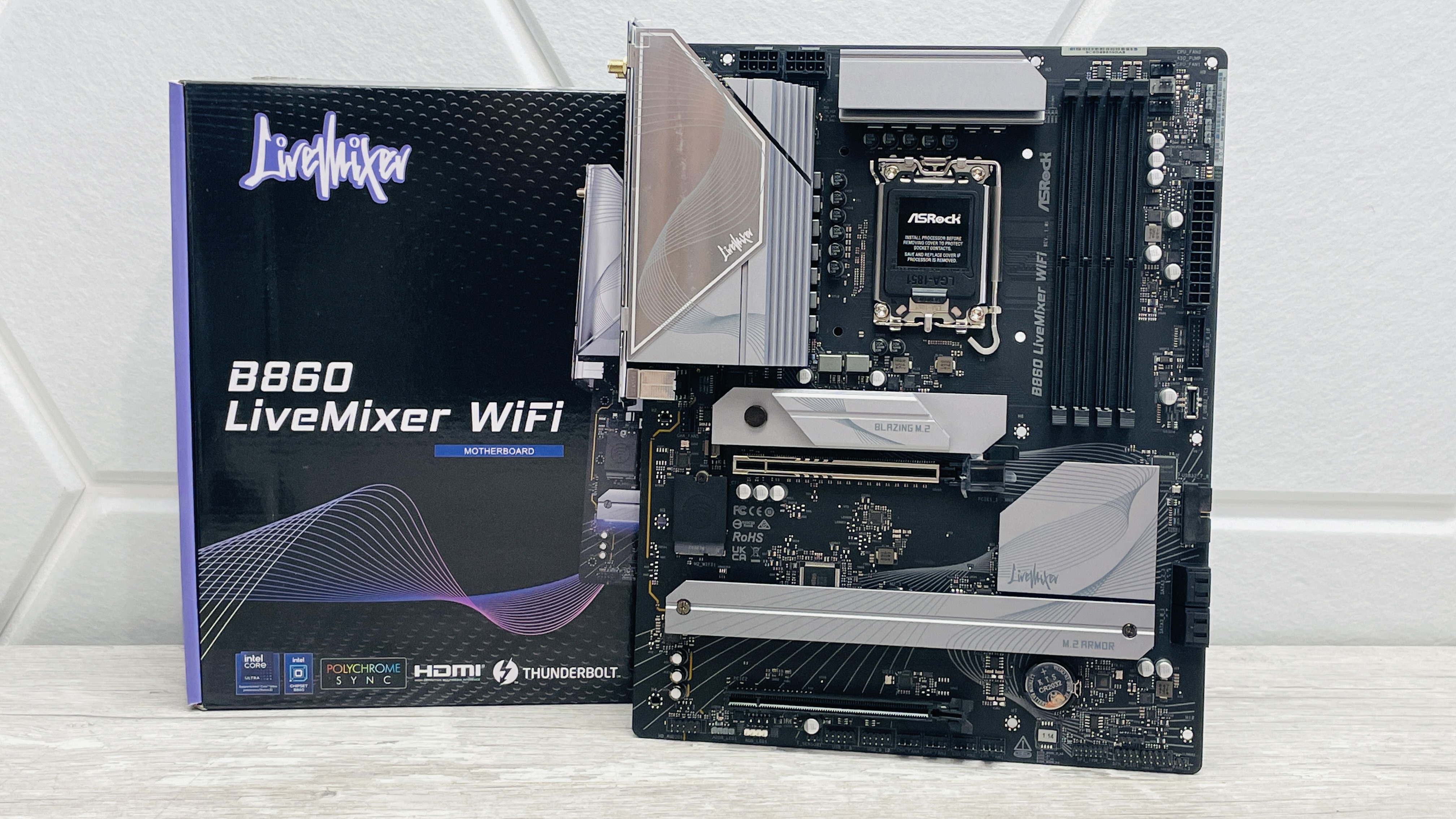
The Q970 and W980 are both chipsets intended for business users, explaining the presence of the Intel vPro+ Standard Manageability (though this is now called Intel vPro Essentials). This means their capabilities will be wasted in a gaming rig. Plus motherboards with them don’t look anywhere near as cool.
As of the end of last month, Nova Lake CPUs were confirmed to be on track for a release in late 2026, with Intel saying ‘We have important customers in both datacenter and client and that needs to be our priority’. Naturally, with the memory crisis ongoing, and the knock-on effects of that when it comes to hardware supply, we can never be fully confident with estimated release dates, but Intel’s knocked it out of the park in Panther Lake testing, so it’s all to play for. We just need Nova Lake to be worth the upgrade.