
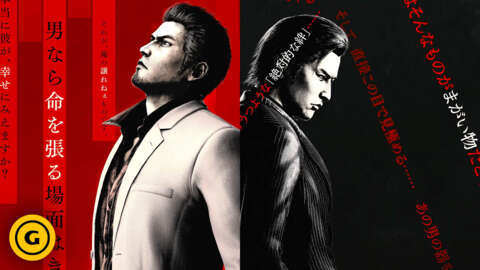

I’ve been playing the Yakuza games for a long time now, having been drawn into them when they were still niche PS3 action games that needed fan petitions to get localised. Now, the series has become SEGAs biggest property with yearly releases that each manages to be larger and longer than the last. Some of these entries have been spin-offs set outside the main continuity, while others have been entire remakes of the oldest games in the series. Yakuza Kiwami 3 & Dark Ties manages to be both at one – a two-pack where one game is a modernised remake of Yakuza 3, while the second weaves a prequel adventure around the final protagonist of Yakuza 3, Yoshitaka Mine. Unfortunately, this duo left me scratching my head and wondering who, exactly, they were made for.
Yakuza Kiwami 3, as a concept, is a game that I’ve been unsure about, even years before it was announced. The Kiwami remakes of the first two games were able to bring a huge leap forward in quality from PS2 to PS4, and make them readily available on modern hardware, but Yakuza 3 isn’t nearly as dusty, and is still easily playable thanks to the Remastered release in 2020. It left me wondering what Yakuza Kiwami 3 could add or change that would make this kind of thing feel like a worthy alternative to the original game (which, as it turns out, SEGA is no longer selling standalone once this remake is released.)
A big part of the original game is the way it blends the usual crime drama of the series with Kiryu’s struggle to settle down in the tropical locale of Okinawa to help run the Morning Glory Orphanage that he himself grew up in. In the original game, your gritty missions in Kamurocho were often and suddenly interrupted to check in on the orphanage for meandering dialogue-focused activities to help the kids and deepen your bonds with them. Yakuza Kiwami 3 adds a lot of depth to these excursions and massively expands your interactivity with the orphanage. There’s a wide variety of new domestic minigames you’ll partake in – sewing, farming, fishing, cooking, catching bugs, and even helping with homework. It’s hilarious, as always, to see the stoic and brawny hero Kiryu so earnestly invest himself in hilariously inconsequential activities. Taking care of these successfully will increase your Daddy Rank – a translation that either had no thought or a little too much thought put into it.

I’m torn on the expanded Morning Glory Orphanage, though. On one hand, having so many more actual activities to get involved in really enhances the feeling of living at the orphanage and feeling your contributions. At the same time, though, there was an important narrative reason to why Kiryu wasn’t mending clothes or helping with homework in the original game. A big part of the story was Kiryu struggling to adapt to domestic dad mode after only knowing crime and violence his whole life. It wasn’t because the technology back then couldn’t handle a bug-catching minigame, it was because Kiryu himself couldn’t handle it. Seeing him dive deep into Daddy mode here feels far more in-line with the 50-something Kiryu we know from the later entries in the series, and not the younger and brasher one we’re supposed to be following here.
A lot of the additions or changes in Yakuza Kiwami 3 feel like they make sense or add value on paper, but the change the mood the original game was going for and make it less immersive. The new combat system is another big example of that. You now have the ability to swap between two unique sets of combat abilities. The Dragon of Dojima: Kiwami style is basically a greatest-hits of Kiryu’s most recognisable moves up until now, with the addition of some fun but fitting new ones like loads of gnarly wrestling throws.

The second style, Ryukyu style, is a little strange. In this mode, Kiryu swaps between a bunch of different melee weapons and attack styles that are based on traditional Okinawan martial arts and weaponry. It’s funny, and weird, and it just doesn’t fit the game at all. It’s sort of an unrestricted extension of the way these games have already let you use knives and guns and bombs to battle your foes in the past, but as an entire dedicated fighting style it’s another example of something added to the game for the sake of fun and at the cost of immersion.
Dark Ties, the other game in the package, is a tighter experience, if still a bit of a baffling one. Kicking things off as a young Yoshitaka Mine and seeing him ousted from his company and seeing him turn to a life of crime is so fascinating. It’s a really fresh character archetype that the series has never put a focus on – Kiryu and Ichiban as protagonists have been so desperate to claw themselves out of the pit that the yakuza lifestyle put them into. Seeing a character who’s cold and calculated but also desperate to claw his way into that world is so fun. At the same time, it often comes dangerously close to ruining the mystique that made Mine an iconic villain in the first place. Playing Dark Ties after beating Yakuza Kiwami 3 solves a lot of that issue, of course, but there’s still something so memorable about the “less is more” way that Mine was used in the original game that Dark Ties spoils a bit.

Both games come with pretty massive side-modes that are, honestly, some of the funnest side-content the franchise has ever put forward. In Yakuza Kiwami 3 you have the Bad Boy Dragon mode (again, someone had way too much fun naming some of this stuff) which sees Kiryu leading a gang of girl bikers into huge multi-crew battles to assert dominance on their turf. Customising and recruiting bikers is a blast, and the chaos that ensues in this fights never gets old. Dark Ties, meanwhile, has the Underground Fight Club. It’s sort of a roguelike dungeon mode, where you’ll explore randomised labyrinths and find new weapons and upgrades as you explore each floor. Successful escape allows you to upgrade your character, recruit mercenary companions, and tackle deeper floors. Both are some of the rare Yakuza franchise gems where I love the modes so much that I almost wish they were standalone games.

All in all, I think this double-pack of titles is a pretty great time for Yakuza fans who have already experienced the original story. For newcomers, though, the breadth of fun-focused new content really dilutes the unique vibe and atmosphere that Yakuza 3 was originally going for. With the original game now being delisted ahead of this release, newcomers will struggle to be able to have that original experience at all. As the franchise grows bigger and the well of potential remakes continues to dry up, it’ll be interesting to see if the team at SEGA manages to find the way to please both longtime fans and newcomers that this entry doesn’t quite stick the landing on.