
One of the first scenes of Yakuza Kiwami 3 sees protagonist Kazuma Kiryu paying respects at a cemetery. Interact with any of the tombstones lined up in a row, and you’ll witness a moment of remembrance. Kiryu, in his thoughts, recalls the deceased’s deeds, their shared bond, and how much they meant to him. In turn, you’re given the option to watch a story recap of the Yakuza entry in which the character was featured. While the original Yakuza 3 also had this option, the scene as a whole takes on a different meaning in Kiwami 3, showing footage of the previous Kiwami games. In a way, this retelling makes it clear that these remake treatments are now the intended story. The problem is that the array of narrative, mechanical, and stylistic changes that came with these iterations, which are handled more bluntly in the latest entry, are altering what made the originals stand out in the first place.
Yakuza Kiwami 3 & Dark Ties gives yet another main entry in the action-adventure series the remake treatment, while also including a new, separate experience featuring a different protagonist, similarly to the Majima Saga portion in Kiwami 2. It is perhaps the most important remake of the first five games. Technically speaking, Yakuza 3 saw developer Ryu Ga Gotoku Studio experimenting with a new engine after its two predecessors, which, despite an effort to iron it out with a remaster in 2019, hasn’t aged gracefully. In addition, it is a key entry in the series, marking a crucial moment in Kiryu’s characterization as he tries, and ultimately fails, to escape the trappings of the underworld to run an orphanage on the picturesque beaches of Okinawa. His past ultimately comes back to haunt him once more, reminding him that there’s no reprieve from his phantoms.

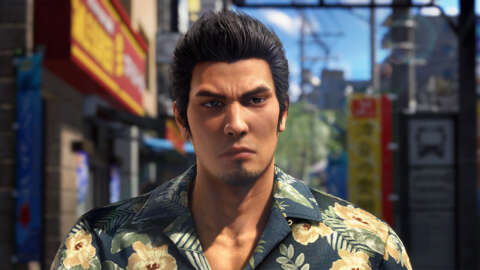
For the most part, the broader strokes of Kiryu’s story remain untouched. Yet, the considerable technology jump does affect the overall ambiance. This is due to Ryu Ga Gotoku recreating environments and characters with modern renditions rooted in the engine used for recent entries in the Yakuza and the larger Like a Dragon ecosystem. The result is a bit too cleaned and polished, dimming the grit of the main locations–Kamurocho and Okinawa–as well as the contrast between them. The stylistic choices, especially around lightning, make them feel like an extension of each other rather than separate areas with distinct thematic purposes. This extension also applies to the Kiwami games as a whole. Considering this is the third remake of its type, the art style is beginning to feel homogenized, losing the charm of each original entry having a specific mood reflecting the story.