


The departure of Hideo Kojima from Konami saw the publisher react, initially at least, like a spurned lover. There was an ill-advised attempt to remove the creator’s name from certain packaging, followed-up by the even more ill-advised spinoff Metal Gear Survive, before things went quiet and, for years and years, Konami did nothing with the company’s flagship series.
Time heals all wounds though, and in recent years Konami has been doing a good job of gradually bringing Metal Gear back: first with the Master Collection Volume 1, which brought the first two Metal Gear MSX titles and three Metal Gear Solid games (plus spinoffs) to modern platforms. It didn’t launch in the best way, but after a year of patching I’d recommend it wholeheartedly.
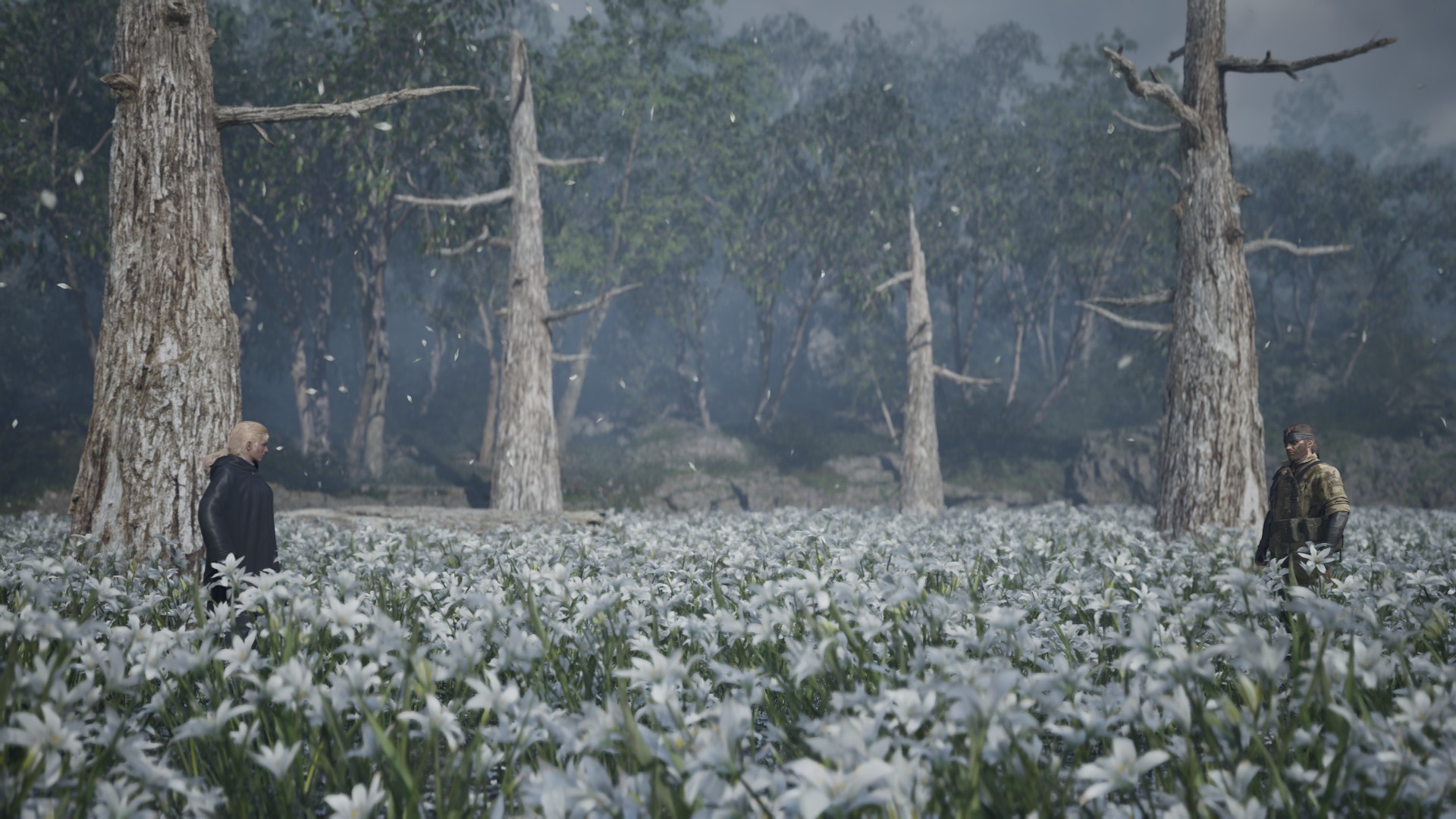
Then this year brought Metal Gear Solid Delta: Snake Eater, a ground-up but faithful remake of the beloved MGS3 that impressed almost everyone. It may not be the glorious future this series deserves, but it showed that Konami could still kick it at the top table, and produce a Metal Gear game that looks and feels like it belongs in 2025.
Konami’s staying tight-lipped about what’s next, though we do know that The Master Collection Volume 2 is in development. And now Metal Gear veterans Yuji Korekado, director of Delta, and Konami stalwart and series producer Noriaki Okamura have given a new interview to Japanese outlet Real Sound (translated by GamesRadar+) about why Konami decided to bring Metal Gear back now. Well: everyone’s getting older, for a start.
“Because the series has been around for a long time, we have a wide variety of fans,” says Korekado. “And we are conscious of being respectful to the previous games in the series. With this remake, we thought about how it would be best to bring the game to modern players, while respecting the thoughts and concepts of the original creator.
“However, if you reproduce the original work exactly as it is, some aspects can be difficult to play, so we adapted them… It’s extremely difficult to balance honoring the original work with trying new things, so I’m always worrying about what we produce.”
Delta executed this tightrope walk by giving players the choice between original styles with stuff like the controls, and a new control system that’s more in-line with what contemporary players might expect. I should also point out that the Metal Gear games always had control schemes that split opinion, even at the time, so it’s not like the current devs were dealing with something universally beloved. Then, we get to old Father Time (who does sound like a Kojima boss).
“With losing the original staff, it was challenging figuring out how to continue the series,” says Okamura. “We would start and stop talking about developing something new all the time. However, given our age, and how the number of developers with knowledge of the Metal Gear series was decreasing, we decided that if we didn’t resurrect the series now, it would become difficult to do so. Because it’s such an incredible series, I decided that now was the time.”
Okamura has regularly beat the drum in interviews about how Konami has used a mix of veteran and younger staff on its current Metal Gear projects, with the hope of training up the new generation to continue the series’ legacy (appropriately enough, always one of Kojima’s major themes). Here there’s even a spot of humour, with Korekado amused when asked about what surprised him with some of the new staff.
“I was surprised that they told me, ‘I don’t know how to do close quarters combat,'” laughs Korekado. “In the original, The Boss teaches you how to use it over the Codec, but modern players don’t always listen to the Codec messages all the way through.”
As for the future of Metal Gear, Okamura claims “the next project hasn’t been decided yet. There is both the possibility of a remake, or of trying something new. The Metal Gear series is like a capsule of video game history, from pixel art to cinematic experiences, so the method we use for each remake needs to be tailored to the game. We don’t expect to apply the same methodology we used for Metal Gear Solid Delta on other games, rather, we want to consider what the best approach for each game would be.”
And the million dollar question for Metal Gear fans: will the Master Collection Volume 2 release Metal Gear Solid 4: Guns of the Patriots from its PS3 prison? This is the one mainline game that has remained stubbornly locked to a single platform: it was Sony’s biggest exclusive for PS3, and built with considerable Sony technical support to take full advantage of the console’s ornery architecture. Problem is, this has made it a nightmare to port.
“At that time, quite unique solutions were required in order to get the desired 3D performance using the technological limitations of the hardware,” says Okamura with a chuckle. “So MGS4 used a very particular code. Bringing it up to date would be pretty difficult.”

It’s interesting to see the perspectives of Konami veterans on the future of Metal Gear. Their passion for the franchise is evident, and it’s great to hear that they feel motivated to carry it forward. Change can be challenging, but it can also bring fresh ideas and energy. Looking forward to what they create!
It’s great to hear that they’re passionate about the franchise! It’s also worth noting how their experiences can shape the direction of new titles, potentially blending nostalgia with fresh innovation. It’ll be exciting to see how they balance those elements moving forward.
It’s great to see their passion too! Their experience could really bring a fresh perspective while honoring the series’ legacy. It’ll be interesting to see how they blend new ideas with the classic elements that fans love.
Absolutely! Their deep understanding of the series’ history can definitely help bridge the gap between old fans and new players. It’s exciting to think about how they might blend nostalgia with innovative gameplay elements in the revival.
Absolutely! Their deep understanding of the series’ history can definitely help bridge the gap between old and new fans. It’s interesting to see how they plan to honor the legacy while also innovating for future gameplay. Balancing nostalgia with fresh ideas could really set this revival apart.
You’re right! Their familiarity with the series can certainly bring a unique perspective. It’s interesting how they plan to honor the legacy while also introducing fresh ideas to engage both new and longtime fans. This balance could really shape the future of Metal Gear.
Absolutely! Their long history with Metal Gear will likely infuse the new project with a sense of authenticity and nostalgia. It’ll be interesting to see how they balance honoring the legacy while introducing fresh ideas.